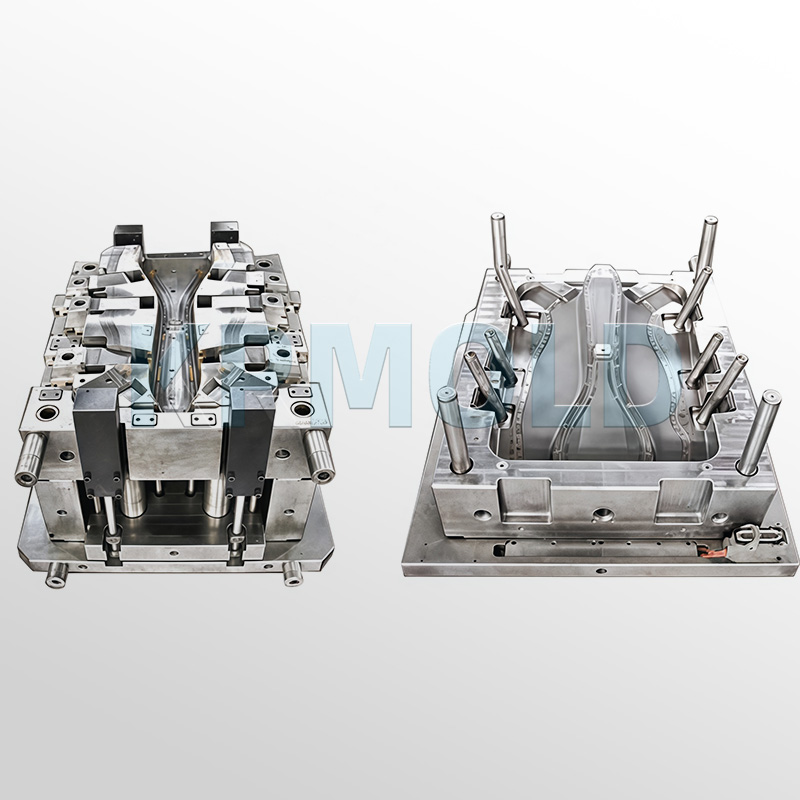
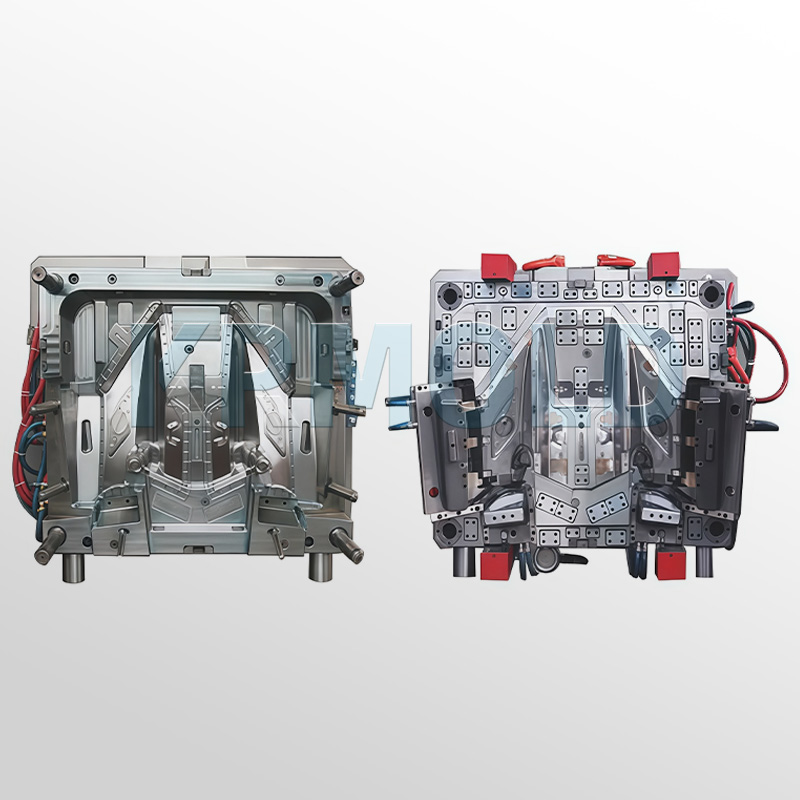
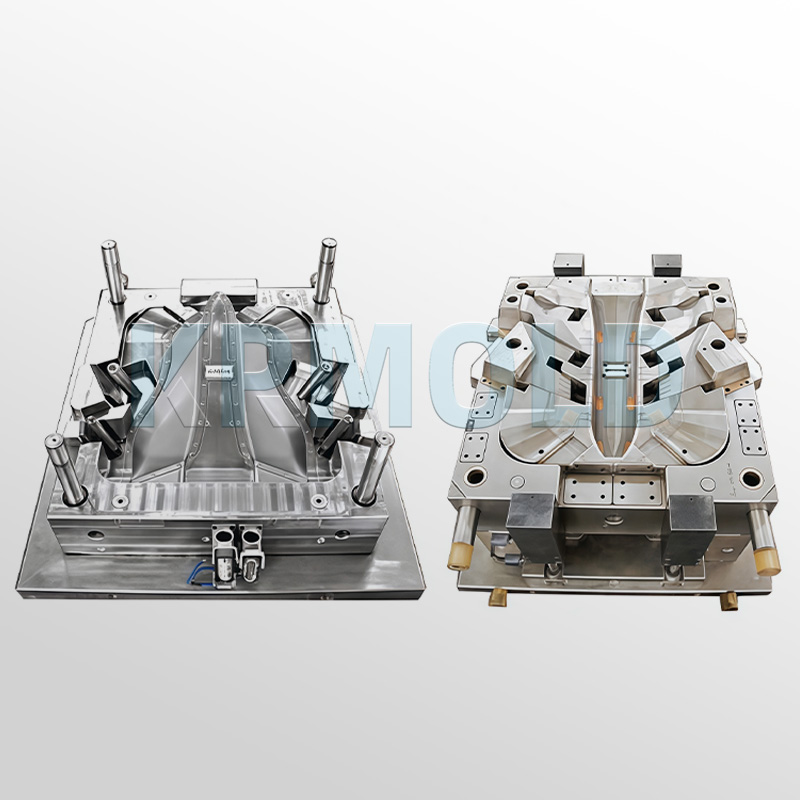
KRMOLD plastic chair injection molds can produce traditional and customized chair styles for a wide range of indoor and outdoor applications.
In the manufacturing process of plastic chair injection mould, KRMOLD pays close attention to the cycle time, parting line, wall thickness, and venting.
KRMOLD offers a diverse range of refrigerator parts injection mould capable of producing components such as drawers, egg trays, door liners, handles, door frames, and fridge lower vent frames, fully covering the molding needs for both interior and exterior plastic parts.
KRMOLD is dedicated to providing a complete range of plastic pallet injection molds, capable of producing pallets in various sizes for widespread use in everyday goods handling and product transportation in factories. KRMOLD plastic pallet injection mould not only meet market demands but also offer customized designs based on different customer application scenarios and handling conditions.
KRMOLD specializes in providing high-quality waste bin injection molds, capable of designing and manufacturing plastic trash bin injection molds for various capacities to meet specific project needs, including 32L, 45L, 60L, 80L, 120L, and 240L.
KRMODL can provide customers with a wide range of Logistic Packaging Injection Mold, according to the customer's product requirements for customized design of injection molds and the process of manufacturing injection molds, Logistic Packaging Injection Molds are used for the production of logistics and transportation required for the products. Logistic Packaging Injection Mold is a large-scale injection mold product.
KRMOLD is a professional injection mold manufacturer in China that can provide Food Packaging Injection Molds, which are designed to produce food packaging products with various specific shapes and functions. As an important injection molding tool, Food Packaging Injection Molds can produce food packaging products that meet food requirements. Welcome to contact us to get the latest design solutions
KRMOLD can provide customers with complete Thin-Wall Container Injection Molds solutions to manufacture injection molds that meet the production requirements of thin-walled products, such as disposable lunch box injection molds, electronic component packaging injection molds, and medical device injection molds.
KRMOLD thin wall container injection molds are characterized by high strength mold structure, precise process control and material innovation. Contact us for new injection molding solutions.
KRMOLD helps customers with complete injection mold design, production and after-sales services, and is able to provide customers with Cosmetic Container Injection Molds, which are used to produce molds for various cosmetic packaging containers. Injection molding technology is used to make plastic raw materials into specific shapes of packaging, such as bottles, jars, lids and so on.
What is Automotive Pillar Injection Mold? Materials, Types & Process
2026-03-09
Plastic pillar car part mould are specifically designed to manufacture automotive pillars. A, B, C pillars, and even D pillars are produced using these plastic pillar car part mould. Providing stability for the vehicle frame and serving as a steady mounting base for windows, doors, and the roof, the plastic columns generated by these automotive pillar injection molds are absolutely essential component of automobiles. Producing high-quality plastic pillar car part molds calls guaranteeing the accuracy, longevity, and consistency of pillar molding. Moreover, these automotive pillar injection molds create pillars that combine appearance, aerodynamic performance, and safety.
What Materials are Used to Manufacture Plastic Pillar Car Part Mould?
High-strength steel, aluminum, and composite materials among others are chosen by KRMOLD engineers to build automotive pillar injection molds depending on the client's particular project demands. High-strength steel is the preferred material for producing safety-critical parts since it offers great toughness and impact resistance; aluminum is lightweight, lowering the vehicle's total weight and improving fuel economy; composite materials and carbon fiber reinforced plastics offer high strength while being much lighter than metal materials. The materials chosen directly influence the durability, manufacturing efficiency, and cost of the plastic pillar car part mould.
Different Types of Automotive Pillar Injection Molds
Plastic pillar car part mould can produce different types of pillars, such as A pillar, B pillar, C pillar, and D pillar, for use in different parts of a car.
-A pillar: Between the passenger compartment and the engine compartment, this is the pillar on either side of the windshield. Aside connecting the roof to the body, the A pillar is very important in frontal crashes as it shields the passenger cabin from damage and keeps wheels and suspension from intruding into it. First, in a head-on collision, the front bumper beams absorb energy before the two front longitudinal beams collapse. Initially absorbed by the A pillar, the remaining collision energy is sent to the passenger compartment where it is dispersed throughout the vehicle. Under these conditions, the A pillar is very important: First, it has to remain undeformed to preserve the integrity of the passenger compartment; second, it has to transfer force. In automotive crash tests, whether the A pillar deforms is an important indicator of a car's safety performance. Therefore, the A pillar is generally made of high-strength steel sheet through stamping. Some models that prioritize vehicle safety even use ultra-high-strength hot-formed steel to make the A pillar.
-B pillar: This is the pillar of a car found between the front and rear doors. Acting as the main pillar of the car, it connects to the floor and supports the roof. Actually, it is very important for managing lateral crashes as well as strengthening and rigidifying the passenger compartment. The B pillar receives the force energy straight in a side collision. Should its strength be lacking, it could bend or shatter in a collision, so letting outside items straight penetrate the passenger compartment and endanger the occupants. Moreover, deformation of the passenger cabin lowers the survival and movement room for the occupants, therefore increasing their possibility of death or injury. In automobile crash tests, the deformation of the B pillar also serves as a crucial indication of vehicle safety performance. Usually, ultra-high-strength hot-formed steel is used in the B pillar, which makes it perhaps the strongest section of the car.
-C pillar: These are the supports found on each side of the rear window. These are the massive pillars on both sides of the headrests when seated in the rear seat. Connecting the roof to the body and absorbing some impact energy in rear-end crashes to preserve the structural safety of the passenger cabin are the two main uses of the C pillar. But the force the C pillar must absorb is rather low given the many structural parts at the back of a car; Consequently, it's usually constructed of basic high-strength steel; rarely using hot-formed material. Moreover, the C pillar is quite important in contemporary automobile design. A car looks much better thanks to a well-built C pillar.
-D pillar: Not every car model needs a D pillar, typically found in large SUVs and MPVs. Located behind the C pillar, its function is similar, primarily supporting the roof.
These pillars help to keep the passenger compartment from deformation in accidents including rollovers or being crushed by heavy objects, therefore lowering the risk of injury or death to occupants. Every automotive pillar injection mold must satisfy particular design standards and performance criteria in its design and manufacturing.
Manufacturing Process of Plastic Pillar Car Part Mould
The production of automotive pillar injection molds involves multiple processes to ensure precision and quality. The specific process is as follows:
-Plastic Pillar Car Part Mould Design: Using Computer-Aided Design (CAD) software, engineers create detailed 3D models to ensure the automotive pillar injection mold meets all precise specifications.
-CNC Machining: After design completion, the raw materials are precisely cut and shaped using Computer Numerical Control (CNC) machine tools.
-Heat Treatment: The machined plastic pillar car part mould undergoes heat treatment to enhance its strength and durability.
-Finishing and Polishing: Finally, polishing and surface finishing processes ensure a smooth surface, guaranteeing its usability for production.
Every step of the manufacturing process is strictly controlled to ensure automotive pillar injection mold consistency and achieve high-performance results.
KRMOLD provides high-quality plastic pillar car part mould for the automotive industry. Whether it's an A pillar, B pillar, C pillar, or D pillar, KRMOLD automotive pillar injection molds can easily achieve mass production.