KRMOLD plastic chair injection molds can produce traditional and customized chair styles for a wide range of indoor and outdoor applications.
In the manufacturing process of plastic chair injection mould, KRMOLD pays close attention to the cycle time, parting line, wall thickness, and venting.
KRMOLD offers a diverse range of refrigerator parts injection mould capable of producing components such as drawers, egg trays, door liners, handles, door frames, and fridge lower vent frames, fully covering the molding needs for both interior and exterior plastic parts.
KRMOLD is dedicated to providing a complete range of plastic pallet injection molds, capable of producing pallets in various sizes for widespread use in everyday goods handling and product transportation in factories. KRMOLD plastic pallet injection mould not only meet market demands but also offer customized designs based on different customer application scenarios and handling conditions.
KRMOLD specializes in providing high-quality waste bin injection molds, capable of designing and manufacturing plastic trash bin injection molds for various capacities to meet specific project needs, including 32L, 45L, 60L, 80L, 120L, and 240L.
KRMODL can provide customers with a wide range of Logistic Packaging Injection Mold, according to the customer's product requirements for customized design of injection molds and the process of manufacturing injection molds, Logistic Packaging Injection Molds are used for the production of logistics and transportation required for the products. Logistic Packaging Injection Mold is a large-scale injection mold product.
KRMOLD is a professional injection mold manufacturer in China that can provide Food Packaging Injection Molds, which are designed to produce food packaging products with various specific shapes and functions. As an important injection molding tool, Food Packaging Injection Molds can produce food packaging products that meet food requirements. Welcome to contact us to get the latest design solutions
KRMOLD can provide customers with complete Thin-Wall Container Injection Molds solutions to manufacture injection molds that meet the production requirements of thin-walled products, such as disposable lunch box injection molds, electronic component packaging injection molds, and medical device injection molds.
KRMOLD thin wall container injection molds are characterized by high strength mold structure, precise process control and material innovation. Contact us for new injection molding solutions.
KRMOLD helps customers with complete injection mold design, production and after-sales services, and is able to provide customers with Cosmetic Container Injection Molds, which are used to produce molds for various cosmetic packaging containers. Injection molding technology is used to make plastic raw materials into specific shapes of packaging, such as bottles, jars, lids and so on.
Plastic Pipe Fitting Mold: Precision Solutions for Manufacturing
2026-03-13
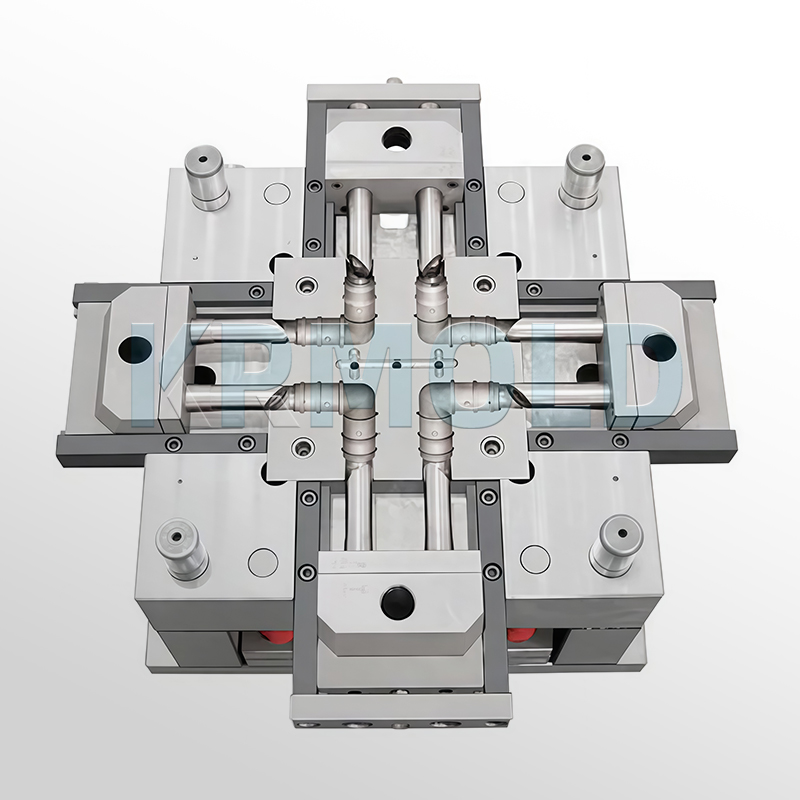
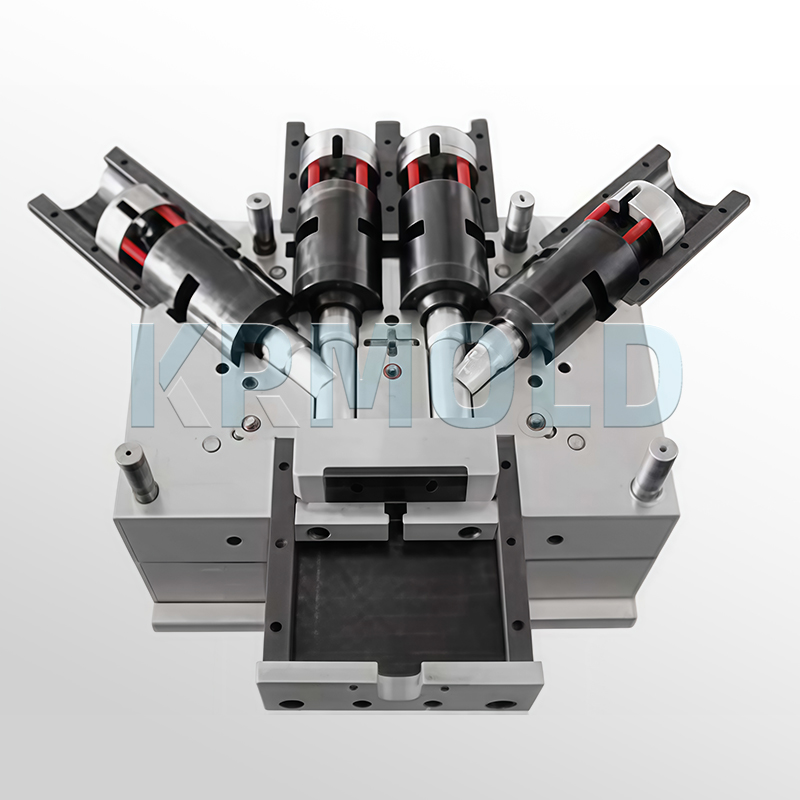
Plastic pipe fitting molds can produce pipe elbows with various standard angles (such as 45 degrees, 90 degrees, and 180 degrees) and different bending radii (such as long radius), and are widely used in modern piping systems such as drainage and ventilation. To ensure high-quality and efficient pvc pipe fitting mold solutions for customers, the KRMOLD team employs a series of precise manufacturing processes to ensure that every plastic pipe fitting mold meets production requirements.
1. PVC Pipe Fitting Mold Structure Design
1.1 Parting Surface Determination
The parting surface design of plastic pipe fitting molds is crucial to mold manufacturing. Based on the shape of the bend and the demolding direction, the KRMOLD team selects a suitable parting surface. A common practice is to design the outer wall of the bend as the main parting surface, while the inner bend portion is handled using side core-pulling or rotary core-pulling mechanisms. This design not only effectively reduces plastic pipe fitting mold complexity but also improves the production efficiency of plastic parts.
1.2 Cavity Layout
During the pvc pipe fitting mold design process, KRMOLD can flexibly choose a 1-cavity or 1-cavity layout based on production needs. A 1-mold, 2-cavity layout can effectively improve production efficiency, but it increases plastic pipe fitting mold complexity. Therefore, the KRMOLD team comprehensively considers the customer's actual needs and economic benefits to select the most suitable solution for the pvc pipe fitting mold.
1.3 Demolding Mechanism Design
The design of the demolding mechanism is a key factor in ensuring smooth demolding of plastic parts. KRMOLD professional team has conducted detailed research in this area.
1.3.1 Pipe Elbow Core-Pulling Mechanism
For the inner wall of the pipe elbow, KRMOLD uses an advanced arc slider or rack-and-sector gear mechanism. A hydraulic cylinder drives the inner wall of the pipe elbow to rotate and pull the core, ensuring smooth demolding. This ingenious design not only improves demolding efficiency but also effectively reduces frictional damage to the surface of the plastic part.
1.3.2 Side Core-Pulling Mechanism
For features such as undercuts and threads on the outer wall of the pipe elbow, KRMOLD designed a side core-pulling slider. A lateral demolding is achieved by driving a slanted guide post or a hydraulic cylinder. This design solves the problems that traditional demolding mechanisms may encounter when dealing with complex shapes, ensuring that every pipe elbow is perfectly formed.
1.3.3 Straight Pipe Core Pulling Mechanism
For the straight pipe section, KRMOLD employs a delayed core pulling mechanism. The inner groove core is pulled out first, followed by the straight pipe core. This design effectively reduces the core pulling force during the process, preventing deformation of the plastic part during demolding.
2. Material Selection for Plastic Pipe Fitting Mold
2.1 Cavity Plate Inserts
To ensure the wear resistance and corrosion resistance of the pvc pipe fitting mold, KRMOLD selects high-quality alloy steels such as S136 and 2344 for the cavity plate inserts. These materials achieve a hardness of 47-50 HRC after heat treatment, significantly extending the plastic pipe fitting mold's service life.
2.2 Core Inserts
The material of the core inserts is equally important. KRMOLD selects 45 steel or P20 steel, which have good machinability. The heat-treated hardness is set at 38-42 HRC, ensuring a reasonable balance between strength and machinability.
2.3 Slider Material
To further enhance the wear resistance of pvc pipe fitting molds, KRMOLD uses imported alloy steel or H13 steel as the slider material, combined with a nano-coating treatment. This combination improves the plastic pipe fitting mold's durability under high-intensity working environments.
3. PVC Pipe Fitting Mold Manufacturing Process
3.1 CNC Machining
KRMOLD uses advanced CNC milling machines and CNC lathes to perform high-precision machining on parts such as cavity plates, core inserts, and sliders, ensuring the dimensional accuracy and surface finish of each component. During this process, the KRMOLD team strictly controls various parameters to achieve optimal manufacturing results.
3.2 Electrical Discharge Machining
For more complex pipe elbow cores and arc-shaped sliders, KRMOLD uses electrical discharge machining (EDM) or wire cutting technology. These high-precision machining methods effectively improve the forming accuracy of plastic pipe fitting mold components, ensuring that every pipe elbow produced meets the standard requirements.
3.3 Heat Treatment and Surface Treatment
One of the key aspects of pvc pipe fitting mold manufacturing is heat treatment. KRMOLD performs heat treatment on key components to improve hardness and wear resistance. Simultaneously, polishing and plating of surfaces such as sliders and cores not only reduce friction and wear but also extend plastic pipe fitting mold life.
4. PVC Pipe Fitting Mold Assembly and Debugging
4.1 Assembly Accuracy Control
Mold assembly accuracy is crucial to product quality. KRMOLD employs a reference angle positioning and a locking mechanism to ensure the assembly accuracy of each plastic pipe fitting mold component, reducing mold system errors and laying a foundation for subsequent production.
4.2 Cooling System Installation
Installing cooling water channels in the cavity plate and core inserts of pvc pipe fitting molds is essential. KRMOLD uses sealing rings to ensure good cooling effect and effectively control mold temperature for a high-efficiency production process.
4.3 Debugging and Testing
Finally, KRMOLD conducts comprehensive debugging and testing through trial molding to check the plastic pipe fitting mold's demolding performance, the dimensional accuracy of the plastic parts, and surface quality. Based on the test results, the parameters of the demolding mechanism and the flow rate of the cooling system are adjusted to ensure stable pvc pipe fitting mold operation and meet specified production requirements.
When manufacturing plastic pipe fitting molds, KRMOLD always recognizes several key factors, including the structure of the plastic part, the properties of the material, and the production volume. Each pvc pipe fitting mold design is tailored to these factors. Simultaneously, important indicators such as demolding difficulty, plastic pipe fitting mold life, and production efficiency must be fully considered during pvc pipe fitting mold design. Furthermore, during the plastic pipe fitting mold manufacturing process, KRMOLD strictly controls machining precision and assembly quality to ensure that the final pvc pipe fitting mold meets all production requirements.
The manufacture of plastic pipe fitting molds is a complex and meticulous task. Leveraging its strong technical capabilities and extensive experience, KRMOLD continuously provides customers with high-quality pvc pipe fitting mold manufacturing solutions. If you are looking for high-quality plastic pipe fitting molds, please feel free to contact KRMOLD. We are dedicated to providing you with professional consultation and services to meet your specific needs.