KRMOLD plastic chair injection molds can produce traditional and customized chair styles for a wide range of indoor and outdoor applications.
In the manufacturing process of plastic chair injection mould, KRMOLD pays close attention to the cycle time, parting line, wall thickness, and venting.
KRMOLD offers a diverse range of refrigerator parts injection mould capable of producing components such as drawers, egg trays, door liners, handles, door frames, and fridge lower vent frames, fully covering the molding needs for both interior and exterior plastic parts.
KRMOLD is dedicated to providing a complete range of plastic pallet injection molds, capable of producing pallets in various sizes for widespread use in everyday goods handling and product transportation in factories. KRMOLD plastic pallet injection mould not only meet market demands but also offer customized designs based on different customer application scenarios and handling conditions.
KRMOLD specializes in providing high-quality waste bin injection molds, capable of designing and manufacturing plastic trash bin injection molds for various capacities to meet specific project needs, including 32L, 45L, 60L, 80L, 120L, and 240L.
KRMODL can provide customers with a wide range of Logistic Packaging Injection Mold, according to the customer's product requirements for customized design of injection molds and the process of manufacturing injection molds, Logistic Packaging Injection Molds are used for the production of logistics and transportation required for the products. Logistic Packaging Injection Mold is a large-scale injection mold product.
KRMOLD is a professional injection mold manufacturer in China that can provide Food Packaging Injection Molds, which are designed to produce food packaging products with various specific shapes and functions. As an important injection molding tool, Food Packaging Injection Molds can produce food packaging products that meet food requirements. Welcome to contact us to get the latest design solutions
KRMOLD can provide customers with complete Thin-Wall Container Injection Molds solutions to manufacture injection molds that meet the production requirements of thin-walled products, such as disposable lunch box injection molds, electronic component packaging injection molds, and medical device injection molds.
KRMOLD thin wall container injection molds are characterized by high strength mold structure, precise process control and material innovation. Contact us for new injection molding solutions.
KRMOLD helps customers with complete injection mold design, production and after-sales services, and is able to provide customers with Cosmetic Container Injection Molds, which are used to produce molds for various cosmetic packaging containers. Injection molding technology is used to make plastic raw materials into specific shapes of packaging, such as bottles, jars, lids and so on.
Auto Radiator Tank Plastic Mold for Efficient Manufacturing
2026-04-05
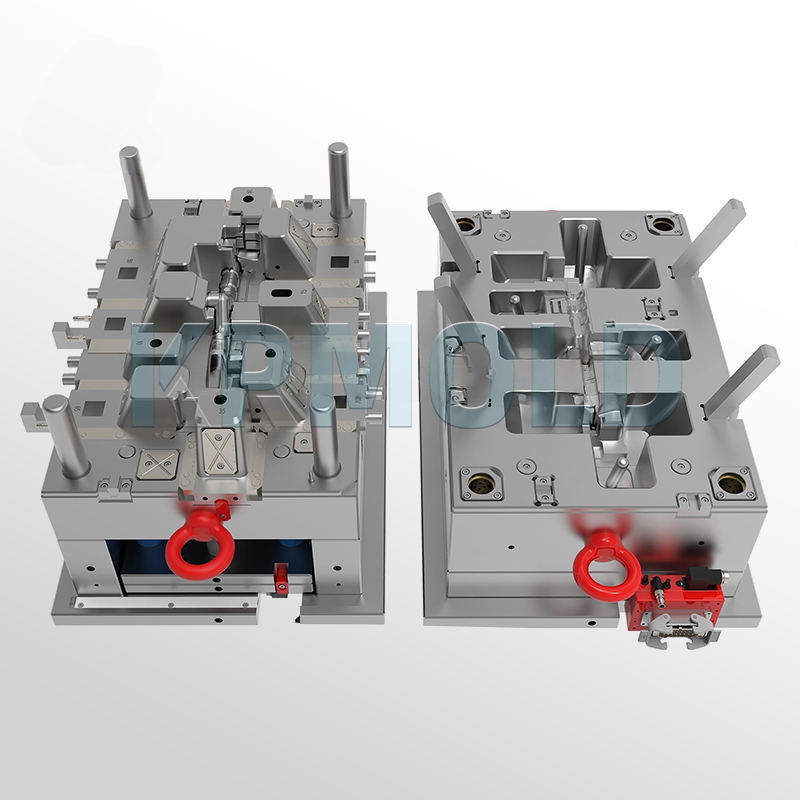
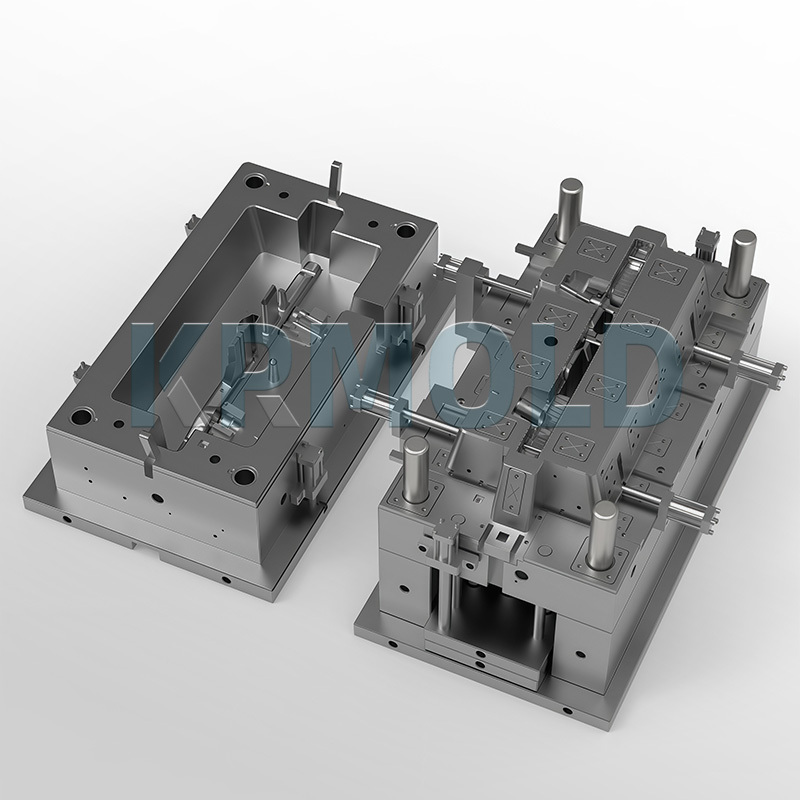
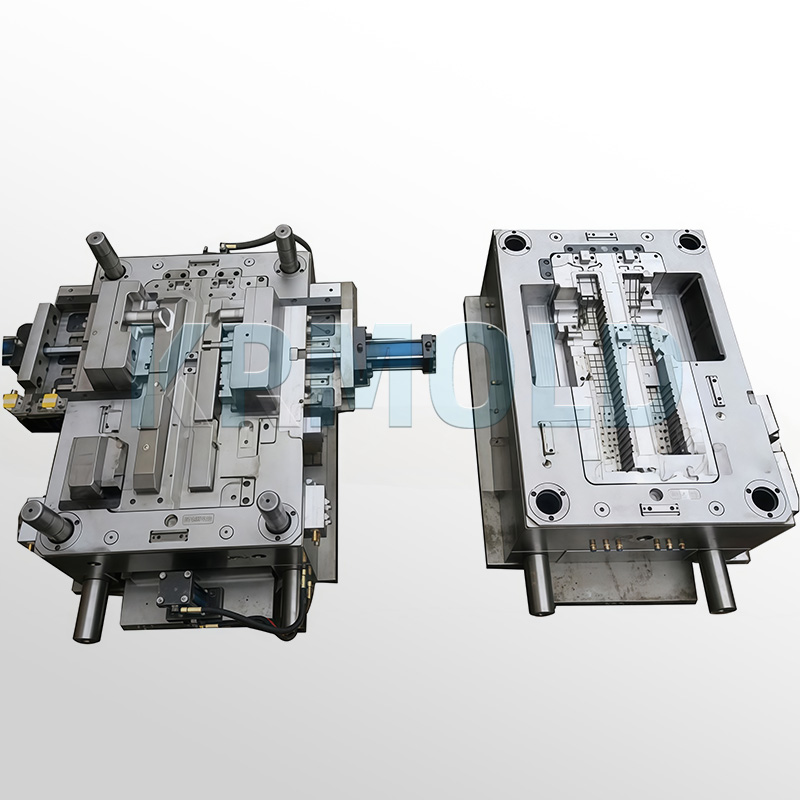
The auto radiator tank plastic mold is specifically designed for manufacturing automotive radiator tanks. It directly determines the quality, production efficiency, and manufacturing cost of the product, and is the key support for the efficient mass production of the automotive cooling system. The core working principle of the automotive radiator tank injection mold is to precisely design the internal cavities based on the structural characteristics and size requirements of the automotive radiator water tank. When the molten plastic raw materials are injected into the cavities, they are rapidly cooled and solidified through the preset cooling system, ultimately forming a radiator tank product that meets the automotive assembly standards. To achieve the goal of efficient manufacturing, the auto radiator tank plastic mold generally adopts advanced hot runner systems and reasonably arranged cooling water channels, which can significantly shorten the cooling time of the plastic melt and significantly improve the production rhythm. At the same time, both the mold cavities and the surface of the formed radiator tank are subjected to high-precision polishing treatment, which can not only ensure the smooth and clean appearance of the product, but also enhance the product's sealing performance and service life, providing a solid guarantee for the stable operation of the automotive cooling system. This article will combine KRMOLD professional technology and practical experience to introduce in detail a high-quality automotive radiator tank injection mold.
Design Features of Auto Radiator Tank Plastic Mold
-Material compatibility design:
The molding effect of the automotive radiator tank injection mold is closely related to the material properties. Currently, the mainstream material for automotive radiator tanks is PA66-GF30, which has high strength, high heat resistance, good dimensional stability and corrosion resistance. It can well adapt to the high-temperature and humid environment of the engine compartment of the vehicle. However, its shrinkage rate has certain characteristics, which impose strict requirements on the design of the mold cavity size. The KRMOLD team, based on the characteristics of PA66-GF30 material, precisely calculated and designed the shrinkage rate of the mold cavity size for the auto radiator tank plastic mold. Through scientific size compensation, the size of the formed radiator tank is accurate and fully complies with automotive assembly standards and customers' personalized requirements. This effectively avoids assembly difficulties and poor sealing caused by size deviations, and improves the product qualification rate from the source.
-Production efficiency optimization design:
KRMOLD engineers, relying on professional design software such as SolidWorks, precisely optimize the thermocycling system and cooling channels of the automotive radiator tank injection mold. The reasonable design of the thermocycling system can reduce plastic melt waste, shorten the filling time, and ensure uniform flow of the melt in the mold cavity, avoiding material shortage and welding marks; while the efficient distribution of cooling channels can achieve rapid and uniform cooling of the plastic melt, significantly shorten the molding cycle, and further improve the production efficiency of the auto radiator tank plastic mold, meeting the requirements of large-scale mass production. In addition, through the three-dimensional modeling function of the SolidWorks software, engineers can simulate the opening and closing of the automotive radiator tank injection mold, the melt flow path, and detect design flaws in advance to optimize the design and ensure the rationality and operational stability of the auto radiator tank plastic mold.
-Product quality assurance:
KRMOLD engineers, based on the structural characteristics of the radiator tank, designed a reasonable demolding structure. This not only avoided scratches and damages to the product surface during the demolding process, ensuring the aesthetic appearance of the plastic tank, but also ensured a smooth and efficient demolding process, significantly improving product quality and qualification rate.
Manufacturing Process of Auto Radiator Tank Plastic Mold
Design and programming stage
KRMOLD engineers first use professional design software such as UG or SolidWorks to establish a three-dimensional model of the automotive radiator tank injection mold, accurately reproducing every detail of the mold's cavity, hot runner, cooling channels, and demolding structure, ensuring that the model is completely consistent with the design. Subsequently, they use the Moldflow flow analysis software to conduct simulation analysis on the model, accurately predicting the flow path and filling time of the plastic melt within the mold cavity, and proactively avoiding common molding defects such as material shortage, weld marks, and shrinkage marks, providing scientific basis for mold manufacturing. After the mold flow analysis optimization is completed, the CNC processing program is automatically generated through CAM software, strictly locking the processing tolerance of the auto radiator tank plastic mold within ±0.01 millimeters to ensure that the processing accuracy meets the design requirements; at the same time, the electrode path of the automotive radiator tank injection mold is simultaneously optimized to reduce the processing travel and improve processing efficiency, shortening the mold manufacturing cycle.
Precision processing stage
KRMOLD employs advanced processing equipment and techniques to carry out meticulous processing of each component of the auto radiator tank plastic mold, ensuring the precision and quality of every part. In the processing of inserts, the slow wire cutting process is adopted to guarantee that the verticality of the automotive radiator tank injection mold inserts is ≤ 0.005mm, ensuring a perfect fit between the inserts and the auto radiator tank plastic mold body and preventing any gaps that could lead to melt leakage. In terms of automotive radiator tank injection mold surface treatment, copper electrode electro-discharge etching textures are used to make the surface roughness Ra ≤ 0.4µm, which not only enhances the wear resistance of the auto radiator tank plastic mold but also ensures the smoothness of the formed products' surface. For the curved parts of the mold, five-axis high-speed milling technology is used for processing, enabling precise completion of complex curved surfaces, with chamfer radii as small as 0.1mm, perfectly meeting the structural requirements of the radiator tank. Additionally, the processing accuracy of the cooling channels directly affects the cooling efficiency of the automotive radiator tank injection mold. KRMOLD controls the tolerance of the cooling channel diameter within the H7 level to ensure smooth flow of the cooling water in the channels.
Assembly and Debugging Phase
During the auto radiator tank plastic mold assembly process, the technicians of KRMOLD strictly controlled the mating accuracy of each component. The gap between the guide pin and the guide sleeve was precisely controlled within 0.02mm, ensuring that the automotive radiator tank injection mold operated smoothly and without any jamming during the opening and closing of the auto radiator tank plastic mold, and avoiding mold wear or product deviation due to excessive mating gap. After assembly, a first trial automotive radiator tank injection mold was conducted. During the trial mold process, the molding effect of the product was monitored in real time. If defects such as flash appeared, the gate size could be adjusted by 0.05mm to quickly eliminate them. At the same time, a push-out balance test was carried out to ensure that the auto radiator tank plastic mold could achieve simultaneous ejection of all cavities in multi-cavity production, avoiding product damage and size deviations caused by uneven ejection. After multiple debugging optimizations, the automotive radiator tank injection mold was ensured to operate stably, and its quality fully met the requirements before it could be put into mass production.
KRMOLD hopes that this introduction will enable everyone to have a deeper understanding of the auto radiator tank plastic mold. If you want to observe the production process of the automotive radiator tank injection mold up close and learn more technical details, please contact KRMOLD.