KRMOLD plastic chair injection molds can produce traditional and customized chair styles for a wide range of indoor and outdoor applications.
In the manufacturing process of plastic chair injection mould, KRMOLD pays close attention to the cycle time, parting line, wall thickness, and venting.
KRMOLD offers a diverse range of refrigerator parts injection mould capable of producing components such as drawers, egg trays, door liners, handles, door frames, and fridge lower vent frames, fully covering the molding needs for both interior and exterior plastic parts.
KRMOLD is dedicated to providing a complete range of plastic pallet injection molds, capable of producing pallets in various sizes for widespread use in everyday goods handling and product transportation in factories. KRMOLD plastic pallet injection mould not only meet market demands but also offer customized designs based on different customer application scenarios and handling conditions.
KRMOLD specializes in providing high-quality waste bin injection molds, capable of designing and manufacturing plastic trash bin injection molds for various capacities to meet specific project needs, including 32L, 45L, 60L, 80L, 120L, and 240L.
KRMODL can provide customers with a wide range of Logistic Packaging Injection Mold, according to the customer's product requirements for customized design of injection molds and the process of manufacturing injection molds, Logistic Packaging Injection Molds are used for the production of logistics and transportation required for the products. Logistic Packaging Injection Mold is a large-scale injection mold product.
KRMOLD is a professional injection mold manufacturer in China that can provide Food Packaging Injection Molds, which are designed to produce food packaging products with various specific shapes and functions. As an important injection molding tool, Food Packaging Injection Molds can produce food packaging products that meet food requirements. Welcome to contact us to get the latest design solutions
KRMOLD can provide customers with complete Thin-Wall Container Injection Molds solutions to manufacture injection molds that meet the production requirements of thin-walled products, such as disposable lunch box injection molds, electronic component packaging injection molds, and medical device injection molds.
KRMOLD thin wall container injection molds are characterized by high strength mold structure, precise process control and material innovation. Contact us for new injection molding solutions.
KRMOLD helps customers with complete injection mold design, production and after-sales services, and is able to provide customers with Cosmetic Container Injection Molds, which are used to produce molds for various cosmetic packaging containers. Injection molding technology is used to make plastic raw materials into specific shapes of packaging, such as bottles, jars, lids and so on.
What are Major Steps in Steering Wheel Plastic Injection Mold Manufacturing Process?
2026-04-03
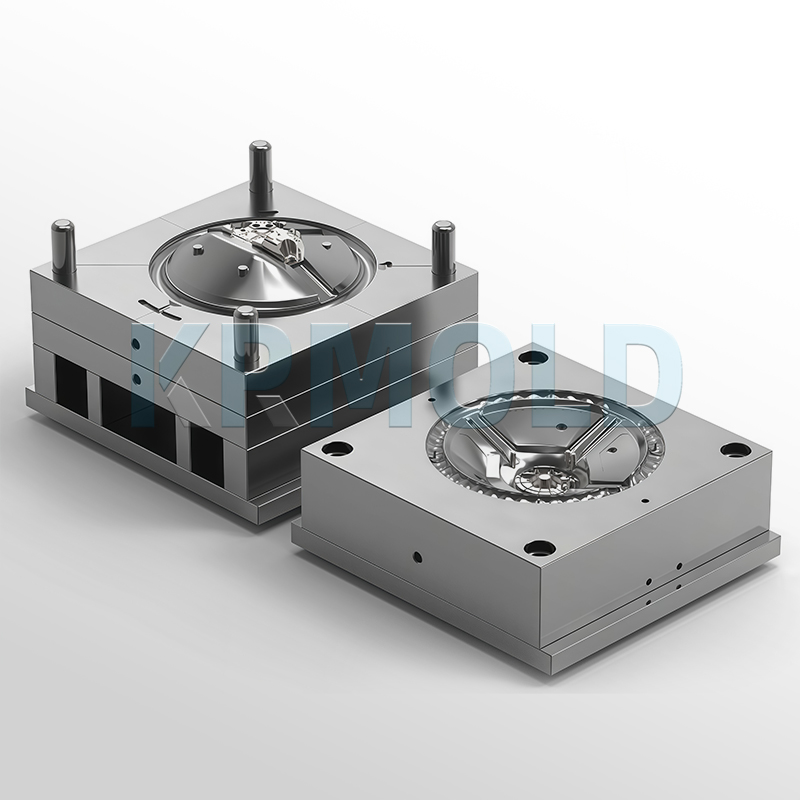
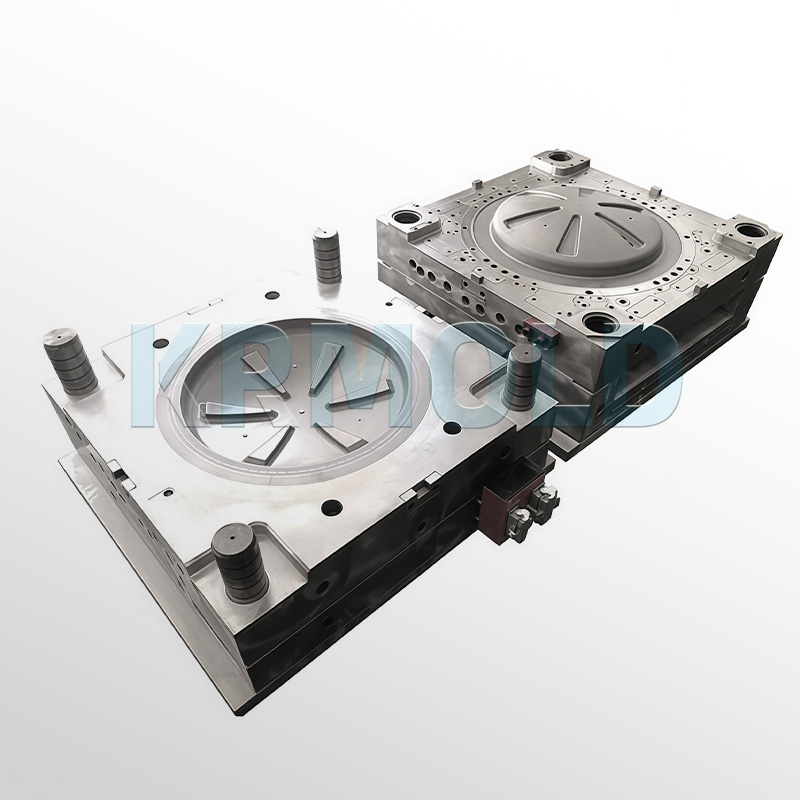
Steering wheel plastic injection molds are specifically designed for the mass production of high-quality, high-precision automotive steering wheel plastic parts. As a key component for automotive driving control, the dimensional accuracy, surface finish, and structural stability of the steering wheel directly affect driving safety and feel, all of which depend on the precision manufacturing of the auto steering wheel mold. Many customers, when customizing steering wheel plastic injection molds, are curious about how this core mold is manufactured step by step. This article will detail five important steps in KRMOLD auto steering wheel mold manufacturing process.
1. Process Analysis of Plastic Products
As a critical control component of automobiles, the steering wheel's plastic parts have strict standards regarding structural complexity, dimensional accuracy, and appearance requirements. Therefore, before auto steering wheel mold design, KRMOLD engineers will conduct in-depth communication and careful consultation with customers, fully analyzing whether the steering wheel plastic parts conform to the principles of injection molding, ensuring that both parties reach a consensus on design requirements, avoiding unnecessary complex processes in steering wheel plastic injection mold manufacturing from the source, and reducing the auto steering wheel mold modification rate. The core of the process analysis revolves around the key characteristics of the steering wheel plastic parts. First, there's the geometric analysis. Steering wheel plastic parts often have irregular curved surfaces with complex shapes such as grips and spokes. Some also require mounting points for multi-function buttons and airbags. KRMOLD engineers need to focus on analyzing whether these structures are easy to steering wheel plastic injection mold, whether there are areas where demolding is difficult, or where melt flow is obstructed, and plan the design direction of the parting surface and core-pulling mechanism in advance.
Second, there's the dimensional accuracy analysis. Key dimensions such as the steering wheel diameter, grip thickness, and spoke spacing have strict tolerance requirements, directly affecting the subsequent assembly accuracy with the steering system. KRMOLD engineers will consider the shrinkage characteristics of injection molding and allow for reasonable shrinkage allowances to ensure that the dimensions of the molded steering wheel plastic parts meet design standards. Finally, there's the appearance requirement analysis. The surface of the steering wheel plastic parts must be smooth, free of burrs, shrinkage marks, and weld lines.
2. Auto Steering Wheel Mold Structure Design
A high-quality steering wheel plastic injection mold requires not only advanced processing equipment and skilled mold-making workers, but also a scientifically sound mold structure design. For complex auto steering wheel molds, the quality of the mold design directly determines over 80% of the mold quality and is a key factor affecting the quality of the steering wheel parts, production efficiency, and mold lifespan. KRMOLD consistently adheres to a customer-centric design philosophy, balancing cost and efficiency. An excellent steering wheel plastic injection mold design aims to achieve the lowest processing cost, the least processing difficulty, and the shortest processing time while fully meeting the customer's requirements for the quality and precision of the steering wheel parts.
To achieve this goal, KRMOLD steering wheel plastic injection mold designers must not only fully understand and digest all customer requirements, but also have a comprehensive grasp of the working principles of injection molding machines, the structural characteristics of steering wheel plastic injection molds, the advantages and limitations of various processing techniques, and the factory's own processing capabilities.
3. Determining Mold Materials and Selecting Standard Parts
In selecting materials for auto steering wheel molds, KRMOLD consistently adheres to the principles of combining adaptability, economy, and practicality. Besides fully considering the precision requirements, appearance requirements, and production volume of the steering wheel parts, it also considers the factory's own processing capabilities and heat treatment level to make a scientific and reasonable selection, ensuring that the material properties perfectly match the steering wheel plastic injection mold's purpose.
The core components of steering wheel plastic injection molds include cavities, cores, guide pillars, and guide bushings. Different parts have different functions, and therefore require different materials. Furthermore, to shorten the manufacturing cycle and reduce processing costs, KRMOLD utilizes existing standard parts as much as possible during mold manufacturing, such as ejector pins, springs, sprue bushings, and locating pins. These standard parts are produced under standardized conditions, ensuring stable quality and complete specifications. They require no separate processing, reducing auto steering wheel mold processing steps, shortening the manufacturing cycle, reducing processing errors, improving mold assembly accuracy, and facilitating subsequent steering wheel plastic injection mold maintenance and parts replacement.
4. Parts Processing and Auto Steering Wheel Mold Assembly
KRMOLD possesses advanced processing equipment and a professional processing team, strictly controlling the processing precision of each part to ensure that the assembled auto steering wheel mold meets the production requirements of the steering wheel plastic parts. In actual production, the dimensional errors of the molded steering wheel plastic parts mainly consist of four parts: first, steering wheel plastic injection mold manufacturing errors, accounting for approximately 1/3 of the total error; second, errors caused by wear during auto steering wheel mold use, accounting for approximately 1/6 of the total error; third, errors caused by uneven shrinkage during the molding process, accounting for approximately 1/3 of the total error; and fourth, errors caused by the discrepancy between the predetermined shrinkage rate and the actual shrinkage rate, accounting for approximately 1/6 of the total error. The total error is the sum of these four parts. Therefore, reducing the manufacturing error of the steering wheel plastic injection mold is crucial to ensuring the precision of the steering wheel plastic parts.
In the steering wheel plastic injection mold assembly stage, KRMOLD skilled workers strictly follow the design drawings and assembly specifications for precise assembly. During assembly, key aspects are carefully controlled, including the fit of the parting surface, the precision of the guide pillars and bushings, and the smoothness of the ejection mechanism. This ensures smooth auto steering wheel mold opening and closing without jamming, coordinated ejection mechanism movements, and unobstructed cooling and venting systems. Simultaneously, to address errors caused by uneven shrinkage of the plastic part and discrepancies between planned and actual shrinkage, KRMOLD typically uses 1/3 of the steering wheel plastic part's tolerance as the mold manufacturing tolerance. This allows for significant adjustments during subsequent injection molding, effectively compensating for errors generated during molding and ensuring the steering wheel plastic part's dimensional accuracy meets design standards.
5. Trial Molding
During the trial molding process, KRMOLD engineers will install the assembled steering wheel plastic injection mold on the corresponding injection molding machine and conduct trial production according to the preset injection molding process parameters. The focus will be on verifying the following aspects: First, the error caused by the discrepancy between the predetermined shrinkage rate and the actual shrinkage rate. The dimensions of the molded steering wheel will be observed to ensure they meet design standards. If dimensional deviations exist, the mold structure or injection molding process parameters will be adjusted promptly. Second, the smoothness of demolding will be checked. The coordination of the ejection mechanism will be verified, ensuring the steering wheel can be demolded smoothly and completely, avoiding problems such as sticking, whitening, and breakage. Third, the cooling effect will be observed. The cooling rate and uniformity of the steering wheel will be monitored to prevent warping, shrinkage marks, and other defects caused by uneven cooling. Fourth, the size, location, and shape of the gate will be assessed to influence the precision and appearance of the part. The gate structure will be optimized to reduce weld lines, gate residue, and other appearance defects.
During the trial molding process, KRMOLD engineers meticulously record the process parameters and part quality of each trial. They analyze and adjust any problems that arise, modifying the auto steering wheel mold as needed, until a qualified steering wheel part is produced.