KRMOLD plastic chair injection molds can produce traditional and customized chair styles for a wide range of indoor and outdoor applications.
In the manufacturing process of plastic chair injection mould, KRMOLD pays close attention to the cycle time, parting line, wall thickness, and venting.
KRMOLD offers a diverse range of refrigerator parts injection mould capable of producing components such as drawers, egg trays, door liners, handles, door frames, and fridge lower vent frames, fully covering the molding needs for both interior and exterior plastic parts.
KRMOLD is dedicated to providing a complete range of plastic pallet injection molds, capable of producing pallets in various sizes for widespread use in everyday goods handling and product transportation in factories. KRMOLD plastic pallet injection mould not only meet market demands but also offer customized designs based on different customer application scenarios and handling conditions.
KRMOLD specializes in providing high-quality waste bin injection molds, capable of designing and manufacturing plastic trash bin injection molds for various capacities to meet specific project needs, including 32L, 45L, 60L, 80L, 120L, and 240L.
KRMODL can provide customers with a wide range of Logistic Packaging Injection Mold, according to the customer's product requirements for customized design of injection molds and the process of manufacturing injection molds, Logistic Packaging Injection Molds are used for the production of logistics and transportation required for the products. Logistic Packaging Injection Mold is a large-scale injection mold product.
KRMOLD is a professional injection mold manufacturer in China that can provide Food Packaging Injection Molds, which are designed to produce food packaging products with various specific shapes and functions. As an important injection molding tool, Food Packaging Injection Molds can produce food packaging products that meet food requirements. Welcome to contact us to get the latest design solutions
KRMOLD can provide customers with complete Thin-Wall Container Injection Molds solutions to manufacture injection molds that meet the production requirements of thin-walled products, such as disposable lunch box injection molds, electronic component packaging injection molds, and medical device injection molds.
KRMOLD thin wall container injection molds are characterized by high strength mold structure, precise process control and material innovation. Contact us for new injection molding solutions.
KRMOLD helps customers with complete injection mold design, production and after-sales services, and is able to provide customers with Cosmetic Container Injection Molds, which are used to produce molds for various cosmetic packaging containers. Injection molding technology is used to make plastic raw materials into specific shapes of packaging, such as bottles, jars, lids and so on.
The Application of Plastic Auto Parts Sensor Mold in Automotive
2026-04-15
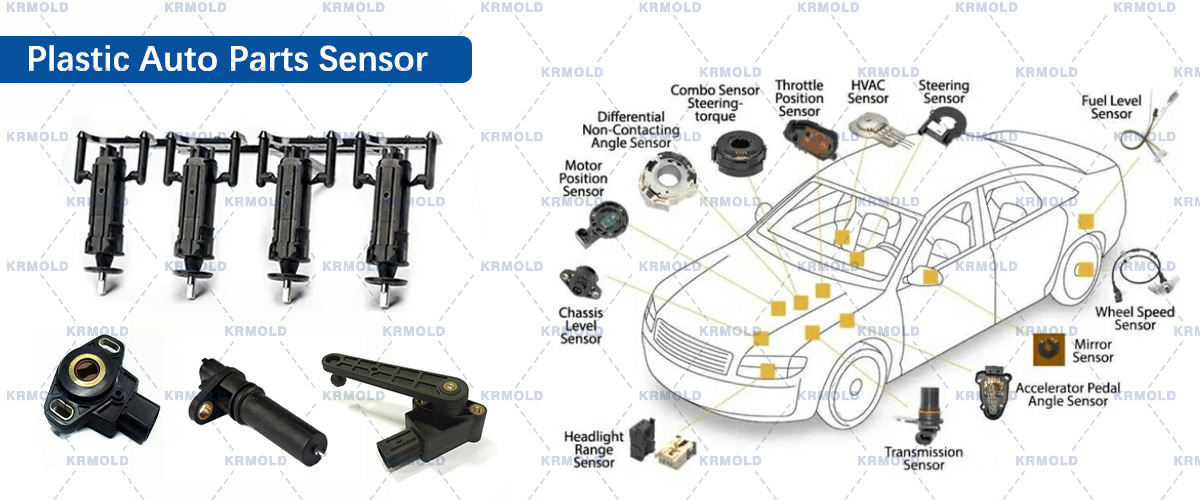
" Plastic auto parts sensor molds enable manufacturers to produce high-quality automotive sensors faster, while reducing costs and improving performance. These molded automotive sensors are widely used in various systems of the engine, chassis, and body, becoming a core support for the stable operation of automotive electronic control systems. Many automotive companies now rely on auto sensor parts molds to maintain a leading position in a highly competitive market. Plastic auto parts sensor molds not only drive the upgrading of the automotive sensor industry but also help the automotive industry achieve efficient production, quality improvement, and cost optimization. "
The Role of Automotive Sensors
The performance of automotive sensors directly determines the handling, safety, and economy of a vehicle, and plastic auto parts sensor molds are key equipment for ensuring sensor quality. The Electronic Control Unit (ECU), as the "brain" of the car, constantly monitors signals from various sensors. Once an abnormal input signal is detected, the erroneous signal is stored in memory. When needed, fault information can be read using a specialized diagnostic tool or manually. Based on the fault code information, precise repairs can be performed to prevent the fault from escalating and affecting the normal operation of the vehicle.
The performance of an automotive computer control system primarily depends on the accuracy of the acquired working variables and parameters related to the control process. Sensors convert these physical variables into corresponding electrical signals. Sensors can convert measured physical quantities into electrical signals in various ways, providing accurate decision-making basis for the electronic control unit. Commonly measured physical quantities in automotive computer control systems include temperature, pressure, speed, position, flow rate, and oxygen concentration. The corresponding sensors require stable installation and signal transmission through plastic housings and mounting bases manufactured using auto sensor parts molds.
Sensor performance indicators include measurement range, accuracy, resolution, response characteristics, reliability, durability, compactness, interchangeability, and economy. These are related to the precise processing and quality control of the plastic auto parts sensor molds.
Core Characteristics and Technical Requirements of Auto Sensor Parts Mold
1.1 Core Characteristics
- Material Compatibility: Plastic auto parts sensor molds must be precisely adapted to the molding characteristics of automotive-grade engineering plastics (such as PA, PC, PBT, etc.), taking into account properties such as high temperature resistance, aging resistance, and impact resistance. Automotive sensors operate in complex environments such as engine compartments and chassis, facing challenges including alternating high and low temperatures, vibration, and shock. Auto sensor parts molds, through optimized cavity structure and processing technology, ensure that the molded plastic parts can withstand the harsh working environment of automobiles.
- Accuracy Controllability: Automotive sensors have extremely high requirements for installation and signal transmission accuracy. Plastic auto parts sensor molds must meet these high-precision requirements, strictly controlling dimensional tolerances, surface finish, and assembly accuracy.
- High-Efficiency Mass Production: The automotive industry is a large-scale mass production industry, placing high demands on auto sensor parts mold production efficiency and lifespan. Plastic automotive component sensor molds must adapt to the large-scale mass production needs of the automotive industry, featuring long mold life, smooth demolding, and low failure rate. High-quality plastic auto parts sensor molds can have a lifespan of over 100,000 cycles, enabling continuous and efficient production.
- Integration Capability: Auto sensor parts molds can achieve integrated molding of sensor mounting bases, terminals, and sealing structures, reducing subsequent assembly processes, improving production efficiency, and enhancing the sensor's sealing performance and structural stability.
1.2 Core Technical Requirements
- Mold Design Technology: The design of plastic auto parts sensor molds must consider the structural characteristics and usage requirements of the sensors, focusing on structural design (parting surface, gate, cooling system) and CAE simulation analysis (molding simulation, stress analysis).
- Manufacturing Technology: The precision of auto sensor parts molds relies on high-precision manufacturing technology, mainly including high-precision CNC machining, EDM electrical discharge machining, and polishing processes.
- Surface Treatment Technology: Surface treatment technology is needed to improve mold life and part quality for plastic auto parts sensor molds, mainly including mold surface hardening and anti-stick treatment.
- Quality Control Technology: The automotive industry has extremely stringent requirements for component quality. Auto sensor parts molds must possess comprehensive quality control technology, including mold precision inspection and part dimensional inspection, strictly adhering to automotive industry quality standards.
Applications of Auto Sensor Parts Molds in Automotive Industry
1.1 New Energy Vehicle Sector
With the rapid development of new energy vehicles, the number of sensors used has increased significantly. Plastic auto parts sensor molds have become core equipment in this field, widely used in battery management systems, motor control systems, and charging systems, ensuring the safe and efficient operation of new energy vehicles.
1.2 Autonomous Driving and Smart Cockpit Sector
The rapid popularization of autonomous driving and smart cockpits has driven the application of various sensing sensors. As core processing equipment for plastic sensor parts, auto sensor parts molds are increasingly widely used in this field, supporting accurate perception in autonomous driving and a comfortable experience in smart cockpits.
1.3 Traditional Fuel Vehicle Sector
Although new energy vehicles are developing rapidly, traditional fuel vehicles still occupy a certain market share. The application of plastic auto parts sensor molds in the traditional fuel vehicle sector represents an upgrade, further optimizing the performance of fuel vehicles, reducing production costs, and adapting to the industry's upgrade needs.
1.4 Other Sub-Scenarios
Besides the passenger vehicle sector, auto sensor parts molds are also widely used in commercial vehicles and special-purpose vehicles, adapting to the sensor processing needs of different vehicle types and driving quality upgrades across the entire automotive industry.