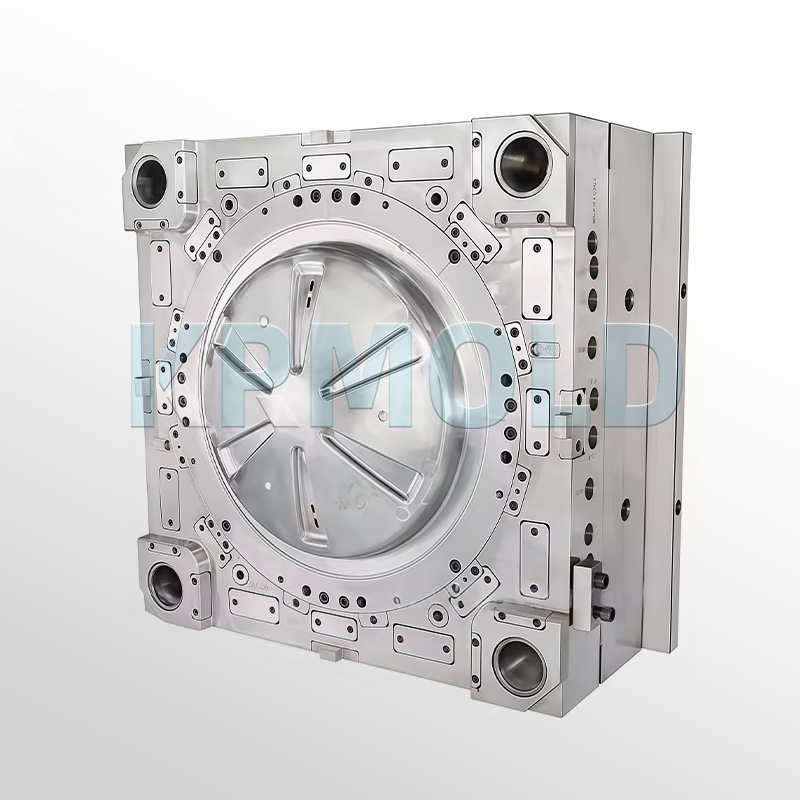
KRMOLD plastic chair injection molds can produce traditional and customized chair styles for a wide range of indoor and outdoor applications.
In the manufacturing process of plastic chair injection mould, KRMOLD pays close attention to the cycle time, parting line, wall thickness, and venting.
KRMOLD offers a diverse range of refrigerator parts injection mould capable of producing components such as drawers, egg trays, door liners, handles, door frames, and fridge lower vent frames, fully covering the molding needs for both interior and exterior plastic parts.
KRMOLD is dedicated to providing a complete range of plastic pallet injection molds, capable of producing pallets in various sizes for widespread use in everyday goods handling and product transportation in factories. KRMOLD plastic pallet injection mould not only meet market demands but also offer customized designs based on different customer application scenarios and handling conditions.
KRMOLD specializes in providing high-quality waste bin injection molds, capable of designing and manufacturing plastic trash bin injection molds for various capacities to meet specific project needs, including 32L, 45L, 60L, 80L, 120L, and 240L.
KRMODL can provide customers with a wide range of Logistic Packaging Injection Mold, according to the customer's product requirements for customized design of injection molds and the process of manufacturing injection molds, Logistic Packaging Injection Molds are used for the production of logistics and transportation required for the products. Logistic Packaging Injection Mold is a large-scale injection mold product.
KRMOLD is a professional injection mold manufacturer in China that can provide Food Packaging Injection Molds, which are designed to produce food packaging products with various specific shapes and functions. As an important injection molding tool, Food Packaging Injection Molds can produce food packaging products that meet food requirements. Welcome to contact us to get the latest design solutions
KRMOLD can provide customers with complete Thin-Wall Container Injection Molds solutions to manufacture injection molds that meet the production requirements of thin-walled products, such as disposable lunch box injection molds, electronic component packaging injection molds, and medical device injection molds.
KRMOLD thin wall container injection molds are characterized by high strength mold structure, precise process control and material innovation. Contact us for new injection molding solutions.
KRMOLD helps customers with complete injection mold design, production and after-sales services, and is able to provide customers with Cosmetic Container Injection Molds, which are used to produce molds for various cosmetic packaging containers. Injection molding technology is used to make plastic raw materials into specific shapes of packaging, such as bottles, jars, lids and so on.
How to Design Car Steering Wheel Cover Mould?
2026-02-13
The car steering wheel is a critical component for vehicle control, and the car steering wheel cover mould is an essential tool in its production. The driving experience is directly affected by the design of a suitable steering wheel plastic injection mold, therefore the looks and functional features of the steering wheel are very important. Specific care has to be given to the accuracy, usefulness, and manufacturing efficiency of the car steering wheel cover mould.
1. Understanding Product Design and Characteristics
Before designing the car steering wheel cover mould, it is essential to fully understand the product design of the steering wheel. The steering wheel is usually a functioning part found inside the steering column. Given this, the creation of both inside and exterior through-holes should especially prioritize accuracy and endurance.
1.1 Product Draft Angle Analysis
In the steering wheel plastic injection mold design, the product has two areas of undercut in the oblique direction and one in the horizontal direction on the exterior, and an internal undercut. These design features require the car steering wheel cover mould to accurately form these shapes.
-External Undercuts: To address the external undercut problem, a slider design can be used. Sliders effectively form the contours and ensure that the steering wheel plastic injection mold does not experience excessive wear during production.
-Internal Undercuts: The inside concave design calls for angled ejector pins. When the steering wheel plastic injection mold opens and closes, angled ejector pins enable for easier demolding and stop warping or deformation of the product.
2. Designing Car Steering Wheel Cover Mould Components
When designing the steering wheel plastic injection mold, it can be divided into several key components. The design of each component directly affects the overall performance and production efficiency of the car steering wheel cover mould.
2.1 External Undercut Slider Design
To achieve the two oblique undercuts on the exterior, these two holes can be designed as angled sliders. Since the gate locations for these two oblique holes are on the front mold and require high precision, a front mold tunnel slider design is essential.
-Angled Slider Design: In this section, when designing the sliders, ensure that they can move flexibly and without friction with other parts of the steering wheel plastic injection mold to avoid damaging the product during demolding. A well-designed support structure will also reduce the pressure on the angled sliders, extending the car steering wheel cover mould' lifespan.
The internal undercut design uses an angled ejector pin mechanism for demolding, ensuring that the product's plastic body is smoothly released. The large contact area of the angled ejector pin here allows for excellent control of the shape during steering wheel plastic injection mold opening.
-Guiding design: A dome-shaped guide pin system is used to ensure smooth movement of the angled ejector pin during car steering wheel cover mould opening and closing. This design not only reduces friction during insertion and removal but also minimizes mold damage caused by improper operation. The dome-shaped guide pin is connected to a MISUMI standard universal joint, making the guiding system more stable and efficient.
Accuracy is a key feature in the construction of car steering wheel cover mould that cannot be ignored. The steering wheel plastic injection mold's overall accuracy directly impacts the quality and performance of the final product.
3.1 Precision Testing and Adjustment
After the car steering wheel cover mould design is completed, meticulous testing and correction are necessary. Make certain all through-holes and openings fulfill the design specifications. In actual manufacture, this procedure helps to eliminate superfluous material waste as well as guarantee product quality.
3.2 Designing the Insertion Angle
The insertion angle of the sliders needs particularly close consideration while designing them. To guarantee smooth sliders and decrease resistance during steering wheel plastic injection mold opening, it is advised to create a 3-5 degree insertion angle in the steering wheel plastic injection mold opening direction.
4. Conclusion
Designing car steering wheel cover mould requires comprehensive consideration of various product characteristics, including material properties, functional needs, and design. The steering wheel plastic injection mold's accuracy, stability, and manufacturing efficiency should be top priority during the design process.
The car steering wheel cover mould structure mainly consists of a front mold tunnel slider, ordinary horizontal sliders, and a rear mold angled ejector mechanism. Using the benefits of sliders and angled ejector pins in the design process helps to significantly raise the steering wheel plastic injection mold's general performance and guarantee the production of excellent automobile steering wheel covers.
Through the above analysis and design methods, we can better understand the design requirements and techniques of car steering wheel cover mould. If you have more questions about steering wheel plastic injection mold design or require professional technical guidance, it is recommended to consult the KRMOLD team directly for more specific solutions and support.