KRMOLD plastic chair injection molds can produce traditional and customized chair styles for a wide range of indoor and outdoor applications.
In the manufacturing process of plastic chair injection mould, KRMOLD pays close attention to the cycle time, parting line, wall thickness, and venting.
KRMOLD offers a diverse range of refrigerator parts injection mould capable of producing components such as drawers, egg trays, door liners, handles, door frames, and fridge lower vent frames, fully covering the molding needs for both interior and exterior plastic parts.
KRMOLD is dedicated to providing a complete range of plastic pallet injection molds, capable of producing pallets in various sizes for widespread use in everyday goods handling and product transportation in factories. KRMOLD plastic pallet injection mould not only meet market demands but also offer customized designs based on different customer application scenarios and handling conditions.
KRMOLD specializes in providing high-quality waste bin injection molds, capable of designing and manufacturing plastic trash bin injection molds for various capacities to meet specific project needs, including 32L, 45L, 60L, 80L, 120L, and 240L.
KRMODL can provide customers with a wide range of Logistic Packaging Injection Mold, according to the customer's product requirements for customized design of injection molds and the process of manufacturing injection molds, Logistic Packaging Injection Molds are used for the production of logistics and transportation required for the products. Logistic Packaging Injection Mold is a large-scale injection mold product.
KRMOLD is a professional injection mold manufacturer in China that can provide Food Packaging Injection Molds, which are designed to produce food packaging products with various specific shapes and functions. As an important injection molding tool, Food Packaging Injection Molds can produce food packaging products that meet food requirements. Welcome to contact us to get the latest design solutions
KRMOLD can provide customers with complete Thin-Wall Container Injection Molds solutions to manufacture injection molds that meet the production requirements of thin-walled products, such as disposable lunch box injection molds, electronic component packaging injection molds, and medical device injection molds.
KRMOLD thin wall container injection molds are characterized by high strength mold structure, precise process control and material innovation. Contact us for new injection molding solutions.
KRMOLD helps customers with complete injection mold design, production and after-sales services, and is able to provide customers with Cosmetic Container Injection Molds, which are used to produce molds for various cosmetic packaging containers. Injection molding technology is used to make plastic raw materials into specific shapes of packaging, such as bottles, jars, lids and so on.
What is Plastic Pillar Car Part Mould? Materials, Types & Process
2025-11-27
General Content
1.Common Materials for Plastic Pillar Car Part Injection Mould
2.Different Types of Plastic Pillar Molds
3.Manufacturing Process of Plastic Pillar Car Part Mould
4.Factors Affecting Quality of Plastic Pillar Car Part Mould
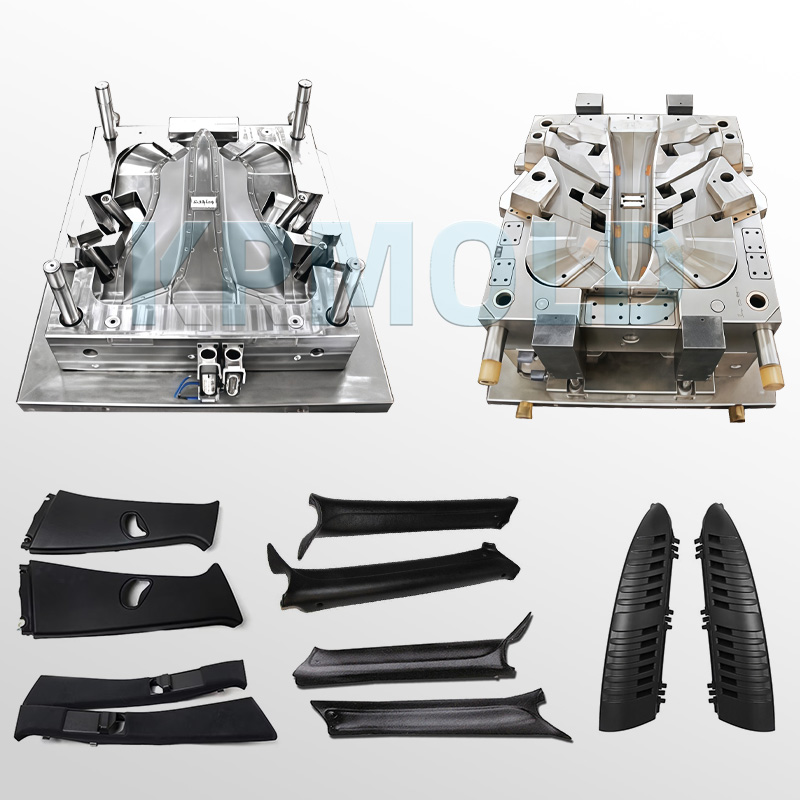
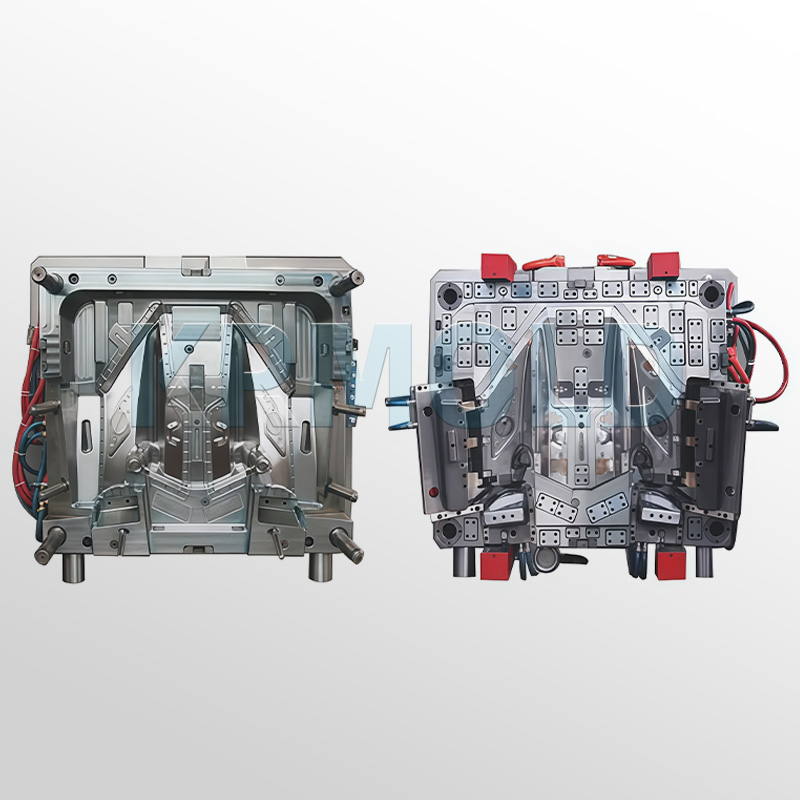
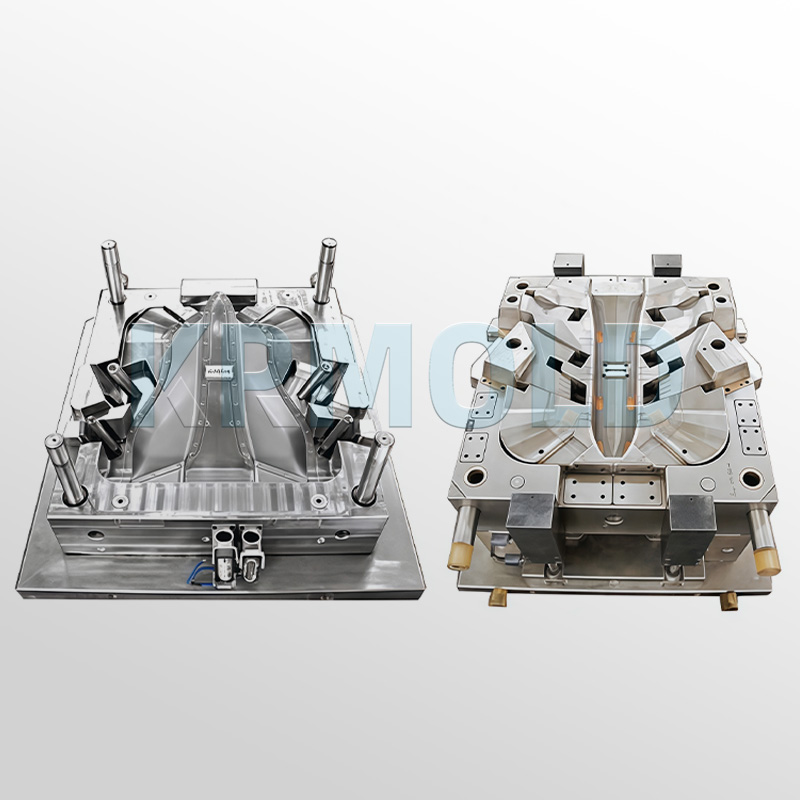
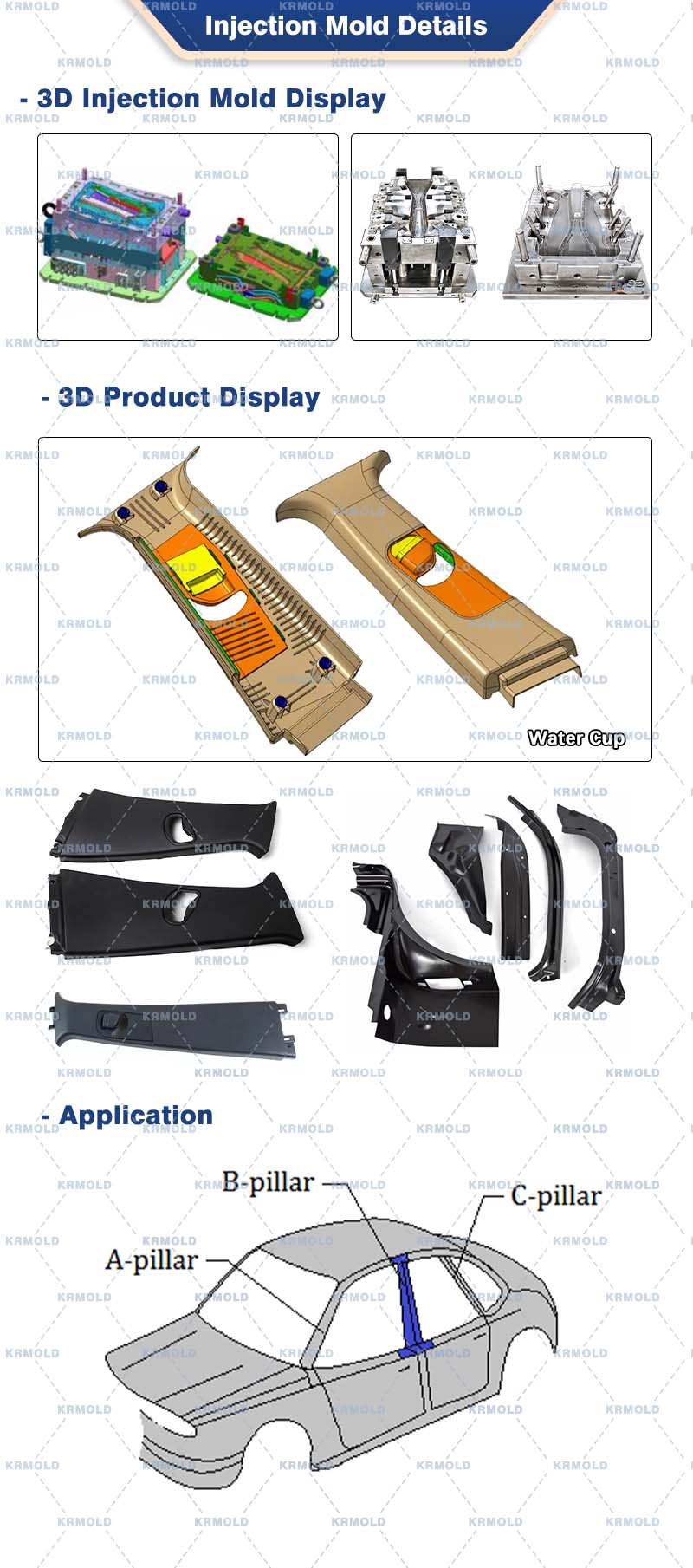
In modern automobile manufacturing, plastic pillar car part mould are specifically used to efficiently produce structural pillars for automobiles. These automotive plastic pillar molds are quite important for safety performance in addition to their frame support. Plastic pillar car part mould may be divided into automotive plastic A pillar injection molds, B plastic pillar car part mould, and automotive plastic C pillar injection mold depending on their positioning inside the vehicle. They make sure the frame is stable, cushion collision force, and offer a solid base for windows, doors, and the roof.
1.Common Materials for Plastic Pillar Car Part Injection Mould
When manufacturing automotive plastic pillar injection molds, manufacturers select appropriate materials based on specific design requirements and functional needs. The following are some commonly used materials:
1.1 High strength steel for plastic pillar car part mould
1.2 Aluminum
1.3 Composite materials
Usually employed in safety-critical parts in cars, high-strength steel has very strong impact resistance and toughness. Its strength resists collision forces remarkably, so making it especially crucial in the production of plastic pillar car part mould including A-pillars.
The lightweight nature of aluminum makes it another option for manufacturing plastic pillar car part mould. Using aluminum can effectively reduce overall vehicle weight, improve fuel efficiency, and reduce production costs to some extent.
Modern car design makes more and more use of carbon fiber reinforced plastics (CFRP) and composite materials. The benefits of this substance include its great strength and light weight, which can both increase vehicle performance and fuel efficiency and guarantee safety.
The selection of these materials has a great impact on automotive plastic pillar injection mold lifespan, manufacturing efficiency, and price according on varied demands.
2.Different Types of Plastic Pillar Molds
Plastic pillar car part mould can be subdivided into mold categories, each with unique functions and design requirements.
2.1 Plastic A pillar car part mould
Particularly employed to shape the pillars on either side of a car's windscreen, automotive plastic pillar injection molds are used. Apart from helping to support the windshield, they also contribute in spreading collision energy. Driver safety depends directly on the quality of the A-pillar; thus, choosing appropriate materials and precise plastic pillar car part mould design is very important.
2.2 Plastic B pillar car part mould
Plastic B pillar car part mould are used to produce the pillars connecting the front and rear doors, playing a vital role in the overall structure of the car. The B-pillar not only withstands side impact forces but also provides support for the roof and chassis. Its reliability directly affects the safety of the entire vehicle.
2.3 Plastic C pillar car part mould
The automotive plastic C pillar injection mold is used to mold the connection between the rear and roof of the vehicle. Its main purpose is to withstand rear-end impact forces and protect rear passengers. Although its load-bearing capacity requirements are lower than those of the A-pillar and B-pillar, the quality of the C-pillar is equally important; ensuring its strength is a crucial aspect of the design.
2.4 Plastic D pillar car part mould
In some large and medium-sized SUVs, the D-pillar also provides additional safety protection. A well-designed automotive plastic D pillar injection mold is essential to ensuring rear passenger protection in a collision.
Each type of plastic pillar car part mould is precisely designed to meet the production needs and safety standards of different vehicle models.
3.Manufacturing Process of Plastic Pillar Car Part Mould
Designers create structural drawings of the automotive plastic pillar injection mold in the first design phase using computer-aided design, carefully considering material characteristics, practical needs, and cosmetic requirements. To guarantee the final plastic pillar car part mould design fits production needs, a thorough investigation of the automotive plastic pillar injection mold's dimensions, form, and performance features is carried out.
3.2 Machining stage of plastic pillar car part mould
During the machining stage, high-precision machine tools and processing equipment, such as CNC lathes, machining centers, grinding machines, and EDM machines, are used in the production process. Advanced equipment aids employees in the treatment of mold pieces, hence guaranteeing the quality and precision of the plastic pillar car part mould.
3.3 Assembly stage of plastic pillar car part mould
After all mold parts are machined, workers need to strictly inspect the dimensions and shape of each component and perform precise assembly. At this stage, the overall performance and service life of the automotive plastic pillar injection mold are particularly important.
3.4 Debugging stage of plastic pillar car part mould
Finally, the automotive plastic pillar injection mold needs to be debugged to ensure smooth operation in actual production. The debugging stage mainly involves checking the automotive plastic pillar injection mold's operating status and product quality, and making necessary adjustments and optimizations to the plastic pillar car part mould.
4.Factors Affecting Quality of Plastic Pillar Car Part Mould
4.1 Mold Material
Choosing the appropriate mold material is key to ensuring automotive plastic pillar injection mold quality. Different types of plastics require different types of steel for injection molding; therefore, choosing the right material can significantly improve the plastic pillar car part mould' service life.
4.2 Structural Design
A reasonable automotive plastic pillar injection mold structure design can take into account material characteristics, such as shrinkage rate and molding temperature, while optimizing cooling water channels and opening/closing speed. The rationality of the structural design directly affects the production efficiency and molding quality of the plastic pillar car part mould.
4.3 Machining Process
A reasonable arrangement of automotive plastic pillar injection mold machining can shorten the machining cycle and improve production efficiency. Any errors in the machining process may lead to a decline in mold quality, thus affecting the quality of the final product.
4.4 Standard Parts Quality
Standard parts are key to ensuring the stability of automotive plastic pillar injection mold operation. High-quality standard parts maintain high wear resistance and high precision, preventing problems during plastic pillar car part mould operation.
4.5 Polishing Process
The polishing process of the plastic pillar car part mould directly affects the smoothness of the automotive plastic pillar injection mold surface and the demolding performance of the product. Insufficient polishing may lead to demolding difficulties, thus affecting production efficiency.
4.6 Mold Maintenance
Regular maintenance and upkeep of the plastic pillar car part mould are necessary measures to extend its service life. Thorough cleaning is essential after use, and the automotive plastic pillar injection mold surface must be treated with rust prevention.
If you have any needs for purchasing plastic pillar car part mould, please visit the KRMOLD factory to discuss details with our engineers.