KRMOLD plastic chair injection molds can produce traditional and customized chair styles for a wide range of indoor and outdoor applications.
In the manufacturing process of plastic chair injection mould, KRMOLD pays close attention to the cycle time, parting line, wall thickness, and venting.
The air purifier casing injection mold is primarily used to manufacture customized plastic housings for air purifiers across various types and specifications.
KRMOLD is dedicated to providing high-performance air purifier filter plastic injection mould solutions for air purifier casings to global clients.
KRMOLD vacuum cleaner injection mold is specifically designed to produce vacuum cleaner housings that combine high structural strength with superior aesthetic quality.
The precision of a phone case injection mold directly determines the finished product's assembly fit, tactile feel, and visual quality.
KRMOLD specializes in the R&D and manufacturing of high-quality phone case mould. By precisely injecting molten plastic into the mold cavity and utilizing rigorous cooling and solidification cycles, we achieve efficient molding for phone cases with complex specifications.
KRMOLD plastic pail bucket injection mold is engineered for the mass production of coating pails, paint buckets, and chemical storage containers. It enables the efficient and stable production of plastic buckets featuring precise dimensions, uniform aesthetics, and robust structural integrity—perfectly meeting the demands of industrial-scale manufacturing.
KRMOLD plastic crate injection molds are designed for the mass production of durable, high-strength plastic crates. Engineered for high-volume manufacturing, these plastic crate mould are widely utilized in modern logistics and supply chain management.
KRMOLD provides Plastic Bottle Cap Injection Mould products to help customers solve the production and design problems of plastic bottle cap products, and to provide production efficiency and control production costs through the injection molding process. Welcome to contact KRMOLD
KRMOLD offers flip top cap injection molds that are custom-engineered to meet specific product specifications, production capacity requirements, and application scenarios, making them suitable for the mass production of a wide range of plastic flip-top caps.
Material Selection of Automotive Trim Strip Injection Mold
2025-11-30
General Contents
1. Polypropylene (PP) for Car Trim Strip Injection Mold
2. Polyvinyl Cloride (PVC) for Automotive Trim Strip Injection Mold
3. Polystyrene (PS) for Automotive Trim Strip Injection Mold
4. Polycarbonate (PC) for Car Trim Strip Injection Mold
5. ABS (Acrylonitrile-Butadiene-Styrene) for Car Trim Strip Injection Mold
6. Polyamide (PA) for Automotive Trim Strip Injection Mold
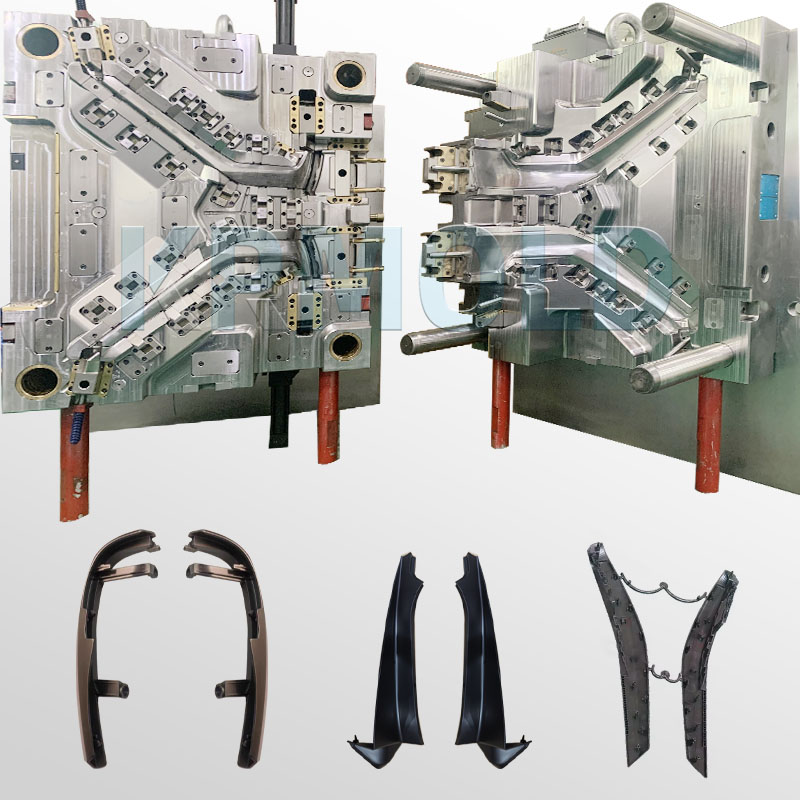
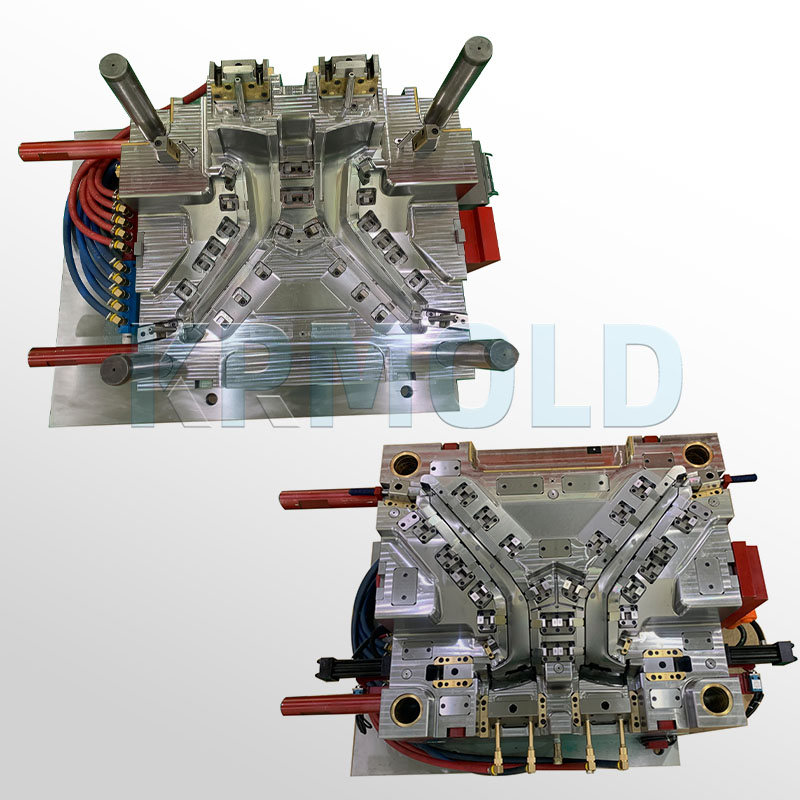
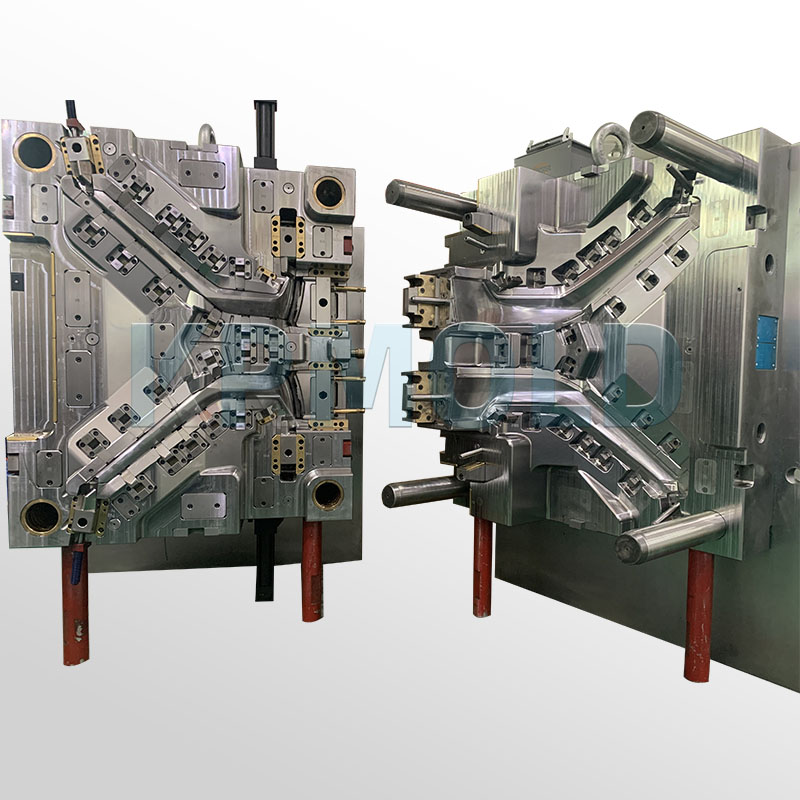
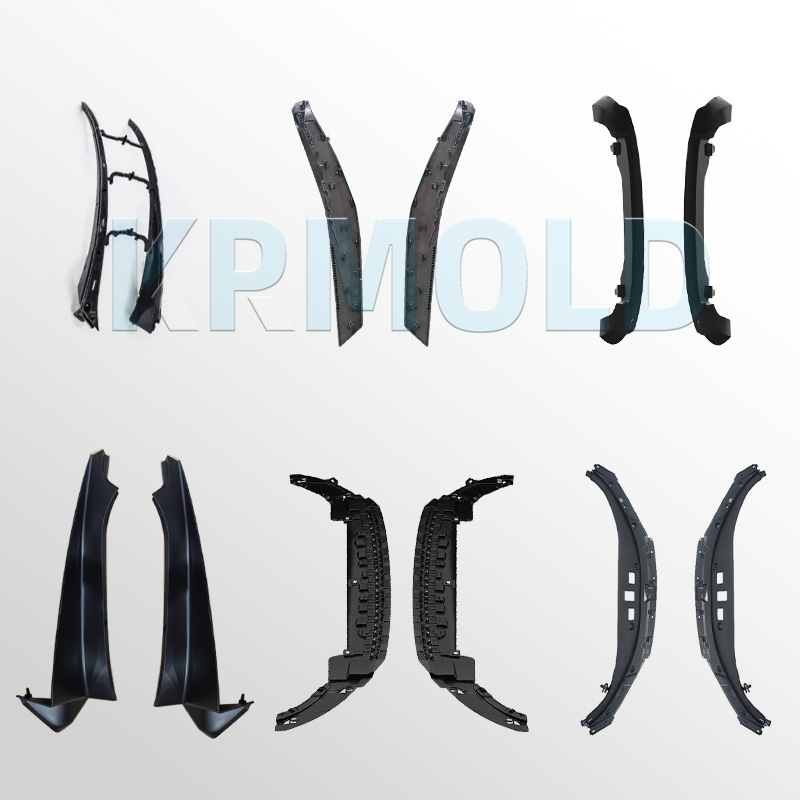
Designed to create accurate trim strips, automotive trim strip injection molds are utilized in applications including the sides of cars, trunk lids, taillights, dashboards, center consoles, and doors. These trim strips not only enhance the visual appeal of the automobile but also, to some degree, shield the body and inside elements, therefore increasing their longevity and durability. Performance and market acceptance of the trim strips depend on selecting the best injection molding material, hence knowing the properties and uses of several materials is critical.
1. Polypropylene (PP) for Car Trim Strip Injection Mold
With excellent molding qualities and flowability, polypropylene (PP) is a clear, light plastic substance. With a shrinkage rate ranging from 1.0% to 3.5% and an ideal thickness of 1.5mm to 2.5mm, PP has a water absorption rate of less than 0.02%. It also shows chemical resistance, hence fits for use in different conditions.
PP has some drawbacks in real-world uses, too. Notably, its low-temperature brittleness and flammability frequently call for the inclusion of certain compounds to lessen these flaws. For instance, adding flame retardants can lower its flammability; adding materials such as rubber, talc, and glass fiber can increase its low-temperature resistance and stiffness.
Polypropylene (PP) is much used in door trim, dashboard trim, and other parts in the automobile industry. PP is finding favor among more and more manufacturers as a lightweight and inexpensive material; hence, its uses are always growing.
2. Polyvinyl Cloride (PVC) for Automotive Trim Strip Injection Mold
Good stiffness and weather resistance make widely used plastic polyvinyl chloride (PVC). PVC can be split into two sorts—stiff and soft—depending on several additives and recipes. While flexible PVC has a shrinkage rate of 2% to 2.3% with a proper thickness between 2mm and 3.5mm, rigid PVC shrinks 1% to 1.5%. Because of its cheap cost and remarkable processing efficiency, PVC is often used in automotive goods including window frames and outside trim. Furthermore enabling it to perform well in several conditions is its aging resistance.
PVC is used in practically every automotive item, including dashboards, steering wheels, interior linings, and floor materials because of its strength and durability. Undoubtedly among the most often used materials in automotive production is PVC because of its many qualities.
3. Polystyrene (PS) for Automotive Trim Strip Injection Mold
Good flowability and transparency have made polystyrene (PS), a transparent, glassy material, useful in the automobile sector. With a suitable thickness of 2mm to 3mm, polystyrene has a shrinkage rate of 0.4% to 0.7%. It is non-absorbent, easy to work with, and perfect for creating components with intricate shapes. Polystyrene itself is somewhat brittle, though; hence it is sometimes graft-copolymerized with other substances to enhance its performance. Polystyrene becomes ideal as a transparent component material like instrument panel housings and light covers since adding rubber dramatically improves its impact strength and surface hardness.
Polystyrene can also be copolymerized with other materials in automotive trim to produce different polystyrene alloys satisfying different design and performance demands, such shape memory alloys (SMA) used to produce automotive dashboard frames. Maintained excellent strength and durability, these alloys provide good performance under different environmental circumstances.
4. Polycarbonate (PC) for Car Trim Strip Injection Mold
Polycarbonate (PC) resists heat and impact quite well. Shrinking at 0.5% to 0.7%, it calls for wall thickness of 2mm to 3.5mm. Adding glass fiber could increase both its mechanical strength and temperature resistance.
For ornamental strips around lamps, polycarbonate's transparency and strength make it a great material. Polycarbonate is much employed in automobile components needing great strength and aesthetics, including headlights and transparent dashboard elements, thanks to its excellent heat and cold resistance.
In addition, annealing enhances the internal stress of polycarbonate, rendering it appropriate for automotive decorative strips meant to keep high strength over long-term use.
5. ABS (Acrylonitrile-Butadiene-Styrene) for Car Trim Strip Injection Mold
ABS is widely used due to its wide variety and excellent surface treatment properties. ABS has a shrinkage rate of 0.4% to 0.7%, and the suitable wall thickness is 1.8mm to 3mm. ABS performs excellently in cases requiring surface treatment (such as spraying).
While ABS has relatively poor weather resistance, its performance can be enhanced by using advanced materials such as AES or ASA. ABS is commonly used in the manufacture of interior components such as center consoles and door trim strips. Due to its low cost and ease of processing, ABS is one of the most popular materials in the automotive industry.
6. Polyamide (PA) for Car Trim Strip Injection Mold
Due of its great strength and abrasion resistance, polyamide—often known as nylon—is much employed in the automotive industry. Polyamide has a shrinkage rate of around 1% to 2%, with a recommended wall thickness of 2mm to 3.5mm. Its water absorption rate can reach 100%, so the workpiece will undergo dimensional changes due to moisture absorption after molding, which requires sufficient attention during the design phase.
Components needing abrasion resistance, high temperature resistance, and great stability—accessories, guide rails, and interior/exterior trim connectors—the application of polyamide materials in automotive trim strips mostly focuses. Selecting the correct polyamide type can successfully satisfy the demands of various automobile brands and models.
Choosing the right injection molding material is crucial to the final performance of automotive trim strips. Material selection needs to consider multiple factors such as appearance requirements, durability, corrosion resistance, and production costs. A well-chosen selection of materials ensures both the aesthetics and practicality of the trim strips, enhancing the overall quality and market competitiveness of the automotive product.
When communicating with KRMOLD, please inform our engineers of your specific needs so that we can design high-quality car trim strip injection molds to meet all your requirements for automotive trim strips. Whether you wish to optimize material performance or enhance the aesthetics of the trim strips, professional guidance and automotive trim strip injection mold manufacturing solutions are available from KRMOLD team.