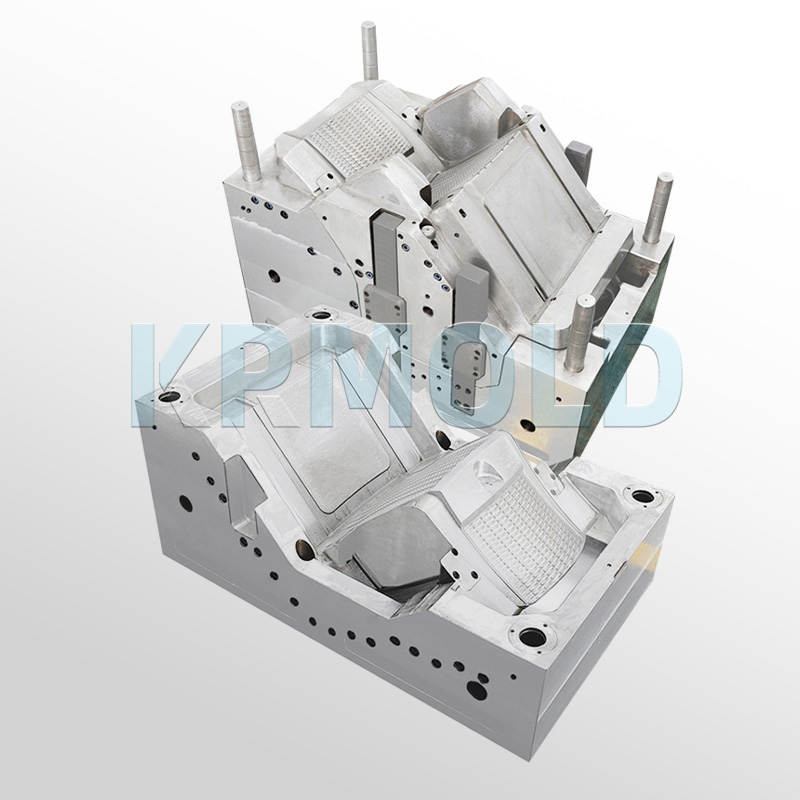
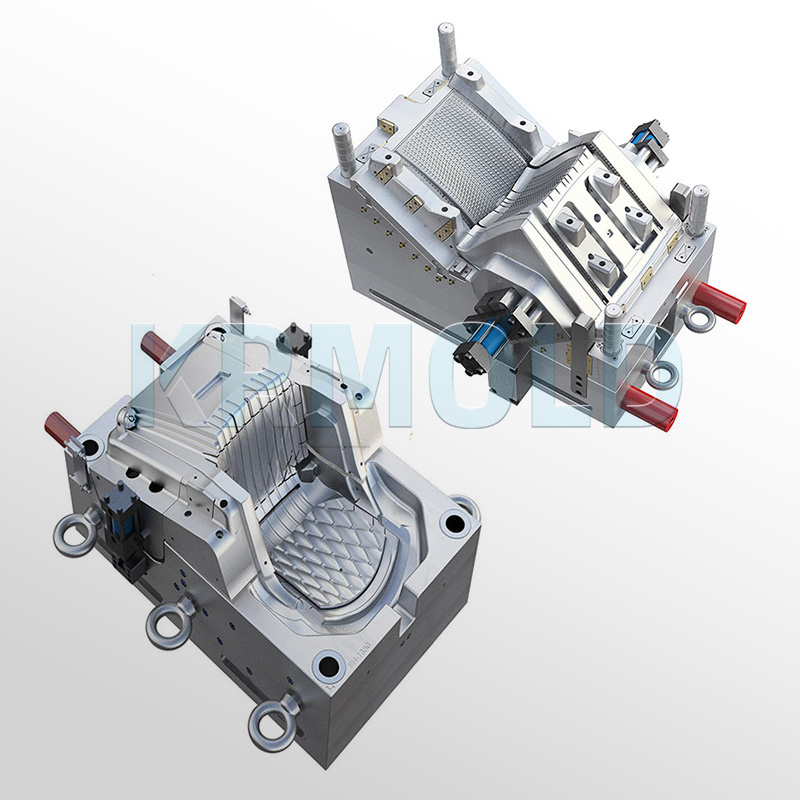
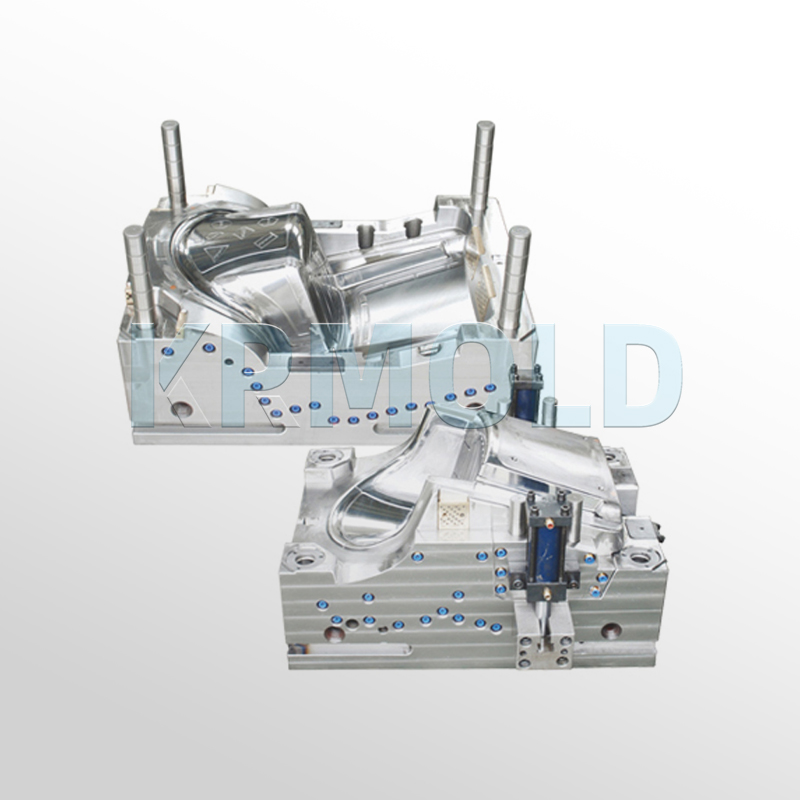
KRMOLD plastic chair injection molds can produce traditional and customized chair styles for a wide range of indoor and outdoor applications.
In the manufacturing process of plastic chair injection mould, KRMOLD pays close attention to the cycle time, parting line, wall thickness, and venting.
Automotive instrument panel molds determines the quality of the auto instrument panel. Automotive instrument panels produced using high-quality auto instrument panel injection molds combine safety, functionality, comfort, and aesthetic appeal, and are widely utilized across various automotive manufacturing scenarios.
Pipe elbow mould are designed for high-volume production of 90° or 180° pipe elbows. These PVC elbow pipe injection molds are widely used in piping systems across multiple fields.
Syringe plunger injection molds play a crucial role in the medical industry, widely used in the production of high-performance, high-quality syringe components. The overall performance of the medical syringe depends on the accuracy of the shape and measurements of the syringe plunger, which is a critical component of the syringe. Specializing in the research and development and production of disposable syringe plunger molds, KRMOLD seeks to give clients steady and dependable manufacturing solutions meeting industry requirements.
The car air conditioner vents produced by car air conditioner vent injection molds are essential components for any vehicle, providing efficient cooling and ventilation inside the cabin. These vents are made from high-quality materials and feature a sophisticated design, perfectly fitting any standard automotive air conditioning system, ensuring optimal performance and long-lasting durability.
Plastic car radiator tank mould are specifically designed to produce radiator water tanks, with their internal design deeply considering the characteristics of automotive radiators.
KRMOLD injection mold for steering wheel offer customers the best solutions. Whether it's complex geometry, multi-material compatibility, high-precision manufacturing, or long lifespan, these car steering wheel injection molds can meet diverse customer needs.
Automotive fan radiator mould enable the mass production of high-quality fans installed in automobiles. KRMOLD provides high-quality car radiator fan shroud mould due to its extremely stringent requirements for mold materials and processing.
Sustainable Practices in Plastic Chair Injection Mold Manufacturing
2026-05-01
Plastic chairs are ubiquitous, found in homes, gardens, and various public spaces. These are all manufactured using plastic chair injection molds. Currently, the demand for plastic chair injection mould is increasing, making sustainable practices in plastic chair injection mold manufacturing essential to reduce resource consumption, mitigate environmental impact, and enhance industry competitiveness. This article will provide a detailed introduction.
The plastic chair's functional needs, shape, dimensions, and requirements must be fully and carefully specified. For instance, whether ventilation holes are needed and whether strengthening ribs would help structural strength. Concurrent with this, factors like production quantity, cost budget, and environmental regulations must be taken into account to balance production efficiency and sustainability and thus prevent material waste and excessive energy use caused by over-design.
-3D Modeling: Currently, the industry commonly uses CAD software (such as SolidWorks, UG, etc.) for 3D mold design, accurately drawing the overall structure of the plastic chair injection mold, including the layout and dimensions of key components such as the cavity, core, gating system, ejection system, and cooling system. Designers must thoroughly evaluate sustainability during the modeling process, including improving the plastic chair injection mold construction, lowering the amount of mold steel utilized, and guaranteeing the compatibility and replaceability of several mold components to enable later plastic chair injection mold repair, maintenance, and recycling, hence extending the life of the plastic chair injection mold.
-Mold flow analysis: Simulating the filling, cooling, and solidification process of molten plastic in the mold cavity allows for the prediction of potential defects during production, such as short shots, weld lines, and warpage, thereby optimizing the gate location, cooling water channel layout, and injection molding process parameters.
(2) Material Selection
Mold steel selection should be combined with the material of the plastic chair (such as PP, ABS, PE, etc.) and the mold usage conditions. Among common mold steel materials are P20, H13, and 45 steel. Choosing should take careful thought of hardness, wear resistance, thermal stability, and polishing ability. Prioritizing high-strength, high-durability mold steel will help to prolong the plastic chair injection mould' service life, minimize mold replacement frequency, and so cut resource usage. Parallel to this, recycled or recyclable mold steel should be given first importance to advance resource recycling and apply the idea of sustainable development.
(3) Plastic Chair Injection Mold Machining
-Rough Machining Stage: CNC machine tools (such as milling machines and lathes) are used to rough-machine the mold steel billet, initially forming the plastic chair injection mould' outline and basic shape. During machining, the machining path needs to be rationally planned to reduce cutting allowances, minimize steel waste, and reduce machine tool energy consumption.
-Fine Machining: The cavity and core, as core components of the plastic chair injection mold, directly determine the shape and dimensional accuracy of the plastic chair. Precise machining is performed using methods such as CNC milling, EDM, or WEDM to ensure dimensional accuracy and surface roughness meet requirements.
-Gating System Machining: The main runner, branch runners, gates, and other components need to be precisely machined to ensure smooth flow of the plastic melt, reduce melt retention and waste, and optimize the gating system structure to shorten runner length and reduce plastic raw material consumption. The ejection system and guiding components need to ensure the accuracy and fit of components such as ejector pins, ejector rods, guide pillars, and guide sleeves to ensure smooth ejection action and accurate guidance, avoiding mold failure due to component wear and extending the service life of the plastic chair injection mould. -Heat Treatment: Heat treatment of the mold steel (such as quenching and tempering) can improve the hardness, wear resistance, and strength of the plastic chair injection mould, while controlling heat treatment deformation and ensuring the dimensional stability of the plastic chair injection mold.
(4) Plastic Chair Injection Mould Assembly and Debugging
-Component Assembly Stage: Assemble the machined cavities, cores, gating systems, ejection systems, guide components, etc., onto the mold frame according to design requirements. During assembly, attention should be paid to the tightness of the fit and the accuracy of the position of each component to avoid plastic chair injection mould malfunctions due to assembly errors, reducing mold maintenance frequency and resource waste. At the same time, a modular assembly method is adopted to facilitate subsequent plastic chair injection mold maintenance, repair, and component replacement, extending the life cycle of the plastic chair injection mold.
-Debugging and Trial Molding: Trial molding is performed on the injection molding machine. Injection process parameters (such as temperature, pressure, speed, holding time, etc.) are adjusted, and the filling effect, ejection status, and dimensional accuracy of the plastic chair injection mould are checked. Based on the trial molding results, the plastic chair injection mold is fine-tuned (such as grinding the cavity, adjusting the ejector pin position, etc.) until a qualified plastic chair sample is produced.
Advantages of Using Plastic Chair Injection Mould
1
High Precision
Plastic chair injection mould can precisely control the size and fine details of chairs. Through precise design and processing, the cavity and core of the plastic chair injection mold can perfectly replicate the design shape of the chair, ensuring that every chair produced is of consistent size and has a regular shape.
2
Mass Production
Plastic chair injection mould enable efficient large-scale chair production to meet high market demand. Using a one-time injection molding method, plastic chair injection mould provide production efficiency substantially above that of conventional handcrafting or other manufacturing techniques. One set of plastic chair injection mould can create thousands of chairs daily, therefore meeting high-volume market demand and shortening production cycles.
3
Material Diversity
A variety of plastic materials can meet different strength, flexibility, and color requirements. Plastic chair injection molds are compatible with injection molding of various plastic materials such as PP, ABS, and PE. Different plastic materials have different properties, allowing for the selection of appropriate plastic materials based on the intended use and functional requirements of the chair.
4
Durability
Chairs produced using plastic chair injection mould are extremely robust and durable, especially when using high-strength plastics. Furthermore, the plastic chair injection molds themselves are made of high-strength mold steel and undergo rigorous heat treatment processes, resulting in excellent wear resistance, corrosion resistance, and long service life. A single high-quality plastic chair injection mold can continuously produce hundreds of thousands of plastic chairs, reducing the frequency of mold replacements.
For more information about plastic chair injection mould, please feel free to contact KRMOLD for the latest updates!