KRMOLD plastic chair injection molds can produce traditional and customized chair styles for a wide range of indoor and outdoor applications.
In the manufacturing process of plastic chair injection mould, KRMOLD pays close attention to the cycle time, parting line, wall thickness, and venting.
KRMOLD offers a diverse range of refrigerator parts injection mould capable of producing components such as drawers, egg trays, door liners, handles, door frames, and fridge lower vent frames, fully covering the molding needs for both interior and exterior plastic parts.
KRMOLD is dedicated to providing a complete range of plastic pallet injection molds, capable of producing pallets in various sizes for widespread use in everyday goods handling and product transportation in factories. KRMOLD plastic pallet injection mould not only meet market demands but also offer customized designs based on different customer application scenarios and handling conditions.
KRMOLD specializes in providing high-quality waste bin injection molds, capable of designing and manufacturing plastic trash bin injection molds for various capacities to meet specific project needs, including 32L, 45L, 60L, 80L, 120L, and 240L.
KRMODL can provide customers with a wide range of Logistic Packaging Injection Mold, according to the customer's product requirements for customized design of injection molds and the process of manufacturing injection molds, Logistic Packaging Injection Molds are used for the production of logistics and transportation required for the products. Logistic Packaging Injection Mold is a large-scale injection mold product.
KRMOLD is a professional injection mold manufacturer in China that can provide Food Packaging Injection Molds, which are designed to produce food packaging products with various specific shapes and functions. As an important injection molding tool, Food Packaging Injection Molds can produce food packaging products that meet food requirements. Welcome to contact us to get the latest design solutions
KRMOLD can provide customers with complete Thin-Wall Container Injection Molds solutions to manufacture injection molds that meet the production requirements of thin-walled products, such as disposable lunch box injection molds, electronic component packaging injection molds, and medical device injection molds.
KRMOLD thin wall container injection molds are characterized by high strength mold structure, precise process control and material innovation. Contact us for new injection molding solutions.
KRMOLD helps customers with complete injection mold design, production and after-sales services, and is able to provide customers with Cosmetic Container Injection Molds, which are used to produce molds for various cosmetic packaging containers. Injection molding technology is used to make plastic raw materials into specific shapes of packaging, such as bottles, jars, lids and so on.
How Long Does It Take to Make Auto Radiator Tank Injection Molds?
2026-03-28
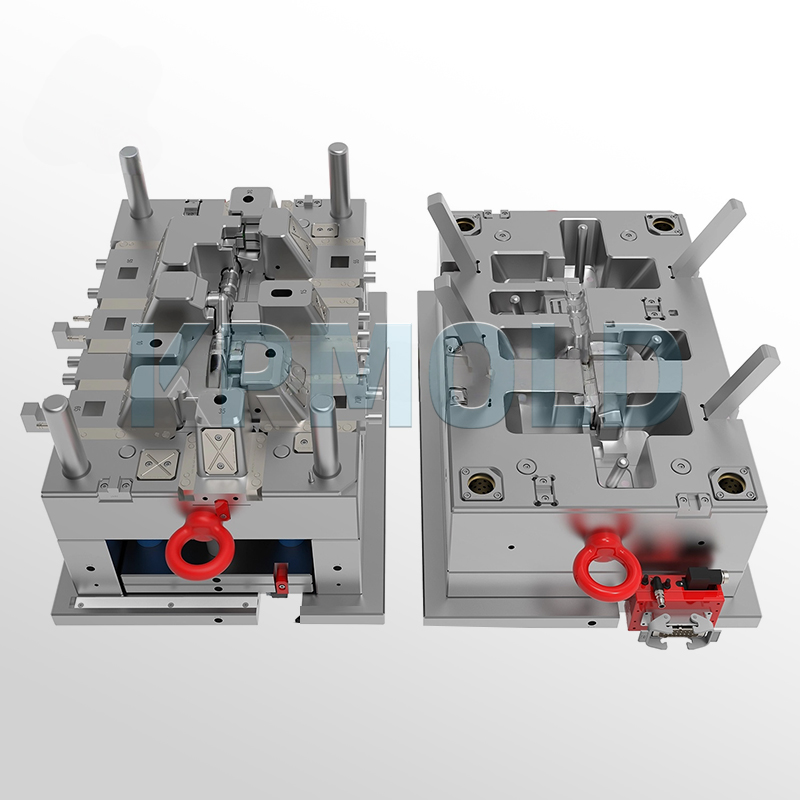
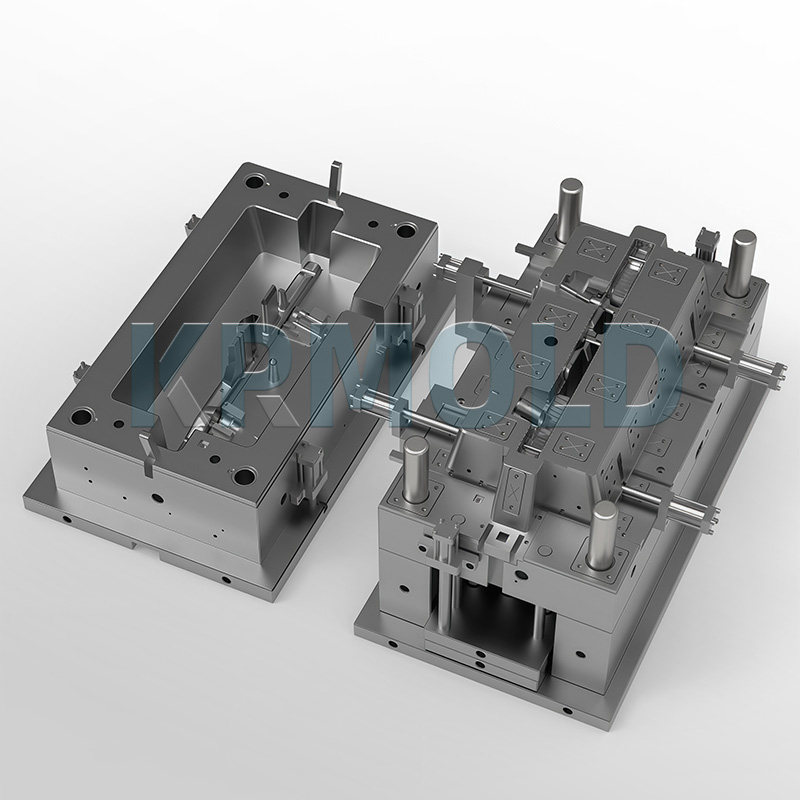
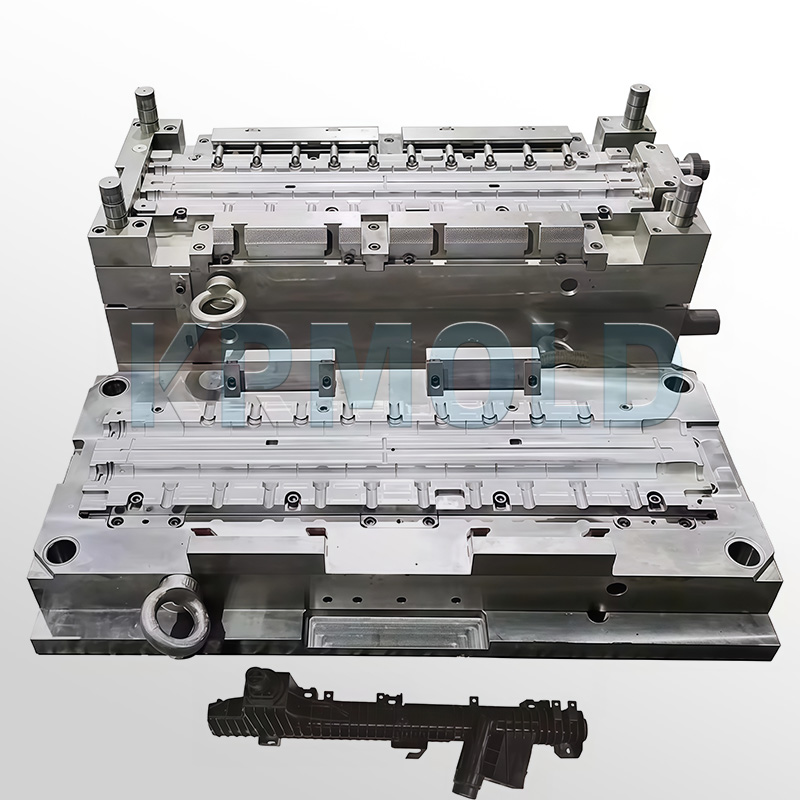
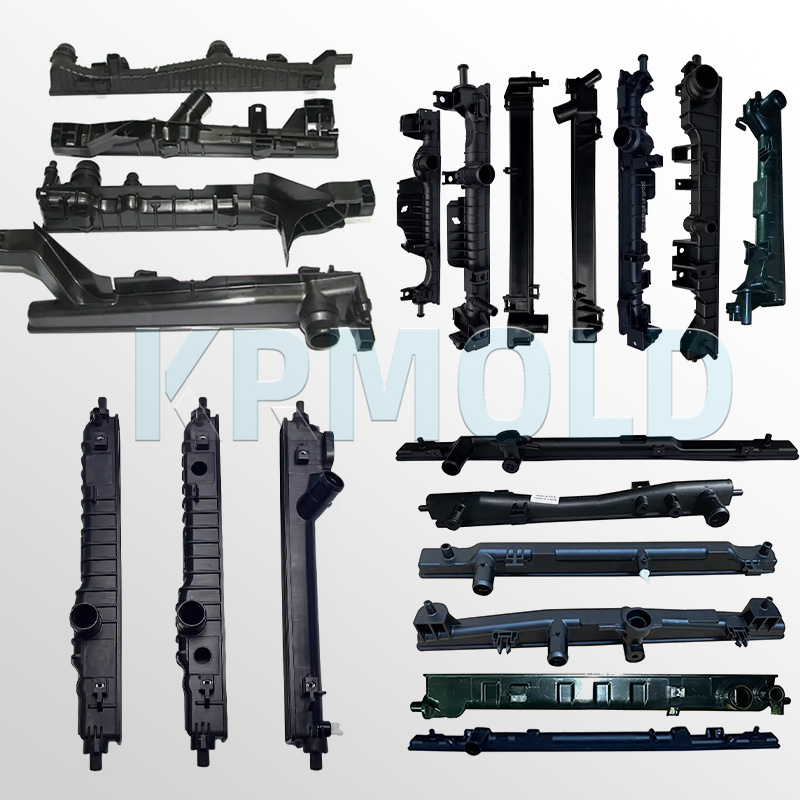
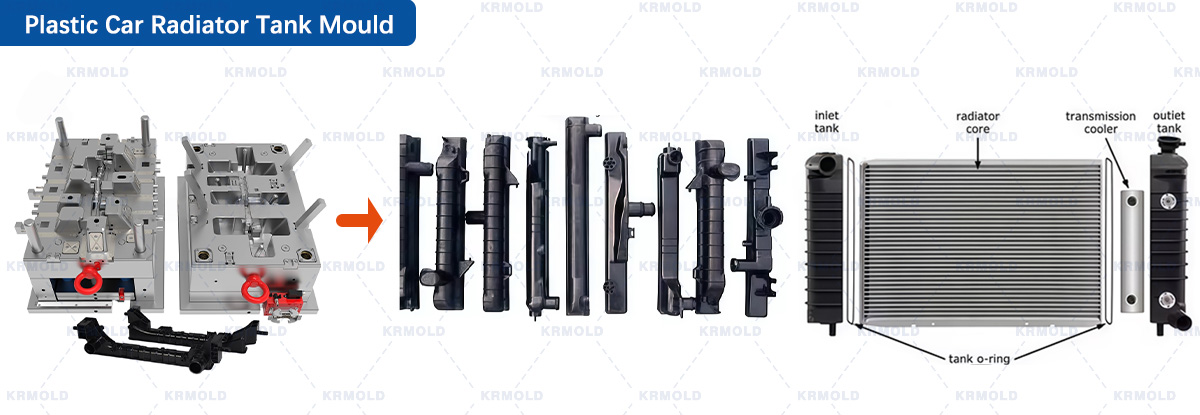
Auto radiator tank injection molds are made especially for the mass manufacture of automotive radiator tanks; therefore, the automotive radiator tank injection mold's manufacturing lead time directly affects the rate of automotive manufacturing and market introduction plans. Several variables affect this lead time, including auto radiator tank injection mold intricacy, material selection, and manufacturing methods, and it varies greatly among many kinds of automotive radiator tank injection molds. The timelines for simple, moderately complex, and large or complex auto radiator tank injection molds differ distinctly, ranging from as short as 4–6 weeks to as long as 16–20 weeks, or even longer.
Specific Auto Radiator Tank Injection Mold Manufacturing Lead Times
Mostly classified by complexity, physical size, and precision demands, the manufacturing lead time for automotive radiator tank injection molds is mostly based on auto radiator tank injection molds can be divided primarily into three broad groups:
1)Simple Automotive Radiator Tank Injection Molds
If a plastic product features a simple structure, small dimensions, low precision requirements, and lacks complex mold mechanisms, the manufacturing lead time for the auto radiator tank injection mold is relatively short. These types of automotive radiator tank injection molds utilize standard mold bases and conventional processes, requiring no complex design iterations or debugging; the typical lead time is 6–8 weeks. Examples include molds for small plastic housings or standard bottle caps, which possess unitary structures and simple cavities, and do not require special features such as side-core pulling mechanisms or hot runner systems. The lead time can be reduced to 4–6 weeks using quick design and machining, therefore satisfying corporate need for small-batch production and quick delivery. During processing, the main priority is making sure the fundamental dimensional correctness is maintained and defects like flashing or material leakage are avoided.
2)Moderately Complex Automotive Radiator Tank Injection Molds
Moderately complex auto radiator tank injection molds involve multiple parting lines, side-core pulling mechanisms, complex cavity geometries, or higher precision requirements; the typical lead time is generally 12–15 weeks. These plastic injection molds are commonly used for products such as automotive interior components or mobile phone mid-frames. The difficulty level of design and machining is elevated, necessitating precise planning of parting lines and core-pulling strokes, the application of precision machining processes, and multiple rounds of auto radiator tank injection mold trials and adjustments to resolve issues such as poor fit or dimensional deviations. Consequently, the lead time is significantly longer compared to that of simple automotive radiator tank injection molds.
3)Complex or Large Auto Radiator Tank Injection Molds
For automotive radiator tank injection molds designed for large structural components, the manufacturing lead time can extend to 16–20 weeks or even longer. This category of auto radiator tank injection molds is characterized by its massive size and intricate structure, demanding exceptionally high levels of precision and performance. Such automotive radiator tank injection molds necessitate complex designs for hot runner systems and conformal cooling channels; furthermore, the mold bases often require custom fabrication, and core components must undergo multiple stages of heat treatment. The auto radiator tank injection mold trial and validation process is rigorous—frequently involving multiple rounds of testing and modification—thereby imposing stringent demands on the technical expertise and production capacity of the automotive radiator tank injection mold manufacturing facility.
Factors Influencing Auto Radiator Tank Injection Mold Manufacturing Lead Time
1)Automotive Radiator Tank Injection Mold Complexity
This is the primary influencing factor: First, the more complex the geometry of the plastic part (featuring multiple curved surfaces, deep cavities, fine textures, etc.), the greater the difficulty involved in designing and machining the mold cavities. This necessitates more time for 3D modeling and process planning, thereby extending the lead time. Second, a greater number of parting lines elevates the demands for both manufacturing accuracy and assembly precision. This frequently calls for multiple changes to guarantee correct clearances, therefore lengthening the lead time. Third, the inclusion of specialized structural components—such as hot runner systems or sliders—adds to the whole lead time by necessitating extra time for designing, manufacturing, and debugging.
2)Auto Radiator Tank Injection Mold Materials
Different mold materials (e.g., standard steel, stainless steel, alloy steel) present varying levels of machining difficulty and distinct requirements for heat treatment. Standard steels are relatively easy to machine and involve shorter heat treatment cycles; they are well-suited for simple automotive radiator tank injection molds, which helps to shorten the overall lead time. Conversely, high-performance materials—such as alloy steels or beryllium copper—can significantly enhance the auto radiator tank injection mold's lifespan and precision, making them ideal for complex automotive radiator tank injection molds. However, these materials are more difficult to machine and require more intricate heat treatment processes, which inevitably extends the manufacturing duration.
3)Number of Auto Radiator Tank Injection Mold Cavities
The number of cavities is determined by the client's order volume; generally, the higher the number of cavities, the longer the lead time for the auto radiator tank injection mold. A single-cavity mold features a relatively simple structure, with core machining typically requiring 10 to 15 days. Conversely, a multi-cavity automotive radiator tank injection mold necessitates the machining of several different cavities—all while guaranteeing dimensional consistency and equal material flow. As a result, the time needed for machining, assembly, and debugging grows considerably, sometimes taking 20 to 30 days or even longer; As the number of cavities grows, so too does this difference.
4)Design and Review Process
The design phase of the auto radiator tank injection mold serves as the foundational prerequisite; it involves creating 3D models and defining manufacturing processes based on the product's specific requirements. After the first design, technical evaluation is required. The project can move quickly to the machining stage if the design passes the first time. But should the design call for many modifications and the next review procedure prove time-consuming, it will greatly increase the whole lead time for the automotive radiator tank injection mold.
5)Material Procurement
The manufacturing of an auto radiator tank injection mold necessitates the procurement of various materials and components—including steel stock, standard parts, and hot runner assemblies. The lead time for these procurement activities is subject to fluctuations in market supply and availability. Ample material supply and timely delivery are essential for maintaining project schedules; conversely, delays in the arrival of specialized steels or custom-made components can bring production to a standstill. This is particularly critical for complex automotive radiator tank injection molds, where delays in core materials can extend the overall lead time by one to two weeks.
6)Auto Radiator Tank Injection Mold Trials and Modifications
Upon completion, automotive radiator tank injection molds must undergo trial runs for verification. If issues such as dimensional deviations or incomplete filling occur, the auto radiator tank injection mold requires modification—or in severe cases, complete rework. The longer the overall lead time becomes; intricate automotive radiator tank injection molds may need three to four trial runs, adding an extra one to three weeks to the schedule. The more complex the necessary changes, the longer the lead time.
7)Production Resources and Scheduling
The plastic injection mold manufacturer's equipment, personnel allocation, and production scheduling significantly impact the lead time. With sufficient equipment and a well-allocated workforce, processing can proceed rapidly. However, if the facility simultaneously undertakes multiple automotive radiator tank injection mold projects, equipment and personnel resources may become backlogged, resulting in longer processing wait times and an extended overall project duration.
How to Shorten the Manufacturing Lead Time for Auto Radiator Tank Injection Molds?
1)Auto Radiator Tank Injection Mold Design Optimization
Implement hot runner technology to reduce the processing and cleanup time associated with cold runners, thereby minimizing the need for automotive radiator tank injection moldtrials and modifications. Optimize the cooling system by designing efficient water channels to enhance the auto radiator tank injection mold's cooling efficiency, which helps reduce product deformation and the need for subsequent mold adjustments. Simplify the automotive radiator tank injection mold structure by minimizing unnecessary parting lines and sliders to reduce design and processing complexity. Finally, optimize mirror polishing and ejection mechanisms to boost efficiency and prevent delays caused by rework.
2)Manufacturing Process Optimization
Precisely fine-tune processing parameters—such as those for milling and Electrical Discharge Machining —to enhance precision and efficiency, thereby reducing the need for auto radiator tank injection mold modifications caused by machining errors. Optimize heat treatment temperature parameters to improve plasticization efficiency and shorten the heat treatment cycle, while simultaneously ensuring the automotive radiator tank injection mold maintains the required hardness and wear resistance.
3)Equipment Selection and Upgrades
Select high-speed, precision machining equipment to accelerate the processing of core auto radiator tank injection mold components while maintaining high accuracy. Introduce automation technologies—such as automated polishing machines and assembly lines—to replace manual labor, thereby boosting efficiency, minimizing errors, and shortening the overall processing and assembly time.
4)Production Management Optimization
Implement Quick Mold Change methodologies to streamline the automotive radiator tank injection mold installation and commissioning processes, thereby maximizing equipment utilization rates. Strengthen production planning and material management by allocating resources effectively and coordinating proactively with suppliers to ensure the timely arrival of materials, thereby preventing shortages and avoiding scheduling disruptions. In summary, the production cycle for auto radiator tank injection molds typically ranges from 4–6 weeks to 16–20 weeks. Companies can select the appropriate automotive radiator tank injection mold type based on their specific product requirements; furthermore, by optimizing design, manufacturing processes, equipment, and management—while strictly maintaining quality standards—they can minimize lead times and enhance their overall competitiveness.