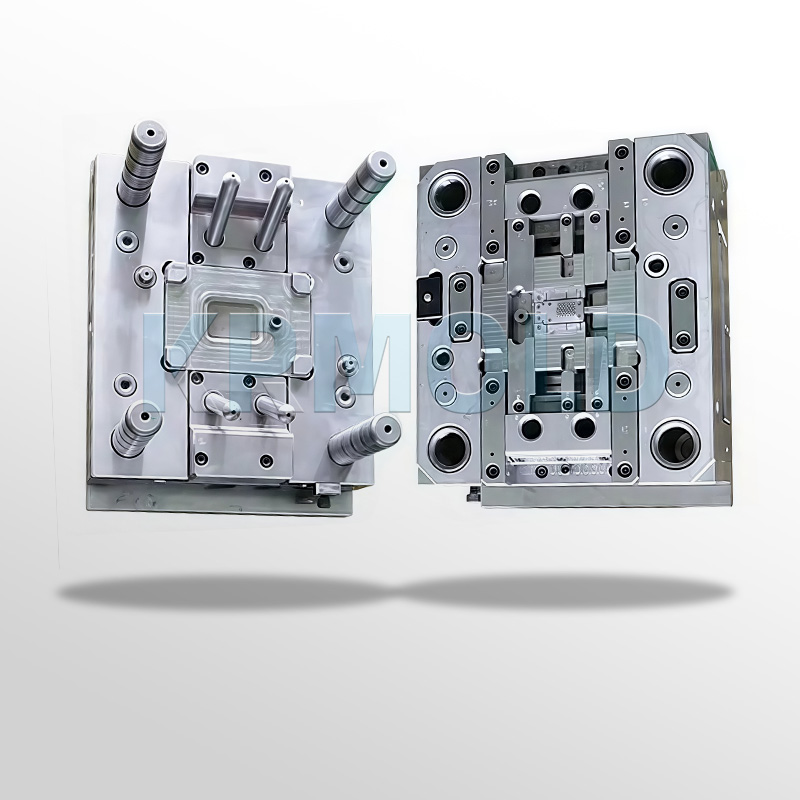
KRMOLD plastic chair injection molds can produce traditional and customized chair styles for a wide range of indoor and outdoor applications.
In the manufacturing process of plastic chair injection mould, KRMOLD pays close attention to the cycle time, parting line, wall thickness, and venting.
Automotive instrument panel molds determines the quality of the auto instrument panel. Automotive instrument panels produced using high-quality auto instrument panel injection molds combine safety, functionality, comfort, and aesthetic appeal, and are widely utilized across various automotive manufacturing scenarios.
Pipe elbow mould are designed for high-volume production of 90° or 180° pipe elbows. These PVC elbow pipe injection molds are widely used in piping systems across multiple fields.
Syringe plunger injection molds play a crucial role in the medical industry, widely used in the production of high-performance, high-quality syringe components. The overall performance of the medical syringe depends on the accuracy of the shape and measurements of the syringe plunger, which is a critical component of the syringe. Specializing in the research and development and production of disposable syringe plunger molds, KRMOLD seeks to give clients steady and dependable manufacturing solutions meeting industry requirements.
The car air conditioner vents produced by car air conditioner vent injection molds are essential components for any vehicle, providing efficient cooling and ventilation inside the cabin. These vents are made from high-quality materials and feature a sophisticated design, perfectly fitting any standard automotive air conditioning system, ensuring optimal performance and long-lasting durability.
Plastic car radiator tank mould are specifically designed to produce radiator water tanks, with their internal design deeply considering the characteristics of automotive radiators.
KRMOLD injection mold for steering wheel offer customers the best solutions. Whether it's complex geometry, multi-material compatibility, high-precision manufacturing, or long lifespan, these car steering wheel injection molds can meet diverse customer needs.
Automotive fan radiator mould enable the mass production of high-quality fans installed in automobiles. KRMOLD provides high-quality car radiator fan shroud mould due to its extremely stringent requirements for mold materials and processing.
What are Key Components of Plastic Plug Socket Injection Mold?
2026-05-13
The plastic plug socket injection mold, as the core equipment for large-scale, high-precision production of plastic plug sockets, bears the important mission of transforming molten plastic into molded parts that meet standards. The electric socket plastic part injection mould has a complex and precise structure, with each component having its unique function, working in tandem and being indispensable. It mainly consists of a mold base, molding system, gating system, cooling and temperature control system, venting system, guiding system, ejection system, and auxiliary parts and systems. The following will provide a detailed description of each key component.
1.Mold Base Structure
The mold base is the foundation for the stable operation of the entire plastic plug socket injection mold, directly determining the structural strength and operational reliability of the electric socket plastic part injection mould. It is assembled from various high-precision steel plates and functional components. Core components include clamping plates, A-plate, B-plate, C-plate (spacer block), rear clamping plate, ejection fixing plate, and ejection plate, etc. All components are precisely connected by bolts to form a robust integrated structure.
In the operation of a plastic plug socket injection mold, the core function of the mold base is reflected in two aspects: fixing key molding components such as the mold cavity and core, and achieving precise docking with the injection molding machine.
2.Molding System
The molding system directly determines the shape, dimensional accuracy, surface quality, and internal structure of the plastic plug socket parts. Due to the diverse structures of plastic plug sockets, ranging from complex outer contours to internal details such as holes, grooves, and threads, the molding system must be precisely matched according to the product design. Its main components include the core, cavity, threaded core/ring, and inserts.
For plastic plug sockets with threaded structures, the plastic plug socket injection mold requires threaded cores/rings to mold the internal and external threads of the plastic part. Threaded cores/rings typically employ a rotatable structure, detaching after molding by rotation to ensure the integrity and accuracy of the thread structure and prevent defects such as stripped threads and deformation. Inserts are mainly used in areas of the electric socket plastic part injection mould that are difficult to machine as a whole or are prone to wear.
3. Gating System
The gating system is the crucial channel in a plastic plug socket injection mold responsible for introducing molten plastic from the injection machine nozzle into the mold cavity. Its main components include the main runner, branch runners, gate, and cold slug well.
The main runner directly connects the injection machine nozzle to the branch runners or cavities. To facilitate molten plastic flow and demolding, the main runner is typically designed as a cone, with a taper controlled between 2° and 4°. A sprue bushing must be installed at its inlet to ensure a tight fit with the injection machine nozzle and prevent molten plastic leakage. The branch runners are responsible for evenly distributing the molten plastic from the main runner to each cavity. Common branch runner cross-sectional shapes include circular and trapezoidal, with the circular cross-section offering the lowest flow resistance, making it suitable for high-precision electric socket plastic part injection mould designs.
The gate is a small channel connecting the branch runners to the cavities. Its size, location, and form directly control the flow rate and volume of the molten plastic, significantly impacting the quality of the molded part. Due to the structural characteristics of plastic plug sockets, the gate is usually located on a non-visible surface or in a thicker area of the part to avoid affecting its appearance and ensure smooth filling of the molten plastic. The cold slug well is located at the end of the main runner or at a corner of the branch runner to store the cold slug head at the start of injection.
4.Cooling and Temperature Control System
In the injection molding process of plastic plug sockets, mold temperature control is crucial, directly affecting the cooling and solidification rate of the molten plastic, the crystallinity of the part, internal stress, and the molding cycle. The cooling and temperature control system controls the mold temperature to meet the injection molding process requirements, ensuring rapid and uniform cooling of the part, improving product quality and production efficiency.
In electric socket plastic part injection mould, the cooling system is the most commonly used temperature control method. It typically involves designing reasonable cooling water channels inside the plastic plug socket injection mold to use circulating cooling water to remove the heat absorbed by the mold during injection molding.
In addition to cooling, the temperature control system can also heat the electric socket plastic part injection mould according to the injection molding process requirements.
5. Venting System
The venting system removes air and gases generated by molten plastic from the mold cavity, ensuring the quality of the molded part. The venting system of a plastic plug socket injection mold typically uses a slotted vent design, located at the end of the cavity, at weld lines, and at the gap between the core and the cavity. For complex areas where venting is difficult, auxiliary venting components such as venting pins and venting inserts can be added to the electric socket plastic part injection mould to further improve venting efficiency.
6. Guiding System
The guiding system of the plastic plug socket injection mold ensures stable and precise mold operation. The core components of the guiding system include guide pillars and guide bushings, typically symmetrically arranged at the four corners or edges of the electric socket plastic part injection mould. The guide pillars are fixed to the moving or fixed mold, while the guide bushings are correspondingly mounted on another mold plate. A high-precision clearance fit ensures that the guide pillars smoothly insert into the guide bushings during mold closing, achieving precise positioning of the moving and fixed molds. The guide pillars require quenching and polishing to achieve sufficient hardness and smoothness, reducing frictional wear with the guide bushings. The guide bushings are typically made of wear-resistant materials to extend the service life of the guiding system.
In addition to guide pillars and guide bushings, the guiding system can be further enhanced with auxiliary positioning components such as positioning pins and conical positioning surfaces, depending on the complexity of the plastic plug socket injection mold, to improve positioning accuracy.
7. Ejection System
The ejection system of the electric socket plastic part injection mould mainly consists of ejector pins, ejector plates, guide rods, and return springs. These components work together to achieve smooth demolding of the plastic part. The ejector pins are the core actuators of the ejection system. Based on the structural characteristics of plastic plug sockets, they are evenly distributed at stress-balanced positions on the plastic part (such as below ribs and bosses) to prevent uneven stress and deformation during demolding. The ejector plate fixes the ejector pins, while the guide rods guide the movement of the ejector plate, ensuring smooth and precise ejector pin movement and preventing bending or misalignment.
8. Auxiliary Components and Systems
Plastic plug socket injection mold requires a series of auxiliary components and systems to achieve stable and efficient injection molding production.
Auxiliary components are diverse, mainly including locating rings, sprue bushings, gripping pins, support pillars, ejector plate guide pillars and bushings, and waste pins. Auxiliary systems mainly include mold heating, cooling, venting, and dead-angle handling mechanisms, working in conjunction with the core system to further optimize the injection molding effect of the electric socket plastic part injection mould.
In summary, the various components of the plastic plug socket injection mold work together to achieve precise molding and efficient production of plastic products.
For more detailed information about electric socket plastic part injection mould, please feel free to contact KRMOLD. We will provide you with professional solutions and attentive service.