KRMOLD plastic chair injection molds can produce traditional and customized chair styles for a wide range of indoor and outdoor applications.
In the manufacturing process of plastic chair injection mould, KRMOLD pays close attention to the cycle time, parting line, wall thickness, and venting.
Automotive instrument panel molds determines the quality of the auto instrument panel. Automotive instrument panels produced using high-quality auto instrument panel injection molds combine safety, functionality, comfort, and aesthetic appeal, and are widely utilized across various automotive manufacturing scenarios.
Pipe elbow mould are designed for high-volume production of 90° or 180° pipe elbows. These PVC elbow pipe injection molds are widely used in piping systems across multiple fields.
Syringe plunger injection molds play a crucial role in the medical industry, widely used in the production of high-performance, high-quality syringe components. The overall performance of the medical syringe depends on the accuracy of the shape and measurements of the syringe plunger, which is a critical component of the syringe. Specializing in the research and development and production of disposable syringe plunger molds, KRMOLD seeks to give clients steady and dependable manufacturing solutions meeting industry requirements.
The car air conditioner vents produced by car air conditioner vent injection molds are essential components for any vehicle, providing efficient cooling and ventilation inside the cabin. These vents are made from high-quality materials and feature a sophisticated design, perfectly fitting any standard automotive air conditioning system, ensuring optimal performance and long-lasting durability.
Plastic car radiator tank mould are specifically designed to produce radiator water tanks, with their internal design deeply considering the characteristics of automotive radiators.
KRMOLD injection mold for steering wheel offer customers the best solutions. Whether it's complex geometry, multi-material compatibility, high-precision manufacturing, or long lifespan, these car steering wheel injection molds can meet diverse customer needs.
Automotive fan radiator mould enable the mass production of high-quality fans installed in automobiles. KRMOLD provides high-quality car radiator fan shroud mould due to its extremely stringent requirements for mold materials and processing.
Plastic Pallet Injection Mold: What Is It and How to Use It?
2026-05-17
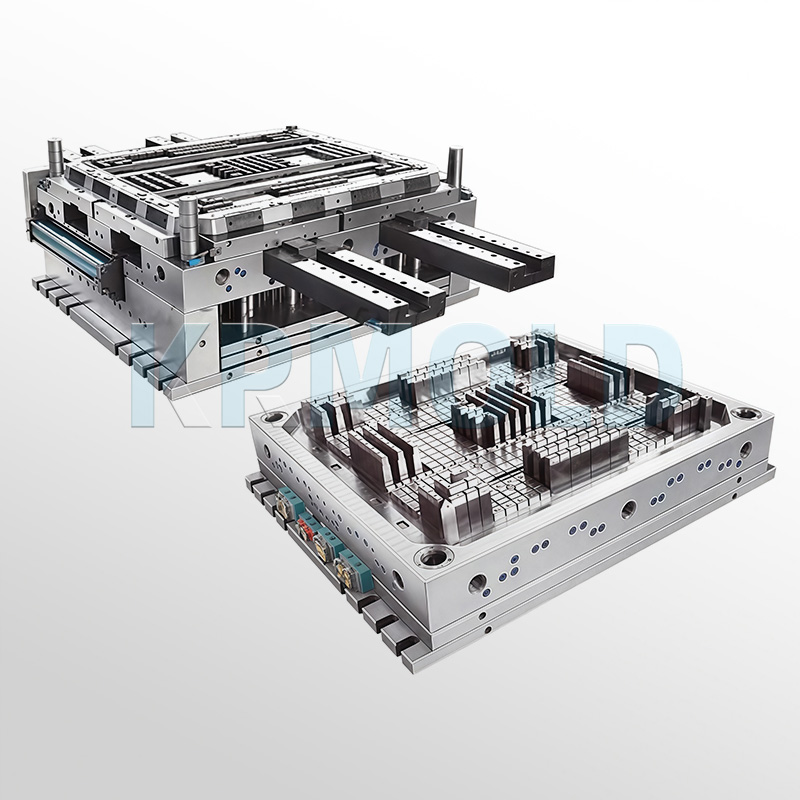
Plastic pallet injection molds can mass-produce industry-standard plastic pallets, widely used in many core industries such as warehousing, logistics, food, chemicals, and e-commerce. However, the quality of the pallet depends on the design, material, and processing precision of the plastic pallet injection mould.
KRMOLD, as a professional manufacturer and supplier of customized plastic pallet injection molds, has many years of experience in mold design, manufacturing, and service. This article will provide a detailed explanation of the core questions regarding plastic pallet injection mould.
What is an Plastic Pallet Injection Mold?
The main benefit of plastic pallet injection mould is their capacity to create a whole plastic pallet in a single piece, therefore negating the requirement for subsequent splicing. This greatly enhances production efficiency while guaranteeing the integrity and structural stability of the pallet.
The primary components of plastic pallet injection mould are cavity/core, hot runner/cold runner system, cooling water system, and ejection system. Directly determining the finished form, size, and surface features of the plastic pallet is the cavity/core. The hot runner/cold runner system guarantees that the molten plastic substance is gently and uniformly delivered into the cavity, therefore guaranteeing that the plastic fills every nook. The rational design of the cooling water channels directly controls the injection cycle duration and the level of plastic pallet distortion. Smoothly and undamagedly ejecting the plastic pallet from the plastic pallet injection mould after cooling and solidification is handled by the ejection system, therefore guaranteeing the pallet's look stays intact.
Common materials for plastic pallet injection molds:
P20/718H: This type of steel requires no complex subsequent processing after smelting; its working hardness can be directly achieved through heat treatment, typically within the HRC 28-42 range. Furthermore, it has excellent machinability, is easy to cut and grind, and can be precisely machined into complex cavity/core structures, while possessing balanced wear resistance and toughness. Plastic pallet injection mould made from this material are mainly used to manufacture small to medium-sized plastic pallets, or plastic pallets with moderate structural complexity. H13: This type of steel exhibits excellent resistance to softening, thermal fatigue cracking, and high wear resistance at high temperatures. To achieve higher hardness, H13 steel requires quenching followed by multiple high-temperature tempering treatments. The final hardness typically stabilizes between HRC 45-52, far exceeding the hardness and wear resistance of P20/718H steel. Plastic pallet injection molds made from this material are commonly used to produce large plastic pallets, plastic pallets with complex blades, plastic pallets subjected to high clamping pressure, or for production environments requiring harsh thermal cycling.
How to Use Plastic Pallet Injection Mould?
1. Preparations Before Use
-First, start by properly cleaning and rust-preventing the plastic pallet injection mold. Clean the mold surface of any dust, oil, and leftover plastic. Check the mold surface for flaws like rust, scratches, or other damage. To stop rusting, apply rust inhibitor to important parts of the mold.
-Second, carefully inspect the water and electrical systems of the plastic pallet injection mould. Check that the electrical connections are sound and the water system is clear. This stops unequal cooling brought on by obstructions or disturbances to the regular operation of the mold caused by electrical problems.
-At last, make sure the injection molding machine is well suited to the plastic pallet injection mold. Particularly confirm that the mold's criteria correspond with the injection volume, mold capacity, and clamping force of the machine. In addition to drying the HDPE/PP plastic raw materials utilized in manufacture.
2 Standard Operation Steps
-Step 1: Mold Installation. Accurately install the plastic pallet injection mould onto the injection molding machine, adjust the mold position to ensure precise alignment, and then tighten the mold with bolts to prevent displacement during production.
-Step 2: Heating Operation. Adjust the injection molding machine barrel, nozzle, and plastic pallet injection according to the characteristics of the plastic raw material and mold requirements. The mold temperature is carefully controlled to ensure it reaches the set standard, preparing the mold for the molding of molten plastic.
-Step 3: Involves machine adjustment, including adjusting the injection pressure, holding pressure, injection speed, and cooling time of the injection molding machine. These parameters directly affect the molding quality of the plastic pallet and require repeated adjustments to achieve optimal performance.
-Step 4: After trial molding, a comprehensive inspection of the first plastic pallet is conducted, focusing on dimensional accuracy, the presence of deformation, missing material, flash, and other defects. If any problems are found, parameters or the mold are adjusted promptly.
-Step 5: During mass production, parameters must be kept stable, and the plastic pallets are regularly sampled for inspection to promptly identify and address any abnormalities.
-Step 6: shutdown. The injection moulding machine and the plastic pallet injection mould are cooled down once manufacturing is finished. The mold is then properly cleaned to get rid of any leftover plastic, a rust prevention spray is applied, and last but not least, the plastic pallet injection mold is sealed and stored correctly.
Main Types of Plastic Pallet Injection Molds
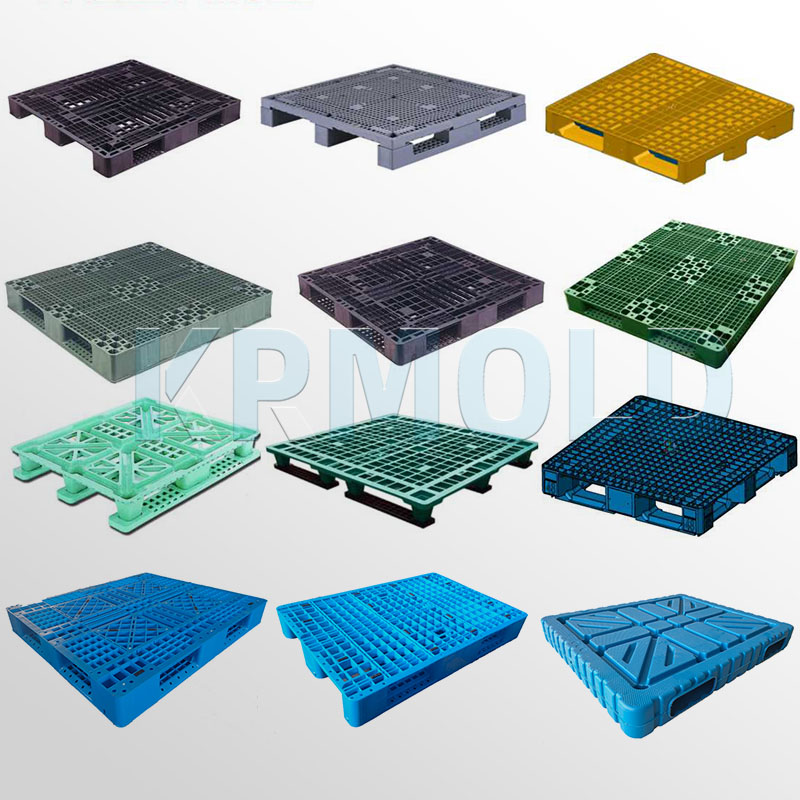
Different industries have different needs for plastic pallets, and the corresponding types of plastic pallet injection molds also vary. The KRMOLD team possesses professional design and manufacturing capabilities, enabling us to customize exclusive plastic pallet injection mould according to customers' actual needs, producing plastic pallets of different types and specifications to fully meet their personalized requirements. KRMOLD plastic pallet injection mold can primarily produce the following types of pallets: 9-foot pallets, hygienic plastic pallets, 3-runner pallets, 6-runner pallets, double-sided pallets, flat-surface 3-runner pallets, 9-foot blow-molded pallets, printing plastic pallets, and spill-control pallets. Each type of plastic pallet injection mould has a unique structural design to adapt to different pallet production needs.
Key Technical Specifications of Plastic Pallet Injection Molds
After each day's production, thoroughly clean the plastic pallet injection mold; check the mold's water channels for blockages, leaks, or other issues; lubricate the ejector pins to ensure smooth movement; and record any abnormalities.
2
Regular Maintenance
Every week or month, conduct a thorough inspection and maintenance of the plastic pallet injection mould. Tighten the screws on the mold to keep it from moving around as they loosen. Check the mold cavity, core, guide pillars, and other parts for wear and distortion. Clean the water channels of the mold well by getting rid of scale and other debris. Give the mold a full rust-prevention treatment, concentrating on any weak spots.
3
Long-Term Storage
If the plastic pallet injection mould will not be used for an extended period, perform a thorough cleaning to remove all residual plastic and debris, ensuring the mold is dry. Spray all mold components with rust inhibitor for comprehensive rust prevention. Seal the mold in its packaging and store it in a dry, well-ventilated environment free of corrosive gases.