KRMOLD plastic chair injection molds can produce traditional and customized chair styles for a wide range of indoor and outdoor applications.
In the manufacturing process of plastic chair injection mould, KRMOLD pays close attention to the cycle time, parting line, wall thickness, and venting.
Automotive instrument panel molds determines the quality of the auto instrument panel. Automotive instrument panels produced using high-quality auto instrument panel injection molds combine safety, functionality, comfort, and aesthetic appeal, and are widely utilized across various automotive manufacturing scenarios.
Pipe elbow mould are designed for high-volume production of 90° or 180° pipe elbows. These PVC elbow pipe injection molds are widely used in piping systems across multiple fields.
Syringe plunger injection molds play a crucial role in the medical industry, widely used in the production of high-performance, high-quality syringe components. The overall performance of the medical syringe depends on the accuracy of the shape and measurements of the syringe plunger, which is a critical component of the syringe. Specializing in the research and development and production of disposable syringe plunger molds, KRMOLD seeks to give clients steady and dependable manufacturing solutions meeting industry requirements.
The car air conditioner vents produced by car air conditioner vent injection molds are essential components for any vehicle, providing efficient cooling and ventilation inside the cabin. These vents are made from high-quality materials and feature a sophisticated design, perfectly fitting any standard automotive air conditioning system, ensuring optimal performance and long-lasting durability.
Plastic car radiator tank mould are specifically designed to produce radiator water tanks, with their internal design deeply considering the characteristics of automotive radiators.
KRMOLD injection mold for steering wheel offer customers the best solutions. Whether it's complex geometry, multi-material compatibility, high-precision manufacturing, or long lifespan, these car steering wheel injection molds can meet diverse customer needs.
Automotive fan radiator mould enable the mass production of high-quality fans installed in automobiles. KRMOLD provides high-quality car radiator fan shroud mould due to its extremely stringent requirements for mold materials and processing.
How to Make a Waste Bin Injection Mold?
2026-05-22
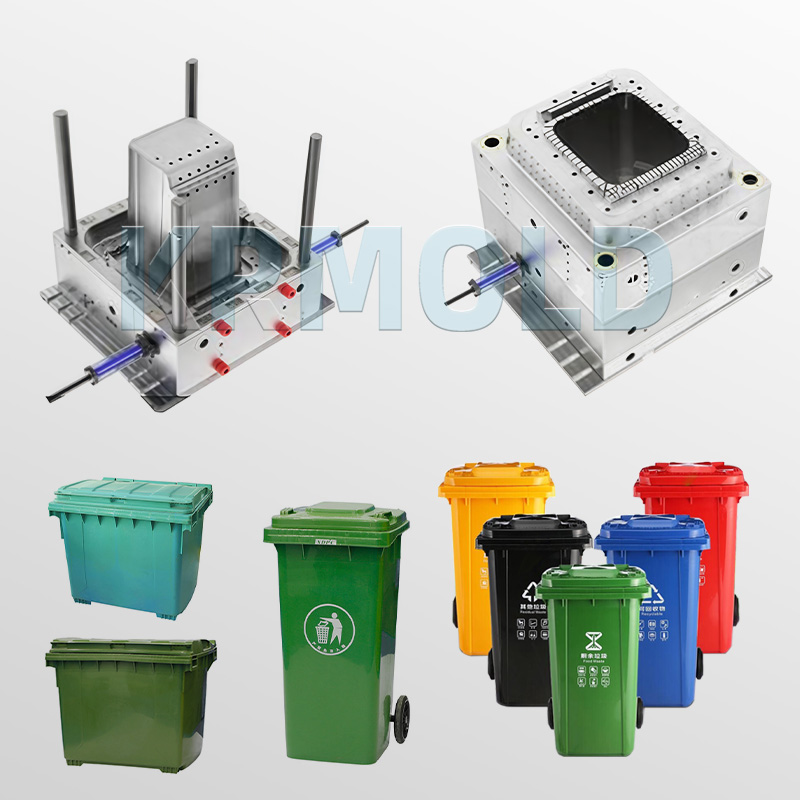
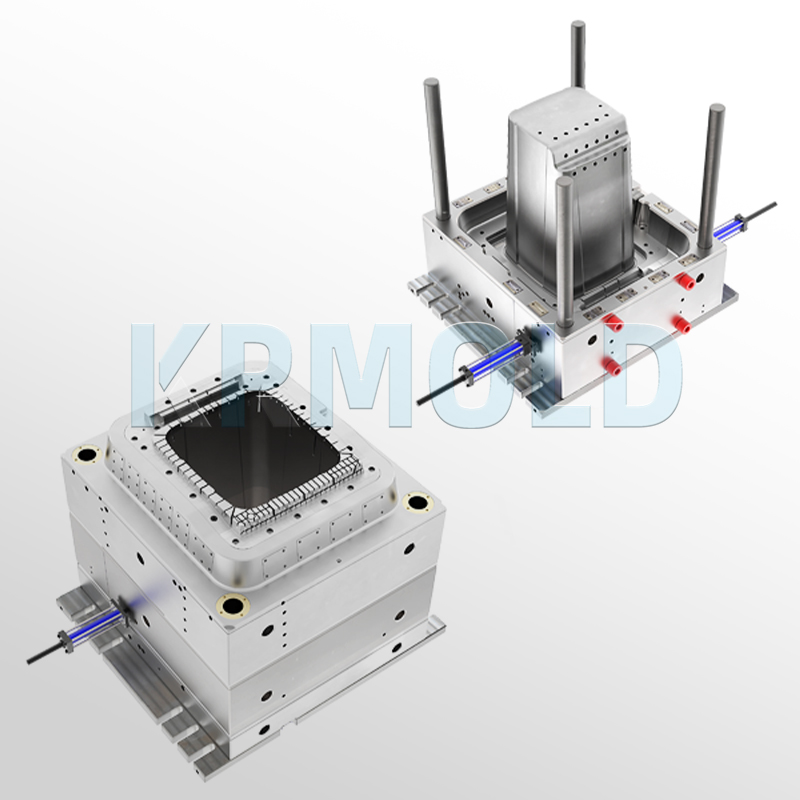
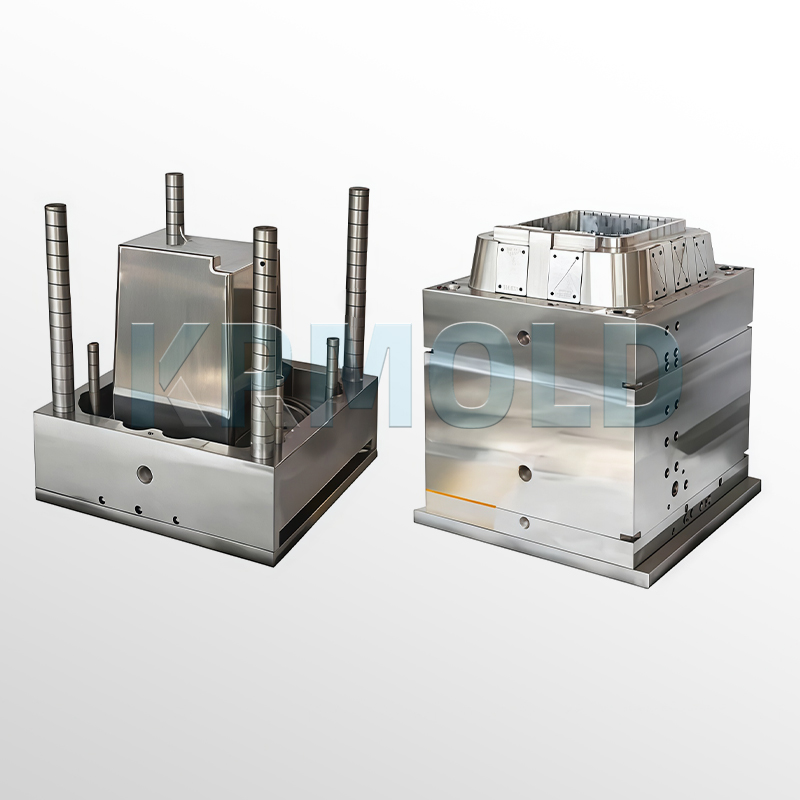
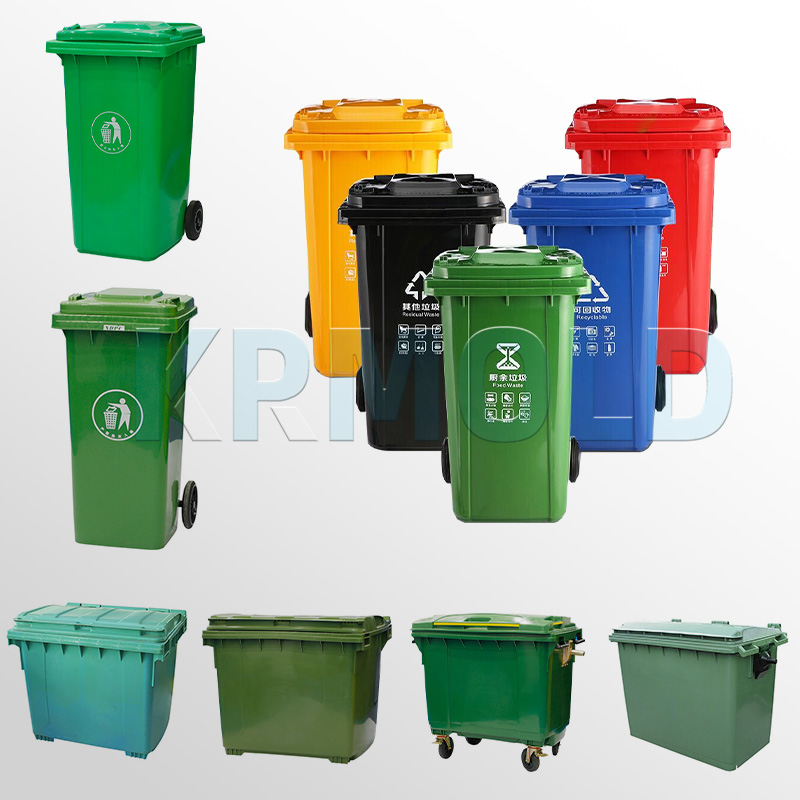
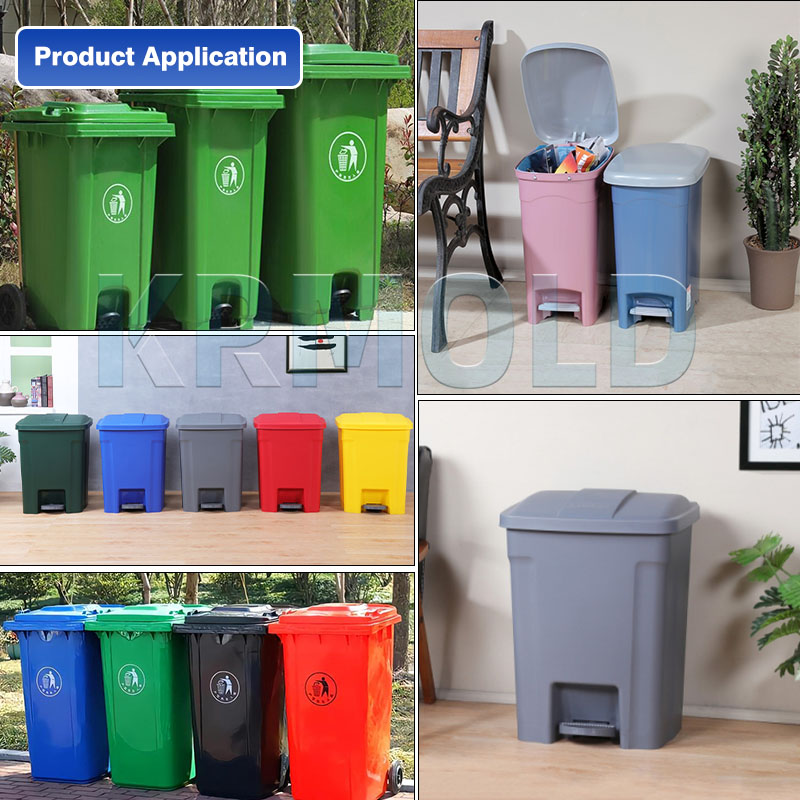
Waste bin injection molds are specifically designed for the mass production of plastic trash bins. They utilize injection molding to precisely shape molten plastic raw materials, producing functional plastic trash cans with complete structures, standard dimensions, and high durability.
The quality of the trash bin injection mold directly determines the appearance, structural strength, dimensional accuracy, and lifespan of the waste bin. For mold investors and plastic product manufacturers, a high-quality, highly stable waste bin injection mold is the core foundation for the large-scale mass production of high-quality recycling bins, household trash bins, and outdoor sanitation trash bins.
To produce plastic trash bins with a high pass rate and strong practicality, it is essential to strictly control the processing precision of the trash bin injection mold and the quality control throughout the entire production process. Based on years of experience in mold R&D and manufacturing, KRMOLD will provide a comprehensive explanation of the entire process of designing and manufacturing waste bin injection molds, offering professional reference for industry professionals.
Introduction to Trash Bin Injection Mold
The geometric design of waste bin injection molds is complex, with stringent dimensional tolerance standards, placing extremely high demands on molding stability and structural adaptability. The core challenge in designing trash bin injection molds lies in balancing three key elements: product aesthetics, functionality, and mold manufacturability.
Everyday plastic trash bins feature a unique design with smooth, flat inner walls, sharp, regular outer corners, load-bearing structures, and opening/closing mechanisms. This necessitates meticulous planning during the design phase of the waste bin injection mold, coupled with advanced injection molding technology to avoid molding defects. The smoothness of the inner wall directly affects the ease of cleaning, while the sharp outer corners ensure the product's neat appearance. The thickened load-bearing structures at the bottom and opening rely on the precise structural design of the trash bin injection mold.
When developing waste bin injection molds, KRMOLD professional design team considers the customer's usage scenarios and mass production needs, comprehensively taking into account core parameters such as the trash bin's load-bearing capacity, overall weight, structural toughness, and appearance. They optimize the layout of the mold cavity, core, and auxiliary structures to customize the most suitable trash bin injection mold design and product drawings for the customer.
Manufacturing Process of Waste Bin Injection Mold
(1) Demand Analysis and Design
First, the core specifications of the trash bin must be fully defined. Based on customer needs, the volume, overall shape, precise dimensions, and functional configuration of the trash bin are determined, including whether it should be equipped with a lid, casters, a foot-operated opening/closing device, and a classification label structure. Simultaneously, the surface finish, color uniformity, texture, and other appearance process requirements are clarified to provide a precise basis for the structural design of the trash bin injection mold.
After determining the product parameters, technicians use professional CAD design software to complete a full-dimensional 3D model of the waste bin injection mold. After modeling, professional mold flow analysis software is used to conduct simulated injection molding experiments, simulating the entire process of molten plastic filling, flowing, cooling, shrinking, and solidifying inside the trash bin injection mold. The flow channel layout, gate location, and cooling system structure of the waste bin injection mold are optimized based on the mold flow analysis results.
(2) Material Selection
Material selection needs to be comprehensively determined based on the production volume of the trash bin, dimensional accuracy requirements, usage scenarios, and customer budget. Commonly used high-quality steels in the industry for manufacturing trash bin injection molds include P20, 718, and 2738. These mold steels have moderate hardness, strong wear resistance, and excellent compressive strength. They also possess good machinability and polishing properties, making them suitable for the precision machining requirements of large waste bin injection molds. They can withstand the impact of high-temperature molten plastic and the wear of repeated mold opening and closing for extended periods.
(3) Mold Processing
First, rough machining is performed. Using a high-precision CNC machine tool, the molding mold steel is integrally cut to quickly remove excess material from the steel surface, initially shaping the basic outline and overall structure of the trash bin injection mold cavity, core, and mold base. After rough machining, the precision machining stage begins. Through precision milling, high-precision grinding, and EDM, key precision parts of the waste bin injection mold, such as the cavity wall, core surface, runner, gate, and corners, are refined. After precision machining, the waste bin injection mold undergoes professional heat treatment, including quenching and tempering.
(4) Mold Assembly
KRMOLD technicians, following the mold assembly drawings, precisely assemble all components, including the cavity, core, slider, ejector pins, guide pillars, locating pins, cooling system, and mold opening/closing mechanism.
After the entire assembly is completed, the garbage can injection mold trash bin injection mold undergoes comprehensive debugging and trial testing. After successful debugging, trial molding is conducted. Based on the condition of the finished trash bin produced from the trial molding, process parameters such as injection pressure, temperature, cooling time, and mold opening/closing speed are fine-tuned until the waste bin injection mold can stably produce finished products with compliant dimensions, good appearance, and qualified performance. This completes the mold assembly and debugging work.
(5) Quality Inspection
For the processed mold components, key indicators such as dimensional accuracy, surface finish, steel hardness, and structural flatness are inspected. For the assembled trash bin injection mold, a comprehensive inspection is conducted on assembly accuracy, mold opening and closing coordination, sealing performance, and the operational effectiveness of the cooling and heating systems.
Advantages of KRMOLD Waste Bin Injection Molds
1
Short Molding Cycle & High Mass Production Efficiency
KRMOLD optimizes the cooling pipe layout and strengthens local cooling structures for areas of the trash bin injection mold prone to high temperatures and heat accumulation, achieving balanced heat dissipation throughout the mold, significantly shortening product cooling and setting time, accelerating the waste bin injection mold opening and closing cycle, and effectively increasing product output per unit time.
2
Stable Operation & High-Quality Finished Products
The mold runner system is precisely optimized, with a scientifically and rationally designed gate layout, ensuring uniform and rapid filling of the mold cavity with molten plastic, reducing molding defects.
Simultaneously, the mold hot runner system is equipped with original German heating elements, providing precise temperature control and stable operation, maintaining uniform plastic melt temperature throughout the process, avoiding problems such as product color difference, insufficient filling, and deformation caused by temperature deviations, and significantly improving the finished product qualification rate.
3
Long Mold Service Life
KRMOLD maintains strict dimensional accuracy during the injection molding process for trash bins, ensuring extremely high precision in the overall assembly. Coupled with a scientifically designed clamping and guiding mechanism, the clamping force is balanced and the positioning is precise, completely eliminating issues such as uneven wall thickness.
Simultaneously, the mold steel is of superior quality, processed with exquisite techniques, and strengthened through a comprehensive heat treatment process. This results in a highly stable mold structure, wear-resistant and pressure-resistant, allowing for long-term, stable, high-volume injection molding operations, with a service life far exceeding industry standards.
4
Wide Mold Adaptability
This waste bin injection mold boasts high overall structural strength and balanced molding force, making it suitable for injection molding of low melt flow index plastics, with stable and controllable molding pressure.
Plastic trash bins produced using this waste bin injection mold have a uniform molecular structure and sufficient toughness, possessing advantages such as impact resistance, pressure resistance, aging resistance, and corrosion resistance. Suitable for various usage scenarios, including outdoor and indoor use, ensuring higher product quality.
Start Your Recycling Trash Bin Injection Molding Project Now!
If you need a high-quality trash bin injection mold, KRMOLD can provide you with excellent service. Please feel free to contact us anytime.