KRMOLD plastic chair injection molds can produce traditional and customized chair styles for a wide range of indoor and outdoor applications.
In the manufacturing process of plastic chair injection mould, KRMOLD pays close attention to the cycle time, parting line, wall thickness, and venting.
Automotive instrument panel molds determines the quality of the auto instrument panel. Automotive instrument panels produced using high-quality auto instrument panel injection molds combine safety, functionality, comfort, and aesthetic appeal, and are widely utilized across various automotive manufacturing scenarios.
Pipe elbow mould are designed for high-volume production of 90° or 180° pipe elbows. These PVC elbow pipe injection molds are widely used in piping systems across multiple fields.
Syringe plunger injection molds play a crucial role in the medical industry, widely used in the production of high-performance, high-quality syringe components. The overall performance of the medical syringe depends on the accuracy of the shape and measurements of the syringe plunger, which is a critical component of the syringe. Specializing in the research and development and production of disposable syringe plunger molds, KRMOLD seeks to give clients steady and dependable manufacturing solutions meeting industry requirements.
The car air conditioner vents produced by car air conditioner vent injection molds are essential components for any vehicle, providing efficient cooling and ventilation inside the cabin. These vents are made from high-quality materials and feature a sophisticated design, perfectly fitting any standard automotive air conditioning system, ensuring optimal performance and long-lasting durability.
Plastic car radiator tank mould are specifically designed to produce radiator water tanks, with their internal design deeply considering the characteristics of automotive radiators.
KRMOLD injection mold for steering wheel offer customers the best solutions. Whether it's complex geometry, multi-material compatibility, high-precision manufacturing, or long lifespan, these car steering wheel injection molds can meet diverse customer needs.
Automotive fan radiator mould enable the mass production of high-quality fans installed in automobiles. KRMOLD provides high-quality car radiator fan shroud mould due to its extremely stringent requirements for mold materials and processing.
Auto Rearview Mirror Injection Mold Design
2025-11-20
General Content
The Role of Automotive Rearview Mirrors
Key Elements of Auto Rearview Mirror Injection Mold Design
Quality Control for Auto Rearview Mirror Injection Mold
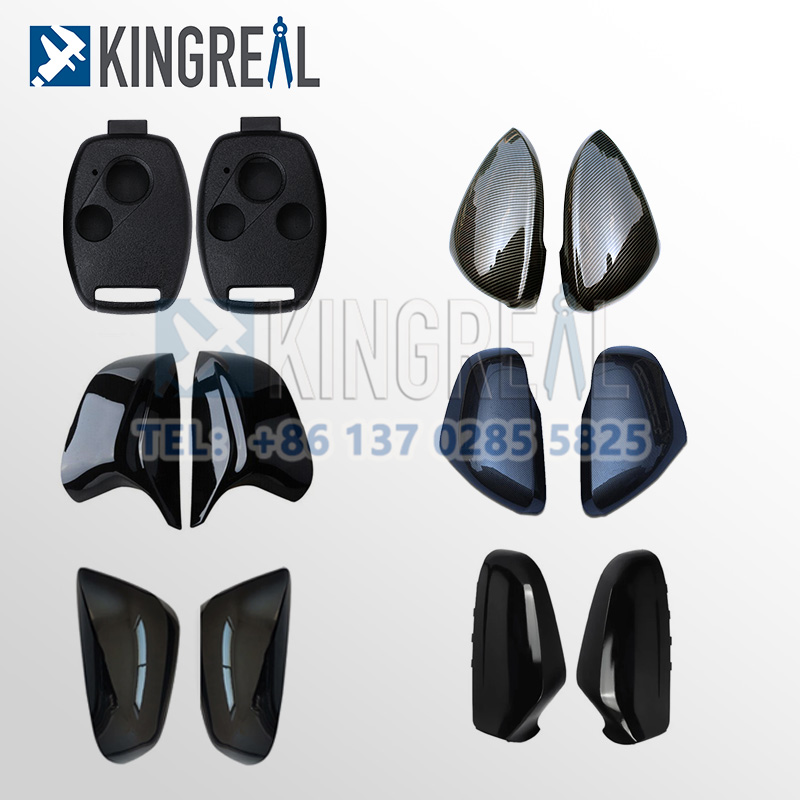
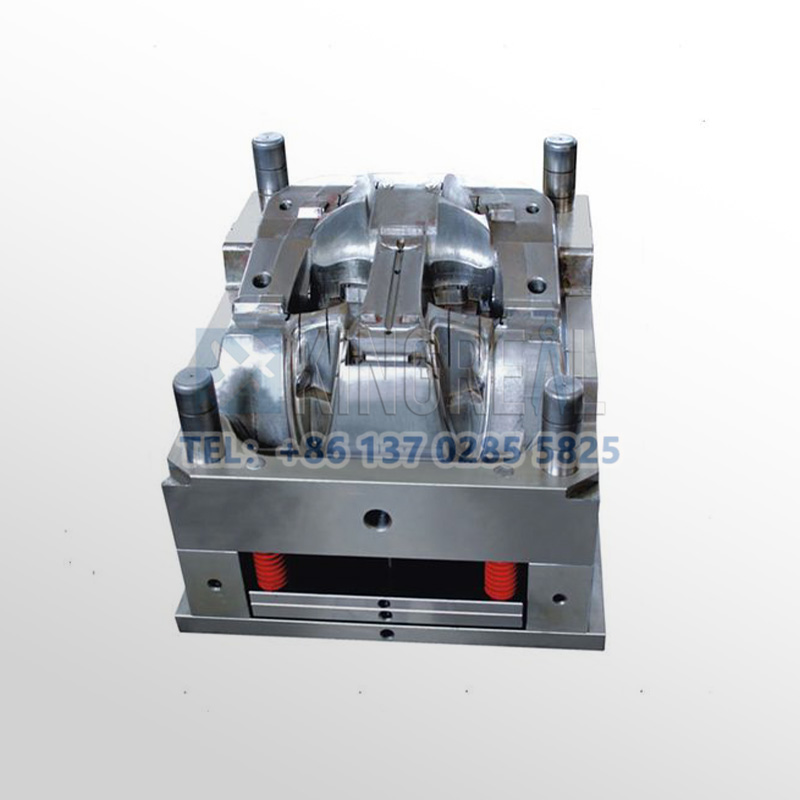
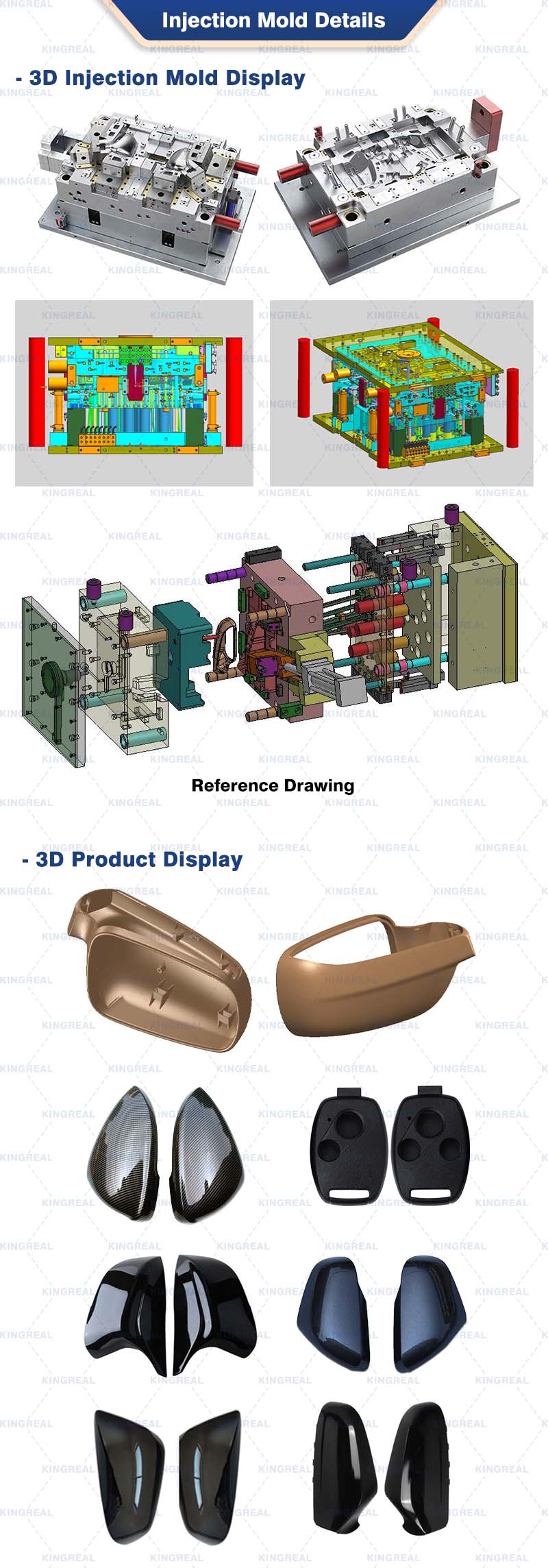
Auto rearview mirror injection molds are specialized equipment used for the mass production of high-precision rearview mirror housings, widely used in vehicles of various sizes and types. With the continuous development of the automotive industry, the demand for automotive rearview mirror housings is increasing daily. The high efficiency of automobile rearview mirror injection molds not only enables the rapid production of large quantities of qualified finished products, ensuring that the installation schedule is not affected by the lack of rearview mirrors during automobile manufacturing, but also provides various materials required for automotive design. Understanding the design process of auto rearview mirror injection molds is crucial for improving the efficiency and quality of automobile rearview mirror injection mold manufacturing.
1.The Role of Automotive Rearview Mirrors
Automotive rearview mirrors play an extremely important role in vehicles. They not only support the mirror lenses, ensuring they don't fall off during driving, but also enhance the vehicle's exterior design. Rearview mirrors are the driver's "third eye" for observing road conditions, affecting driving safety. As a core component, the rearview mirror housing not only needs good weather resistance and high-temperature resistance, but also needs to withstand the challenges of daily environments. As an externally visible part, its appearance design requirements are also very strict, often involving a comprehensive consideration of aesthetics and functionality.
2. Key Elements of Auto Rearview Mirror Injection Mold Design
2.1 Auto rearview mirror injection mold components
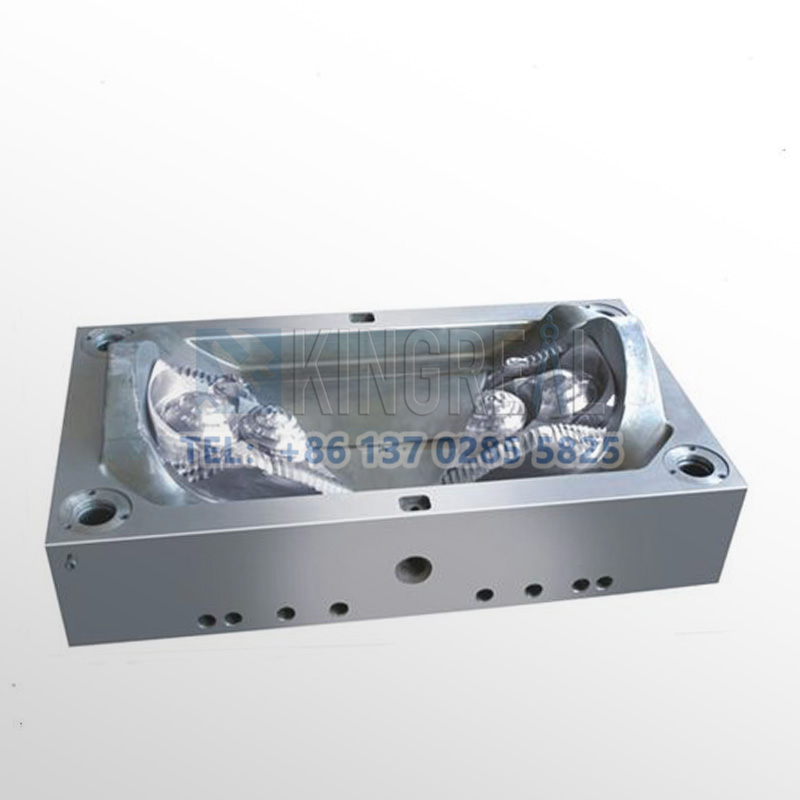
The parting surface of the automobile rearview mirror injection mold is a key factor affecting the molding quality and precision of the plastic part. Choosing a suitable parting surface during design not only ensures the molding quality of the plastic part but also simplifies the manufacturing and processing difficulty of the auto rearview mirror injection mold. Typically, placing the parting surface at the maximum cross-section of the plastic part effectively improves molding precision.
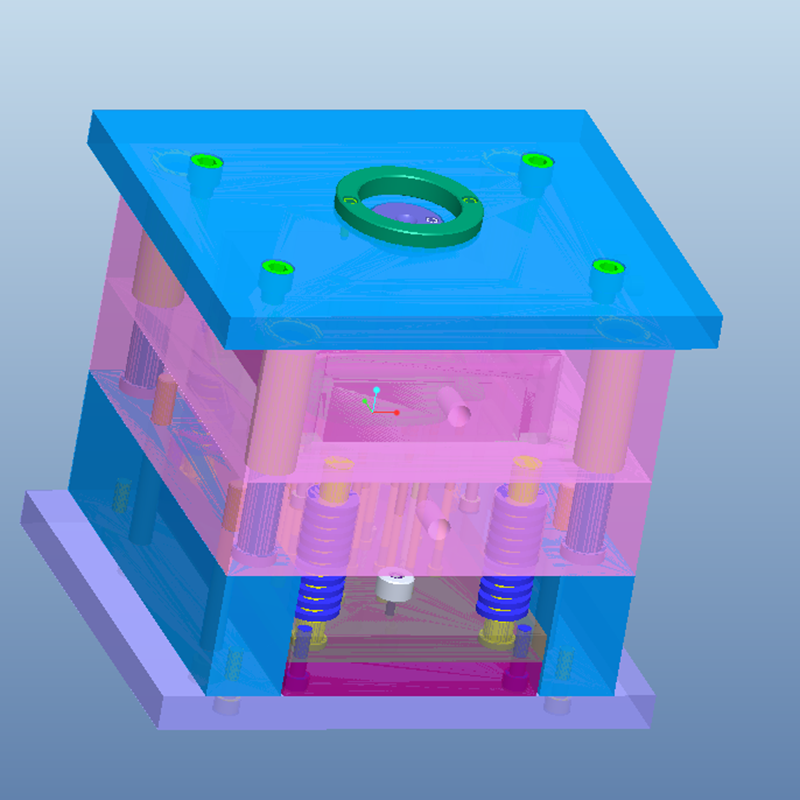
The automobile rearview mirror injection mold components mainly include the cavity and core. The auto rearview mirror injection mold adopts an embedded cavity and core structure, which has the advantages of convenient processing, high precision, and convenient subsequent maintenance. To ensure automobile rearview mirror injection mold strength and durability, P20 steel is generally selected as the material for the cavity and core. This material is not only wear-resistant but also withstands high temperatures.
2.2 Gating and cooling system design for auto rearview mirror injection mold
The gating system is another important part of automobile rearview mirror injection mold design, mainly including the main runner, branch runners, gate, and cold slug well. During design, the main runner is usually conical to facilitate material flow and slurry removal. Due to the good fluidity of ABS material, a side gate design is adopted to improve injection speed and reduce weld lines.
The cooling system is also crucial to the molding quality. During injection molding, the auto rearview mirror injection mold temperature directly affects the shrinkage, deformation, molding cycle, and surface quality of the plastic part. Therefore, four sets of straight-through cooling channels are designed in the fixed mold platen, while one set of circulating cooling channels is configured in the moving mold platen to ensure that the mold temperature can be reduced rapidly and evenly.
2.3 Angled ejector and demolding system design for auto rearview mirror injection mold
When designing an automobile rearview mirror injection mold, the ease of demolding must also be considered. Since the plastic part has 16 reinforcing ribs and clips in the vertical direction, simple ejection methods often cannot demold smoothly. Therefore, an angled ejector mechanism is designed. This mechanism consists of multiple angled ejectors, ejector pins, and angled ejector bases, which can effectively help the plastic part to be smoothly ejected from the auto rearview mirror injection mold.
During the demolding process, the ejector pin ejection mechanism must ensure uniform pushing force to avoid deformation or damage to the plastic part due to uneven forces during ejection. The reset structure uses a reset rod and spring for reset. The spring's rebound force ensures the structure returns to its original position after ejection, guaranteeing the automobile rearview mirror injection mold can quickly return to its ready state for the next injection molding.
2.4. Working principle of auto rearview mirror injection mold
The working process of an automobile rearview mirror injection mold can be summarized as follows: First, molten plastic enters the auto rearview mirror injection mold through the injection molding machine nozzle, passing through the main runner, branch runners, and gate, finally flowing into the cavity. Inside the cavity, the plastic material undergoes filling, pressure holding, and cooling to form the final automotive rearview mirror housing.
Subsequently, when the plastic part cools to a certain temperature, the automobile rearview mirror injection mold is opened. During auto rearview mirror injection mold opening, the injection molding machine's push rod fixing plate pushes the fixing plate, further pushing the ejector pin, while simultaneously pulling the core to push the plastic part out of the automobile rearview mirror injection mold. After the plastic part is removed, the ejection mechanism resets under the action of the reset rod and spring, and the guide sleeve, guide pillar, and push rod fixing plate return to their original positions, ready for the next injection molding.
3. Quality Control for Auto Rearview Mirror Injection Mold
In the design and manufacturing process of automobile rearview mirror injection molds, quality control is a crucial and indispensable aspect. To ensure that every part of the auto rearview mirror injection mold meets design requirements, strict control is typically exercised in the following areas:
3.1 Material selection for auto rearview mirror injection mold
The choice of materials for automobile rearview mirror injection molds is crucial. High-quality materials enhance the auto rearview mirror injection mold's durability and stability. Generally, high-quality steels such as P20 or H13 are preferred, as these materials perform excellently during high-temperature and high-pressure injection molding.
3.2 Precision machining for auto rearview mirror injection mold
Every component of the automobile rearview mirror injection mold must undergo precision machining to ensure a perfect fit and prevent gaps or looseness. Modern machining technologies such as CNC machine tools achieve high machining accuracy, making the overall mold structure more stable.
3.3 Functional testing for auto rearview mirror injection mold
After production, the mold undergoes functional testing to ensure that its various indicators meet design requirements. By simulating the injection and demolding processes, potential problems can be detected and adjustments made promptly.