KRMOLD plastic chair injection molds can produce traditional and customized chair styles for a wide range of indoor and outdoor applications.
In the manufacturing process of plastic chair injection mould, KRMOLD pays close attention to the cycle time, parting line, wall thickness, and venting.
Automotive instrument panel molds determines the quality of the auto instrument panel. Automotive instrument panels produced using high-quality auto instrument panel injection molds combine safety, functionality, comfort, and aesthetic appeal, and are widely utilized across various automotive manufacturing scenarios.
Pipe elbow mould are designed for high-volume production of 90° or 180° pipe elbows. These PVC elbow pipe injection molds are widely used in piping systems across multiple fields.
Syringe plunger injection molds play a crucial role in the medical industry, widely used in the production of high-performance, high-quality syringe components. The overall performance of the medical syringe depends on the accuracy of the shape and measurements of the syringe plunger, which is a critical component of the syringe. Specializing in the research and development and production of disposable syringe plunger molds, KRMOLD seeks to give clients steady and dependable manufacturing solutions meeting industry requirements.
The car air conditioner vents produced by car air conditioner vent injection molds are essential components for any vehicle, providing efficient cooling and ventilation inside the cabin. These vents are made from high-quality materials and feature a sophisticated design, perfectly fitting any standard automotive air conditioning system, ensuring optimal performance and long-lasting durability.
Plastic car radiator tank mould are specifically designed to produce radiator water tanks, with their internal design deeply considering the characteristics of automotive radiators.
KRMOLD injection mold for steering wheel offer customers the best solutions. Whether it's complex geometry, multi-material compatibility, high-precision manufacturing, or long lifespan, these car steering wheel injection molds can meet diverse customer needs.
Automotive fan radiator mould enable the mass production of high-quality fans installed in automobiles. KRMOLD provides high-quality car radiator fan shroud mould due to its extremely stringent requirements for mold materials and processing.
How To Make Reliable Plastic Auto Parts Sensor Mold?
2025-11-25
General Content
01/Process of Making Auto Sensor Parts Mold
02/Understanding Plastic Auto Parts Sensor Mold Components
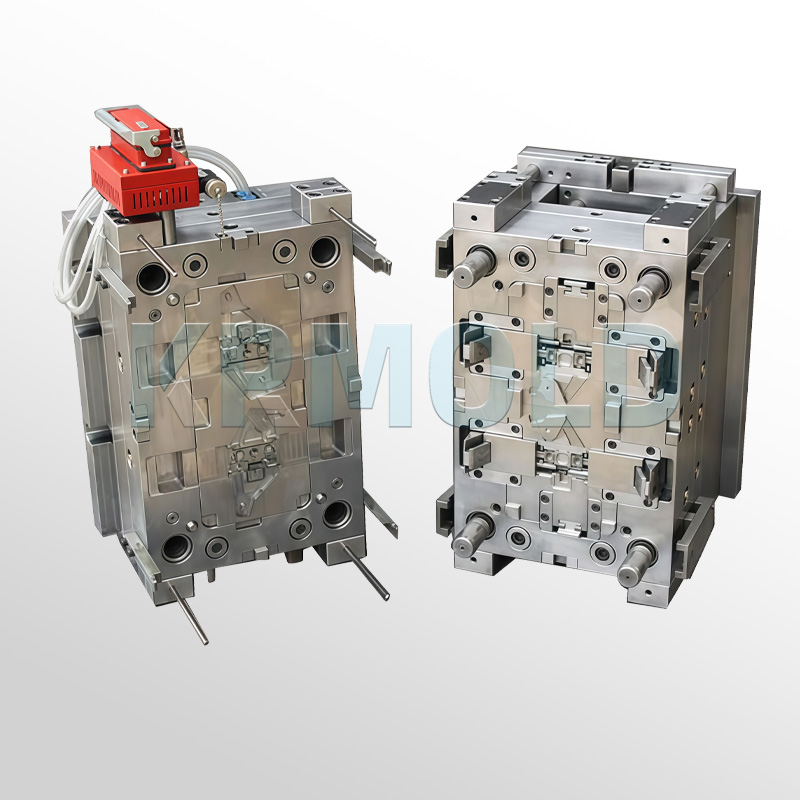
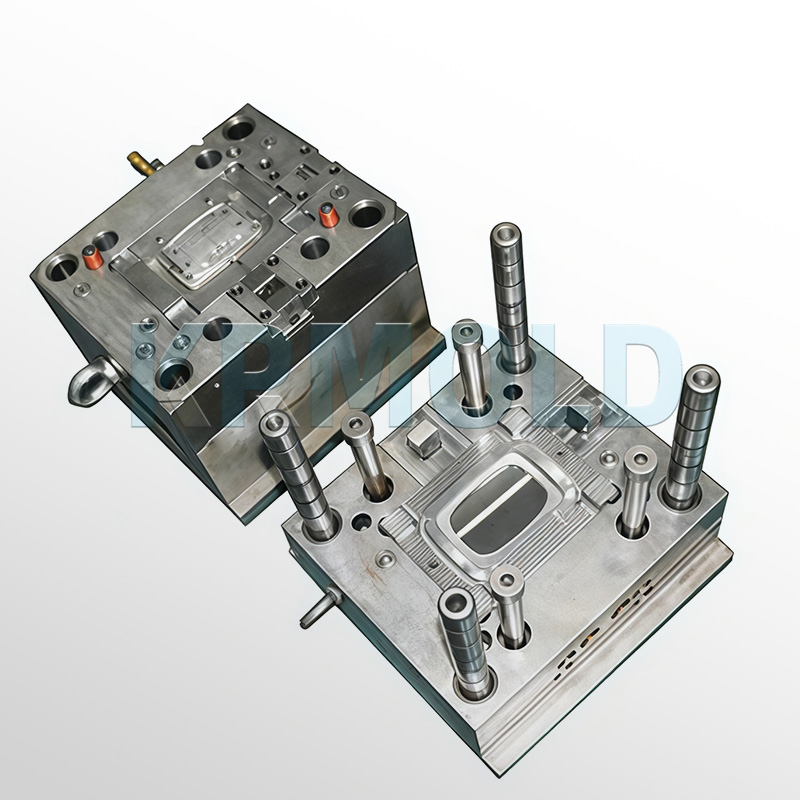
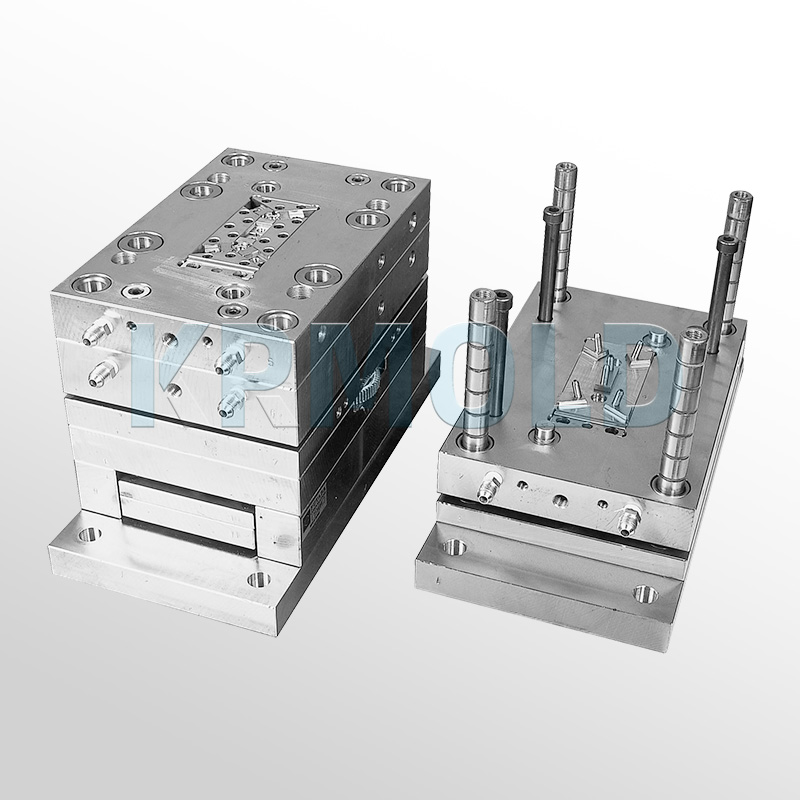
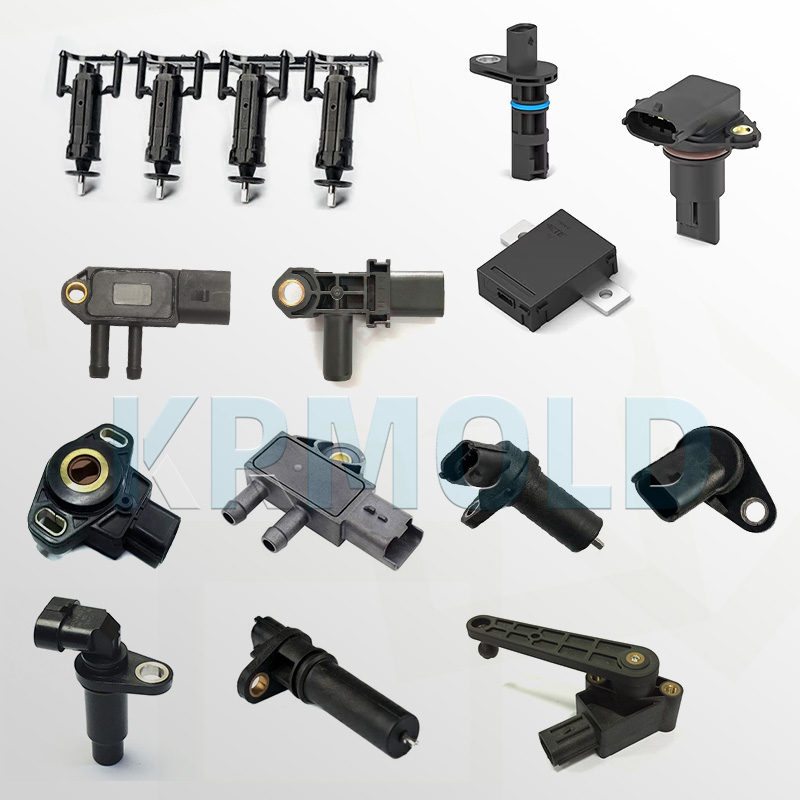
Plastic auto parts sensor molds are crucial tools for manufacturing high-precision plastic sensor components, which are widely used in various systems of modern automobiles. With the continuous advancement of automotive electronics technology, the production of reliable auto sensor parts molds has become particularly important. This article details how to ensure the reliability and quality of plastic auto parts sensor molds, from mold design, manufacturing, testing and verification to mass production.
01/Process of Making Auto Sensor Parts Mold
Step 1: Design phase of auto sensor parts mold
●CAD design for auto sensor parts mold
First, in the design phase of plastic auto parts sensor molds, CAD software is widely used. Designers need to create 3D/2D models of the parts and auto sensor parts molds, and define geometric dimensions and tolerances. Furthermore, a reasonable draft angle design helps with smooth demolding and reduces wear on the plastic auto parts sensor mold. The design quality at this stage directly affects the smooth progress of subsequent processes, therefore it must be accurate and conform to industry standards.
●DFM analysis for auto sensor parts mold
DFM analysis is also an indispensable step. This includes a detailed analysis of factors such as wall thickness, reinforcing ribs, and corner radii, all of which affect warpage and shrinkage marks in the finished product. At this stage, designers need to consider material properties, molding process limitations, and production efficiency to design a plastic auto parts sensor mold that is both productive and suitable for manufacturing.
●Mold flow analysis for auto sensor parts mold
Furthermore, mold flow analysis is a crucial tool for ensuring the rationality of plastic auto parts sensor mold design. By simulating the flow of molten plastic in the auto sensor parts mold, designers can evaluate factors such as fill balance, weld lines, cavitation, cooling, and deflection. Mold flow analysis helps identify potential problems and make corresponding adjustments to ensure the performance of plastic auto parts sensor molds in actual production.
Step 2: Auto sensor parts mold manufacturing
●Material selection for auto sensor parts mold
The choice of materials for plastic auto parts sensor mold manufacturing is crucial to the mold's lifespan and stability. Commonly used mold materials include P20, H13, S136 stainless steel, and aluminum alloys, depending on the operating environment and molding requirements. Each material has its unique properties, and designers must make appropriate selections based on specific needs.
●CNC machining for auto sensor parts mold
The finishing and roughing of plastic auto parts sensor molds are mainly achieved through CNC machine tools to ensure the geometric accuracy of the auto sensor parts mold. This process requires extremely high precision to ensure the yield and consistency of injection molded parts. Furthermore, EDM is a commonly used method when dealing with complex mold structures, capable of handling intricate details such as deep cavities and sharp corners.
●Polishing and texturing for auto sensor parts mold
Plastic auto parts sensor mold surface treatment includes polishing and texturing. Optical polishing achieves a highly smooth surface, while texturing (such as VDI/MT standards) creates appropriate textures on the auto sensor parts mold surface, which is crucial for improving the appearance and adhesion of parts. Surface treatment is not just an aesthetic issue; it directly affects the demolding performance and lifespan of plastic parts.
●Assembly for plastic auto parts sensor mold
The final step in auto sensor parts mold making is assembly, including the configuration of guides, ejectors, water channels, and hot runners (if applicable). This step ensures that all plastic auto parts sensor mold components work in coordination to improve the efficiency and stability of the injection molding operation.
Step 3: Testing and validation for auto sensor parts mold
●T0/T1 testing for auto sensor parts mold
After plastic auto parts sensor mold completion, conducting T0/T1 testing is essential. This stage primarily involves determining the process window and evaluating the dimensions and appearance of the parts. These tests help identify potential problems in the auto sensor parts mold design and manufacturing process, allowing for adjustments before mass production.
●Auto sensor parts mold inspection
During the testing phase, CMMs and optical measurements are used to precisely inspect each component of the plastic auto parts sensor mold. Each part needs to be confirmed to meet design requirements, providing a "gold standard" for subsequent production.
●Auto sensor parts mold optimization
Based on the initial testing, further plastic auto parts sensor mold optimization may be necessary, such as adjusting the gate location, optimizing venting, improving cooling balance, and adjusting steel for safety. These improvements contribute to increasing auto sensor parts mold production efficiency and stability.
Step 4: Auto sensor parts mold mass production
●Stable operation
After the plastic auto parts sensor mold enters mass production, its repeatability under key parameters such as temperature, pressure, and time must be ensured. A stable production process is fundamental to ensuring the quality of every part meets standards.
●Auto sensor parts mold quality control
Quality control is crucial for ensuring consistent quality in the mass production of plastic auto parts sensor molds. First article inspection and statistical process control are commonly used methods to promptly identify and correct deviations in production, ensuring the quality of the final product. Final inspection is also essential. A rigorous inspection process ensures that every delivered product meets standards.
●Auto sensor parts mold maintenance
Plastic auto parts sensor molds experience wear and tear during production, making regular maintenance crucial. Regular cleaning, lubrication changes, water pipe cleaning, and proper spare parts management are necessary to ensure long-term stable auto sensor parts mold operation.
02/Understanding Plastic Auto Parts Sensor Mold Components
Auto sensor parts molds consist of various components that utilize injection, blow molding, compression, transfer, and rotational molding to transform thermoplastic or thermosetting materials into the final product. The core structure of the plastic auto parts sensor mold includes the cavity and the core. Liquid plastic completes a full injection molding cycle through injection, cooling, solidification, and ejection.
In this process, the quality and design details of the auto sensor parts mold (such as the layout of the gating system and the configuration of cooling channels) directly affect the quality of the parts. Mastering these technical details can further improve the production efficiency and product quality of plastic auto parts sensor molds.