KRMOLD plastic chair injection molds can produce traditional and customized chair styles for a wide range of indoor and outdoor applications.
In the manufacturing process of plastic chair injection mould, KRMOLD pays close attention to the cycle time, parting line, wall thickness, and venting.
KRMOLD offers a diverse range of refrigerator parts injection mould capable of producing components such as drawers, egg trays, door liners, handles, door frames, and fridge lower vent frames, fully covering the molding needs for both interior and exterior plastic parts.
KRMOLD is dedicated to providing a complete range of plastic pallet injection molds, capable of producing pallets in various sizes for widespread use in everyday goods handling and product transportation in factories. KRMOLD plastic pallet injection mould not only meet market demands but also offer customized designs based on different customer application scenarios and handling conditions.
KRMOLD specializes in providing high-quality waste bin injection molds, capable of designing and manufacturing plastic trash bin injection molds for various capacities to meet specific project needs, including 32L, 45L, 60L, 80L, 120L, and 240L.
KRMODL can provide customers with a wide range of Logistic Packaging Injection Mold, according to the customer's product requirements for customized design of injection molds and the process of manufacturing injection molds, Logistic Packaging Injection Molds are used for the production of logistics and transportation required for the products. Logistic Packaging Injection Mold is a large-scale injection mold product.
KRMOLD is a professional injection mold manufacturer in China that can provide Food Packaging Injection Molds, which are designed to produce food packaging products with various specific shapes and functions. As an important injection molding tool, Food Packaging Injection Molds can produce food packaging products that meet food requirements. Welcome to contact us to get the latest design solutions
KRMOLD can provide customers with complete Thin-Wall Container Injection Molds solutions to manufacture injection molds that meet the production requirements of thin-walled products, such as disposable lunch box injection molds, electronic component packaging injection molds, and medical device injection molds.
KRMOLD thin wall container injection molds are characterized by high strength mold structure, precise process control and material innovation. Contact us for new injection molding solutions.
KRMOLD helps customers with complete injection mold design, production and after-sales services, and is able to provide customers with Cosmetic Container Injection Molds, which are used to produce molds for various cosmetic packaging containers. Injection molding technology is used to make plastic raw materials into specific shapes of packaging, such as bottles, jars, lids and so on.
Design of Car Rear View Mirror Mould
2026-03-19
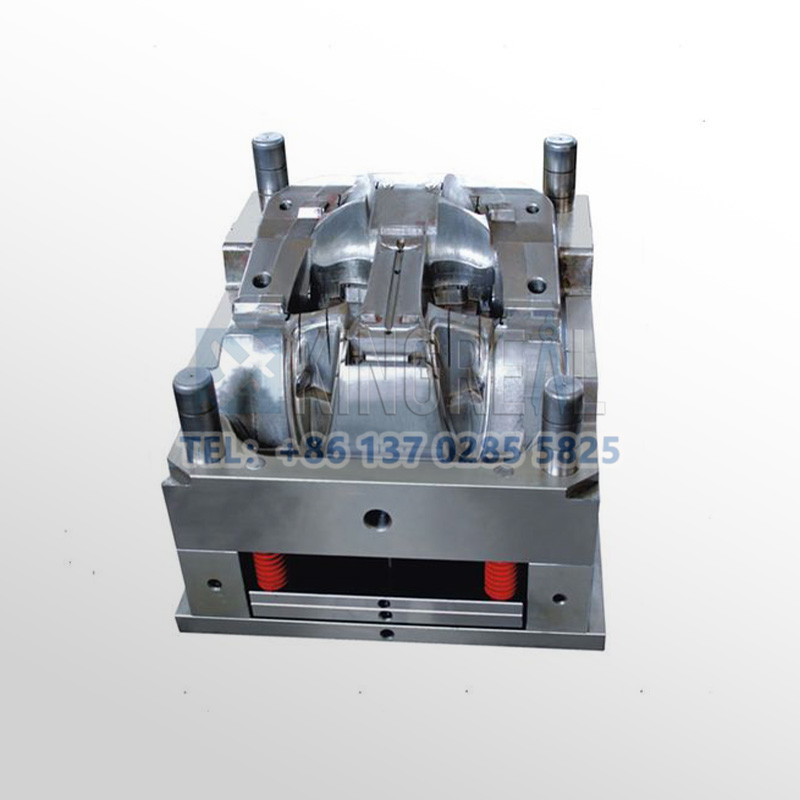
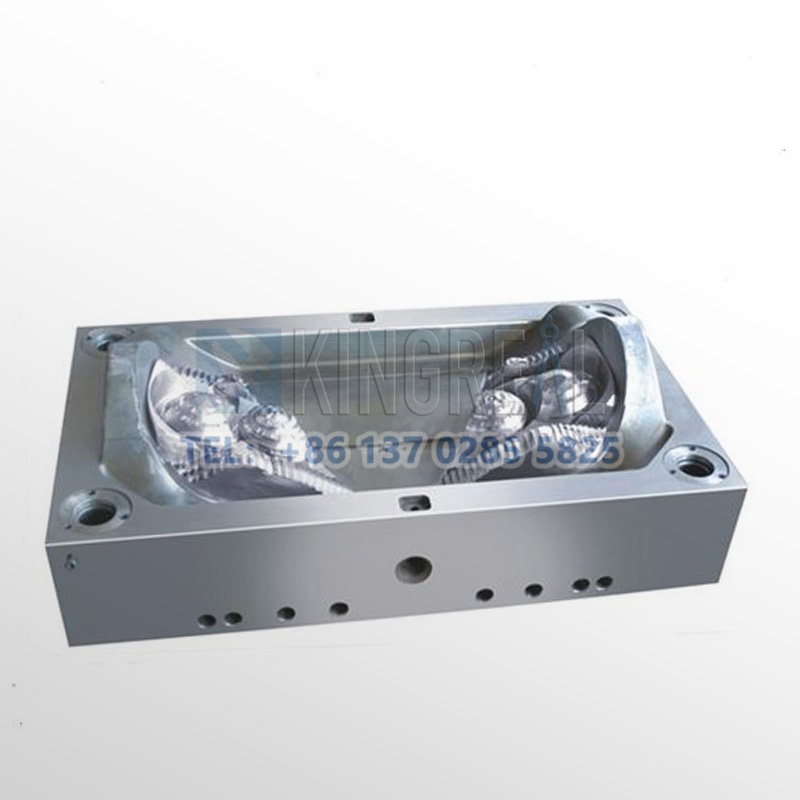
As a core exterior component and safety feature of an automobile, the rear view mirror serves the dual functions of supporting the mirror lens and enhancing the vehicle's aesthetic appeal; more importantly, acting as the driver's other pair of eyes, it provides critical visual support for driving safety. The high-volume, high-precision production of its core components—such as the housing—relies entirely on the design and manufacturing of specialized car rear view mirror mould. As a critical piece of equipment within the automotive manufacturing sector, the design rationality of these automotive rear view mirror molds directly determines production efficiency, dimensional precision, and mold longevity; they are indispensable to the industry, and their design quality directly impacts the overall quality and market competitiveness of the vehicle itself.
Automotive rearview mirror plastic components demand extremely high standards regarding dimensional accuracy and surface finish, thereby imposing rigorous requirements on the structural design of the corresponding car rear view mirror mould. The classic structural design of an automotive rear view mirror mold primarily revolves around key elements such as gating methods, undercut handling, and core-pulling mechanisms, all aimed at ensuring stable car rear view mirror mould operation and efficient production.
Classic Structural Design of Car Rear View Mirror Mould
The structural design of an automotive rear view mirror mold must be tailored to the specific geometry and assembly requirements of the plastic component. Among these design considerations, the gating method, undercut handling, and core-pulling mechanisms constitute the core elements, as they directly influence product quality and production efficiency.
1. Product Gating Methods
The gating method is a pivotal aspect of car rear view mirror mould design, directly determining the melt filling effect and the overall quality of the plastic component. Common gating methods include bottom gating, submarine gating, direct gating, horn gating, and pin-point gating, each possessing its own distinct advantages and disadvantages. Given that rearview mirror components serve as exterior trim parts—subject to strict aesthetic standards—and require high-volume production, their automotive rear view mirror molds typically employ a hot runner system with direct gating. This approach minimizes material waste, shortens the molding cycle, ensures uniform melt filling, prevents flow marks and weld lines, and guarantees both the surface finish and dimensional accuracy of the plastic component.
2. Undercuts and Related Mechanism Design
Based on draft angle analysis, the front face of the rear view mirror plastic component features two specific undercut areas. These undercuts present a challenge to smooth demolding and therefore necessitate the design of specialized ejection mechanisms to address them. Additionally, to accommodate internal assembly requirements, the interior of the plastic component incorporates two areas requiring standard angled-pin (lifter) mechanisms to facilitate the demolding of internal undercut features. Undercuts prevent the plastic part from being directly ejected from the car rear view mirror mould; furthermore, an improperly designed mechanism can easily lead to part damage. Consequently, this constitutes a critical focal point in the structural design of automotive rear view mirror molds.
3. Design of the Hydraulic Cylinder Core-Pulling Mechanism
A specific undercut located directly at the front of the plastic part features a long stroke of 90.58 mm. Since a standard slider mechanism cannot accommodate this requirement, the car rear view mirror mould employs a hydraulic cylinder core-pulling mechanism, utilizing the driving force of the hydraulic cylinder to achieve smooth, long-stroke core pulling. The slider corresponding to this undercut involves a substantial volume of plastic material; thus, heat tends to accumulate easily during injection molding. To address this, cooling channels are integrated into the slider design to dissipate heat promptly, thereby safeguarding both the quality of the plastic part and the service life of the automotive rear view mirror mold.
4. Design of the Angled Slider with Hydraulic Core-Pulling Mechanism
The angled holes located directly at the front of the plastic part fall under the category of undercuts. The car rear view mirror mould incorporates an angled slider mechanism specifically designed to address these features. While the underlying principle is consistent with that of standard sliders, the extended stroke length necessitates the use of hydraulic core pulling. This ensures complete core disengagement and preserves the integrity of the plastic part, thereby guaranteeing the dimensional accuracy of the angled holes and satisfying assembly requirements.
5. Design of the Internal Angled Ejection Mechanism
The assembly clips situated within the plastic part constitute internal undercuts that cannot be released using standard sliders. Consequently, the automotive rear view mirror mold features two angled ejection mechanisms. Through angled motion, these mechanisms simultaneously execute both part ejection and core pulling, ensuring the structural integrity and dimensional accuracy of the clips while preventing deformation or fracture. Furthermore, the angle, stroke, and reset precision of the angled ejectors are carefully controlled to ensure their harmonious and synchronized operation with other mold mechanisms.
Design Considerations for Car Rear view Mirror Mould
The design of automotive rear view mirror mold requires a balanced approach that considers structural rationality, product quality, and production efficiency. The core design principles encompass various critical aspects—including the parting line, molding components, and gating system—each of which exerts a direct influence on the car rear view mirror mould’ performance and the quality of the final product.
1. Parting Line Design
The parting line serves as the interface separating the moving mold half from the fixed mold half. The fundamental principle of its design involves selecting the location corresponding to the plastic part's largest cross-section; this ensures smooth automotive rear view mirror mold opening and closing, facilitates easy part ejection, and prevents the plastic part from becoming jammed or deformed within the automotive rear view mirror mold. Furthermore, to preserve the aesthetic quality of the product, the parting line must be positioned away from critical visible surfaces—ideally situated in concealed areas—to minimize the occurrence of flash or burrs. This approach also balances processing feasibility with assembly precision while effectively preventing molten plastic leakage.
2. Molded Part Design
The molded components (cavities and cores) directly determine the quality of the plastic part. The car rear view mirror mould employs an insert-based modular structure, facilitating processing, maintenance, and replacement while reducing maintenance costs. Based on the shape and dimensions of the plastic part, the thickness and structural strength of these components must be designed judiciously to prevent defects—such as deformation caused by high injection pressures or uneven wall thickness—in the final product. Additionally, wear-resistant and heat-resistant materials, such as 2344 mold steel, are selected to extend the service life of the automotive rear view mirror mold.
3. Gating System Design
The gating system guides the molten plastic into the mold cavity. Based on the material properties (e.g., ABS, PP) and structural features of the plastic part, an appropriate gate type—such as a pin-point gate—is selected to conceal the gate mark. The length and diameter of the runners are carefully controlled to minimize pressure loss and material waste. For hot runner systems, temperature control at the injection points is optimized to ensure the stability of the melt temperature.
4. Side Core-Pulling Mechanism Design
To accommodate structural features such as undercuts and angled holes in the plastic part, the car rear view mirror mould incorporates mechanisms such as angled sliders and hydraulic cylinders for side core-pulling. Long-stroke undercuts are actuated by hydraulic cylinders; angled holes utilize a combination of angled sliders and hydraulic cylinders; and internal snap-fit features are handled by angled ejector pins. The direction and stroke of the core-pulling mechanisms are strategically arranged, and wedge-locking mechanisms are designed to prevent displacement, thereby ensuring smooth and reliable core extraction.
5. Temperature Control System Design
The temperature control system ensures uniform cooling of the molten plastic, thereby minimizing defects in the finished part. The automotive rear view mirror mold employs a combination of cooling methods—including straight-through channels and conformal cooling channels—that closely follow the contours of the mold cavity to enhance cooling efficiency. Priority is given to cooling heat-intensive areas, such as the core-pulling mechanisms. Furthermore, the temperature and flow rate of the cooling water are optimized, and the surface roughness and sealing integrity of the cooling channels are carefully controlled to prevent water leakage.
6. Ejection System Design
Based on the specific characteristics of the plastic part, the ejection system utilizes a combination of ejection methods—such as ejector pins, ejector blocks, and angled ejector pins—to ensure smooth demolding and prevent defects such as ejector marks (whitening) or deformation. The ejection stroke and reset mechanism are designed with precision; stationary-side spring-loaded blocks may be added to prevent the plastic part from sticking to the stationary mold half. Throughout this process, the balance of ejection forces is carefully considered to safeguard the structural integrity of the plastic part.
7. Venting System Design
To prevent air entrapment—which can lead to defects in the molded parts—venting grooves or holes are strategically placed at critical locations within the cavities and runners of the car rear view mirror mould. These vents are designed with a controlled width of 0.02–0.05 mm and a depth of 0.01–0.03 mm. Furthermore, areas prone to air entrapment utilize venting through insert parting lines to ensure the timely and effective evacuation of gases.
8. Material and Process Compatibility
Based on the shrinkage rates and flow characteristics of the plastic materials used for the parts—such as ABS and PP—the dimensions of the automotive rear view mirror mold and the associated injection molding process parameters are carefully adjusted. The mold material itself must be selected to suit both the specific plastic material being processed and the projected production volume; typically, wear-resistant and heat-resistant mold steels are chosen. This approach enables the synergistic optimization of both the car rear view mirror mould design and the manufacturing process, thereby guaranteeing consistent product quality.
The design of automotive rear view mirror molds requires a focused and rigorous approach to managing every core stage. Only by ensuring a scientifically sound and rational design can one successfully manufacture a stable and efficient car rear view mirror mould capable of producing high-quality rearview mirror housings. As the automotive industry continues to evolve, the design and technology of automotive rear view mirror molds are poised to advance toward even greater levels of precision and efficiency.