KRMOLD plastic chair injection molds can produce traditional and customized chair styles for a wide range of indoor and outdoor applications.
In the manufacturing process of plastic chair injection mould, KRMOLD pays close attention to the cycle time, parting line, wall thickness, and venting.
KRMOLD offers a diverse range of refrigerator parts injection mould capable of producing components such as drawers, egg trays, door liners, handles, door frames, and fridge lower vent frames, fully covering the molding needs for both interior and exterior plastic parts.
KRMOLD is dedicated to providing a complete range of plastic pallet injection molds, capable of producing pallets in various sizes for widespread use in everyday goods handling and product transportation in factories. KRMOLD plastic pallet injection mould not only meet market demands but also offer customized designs based on different customer application scenarios and handling conditions.
KRMOLD specializes in providing high-quality waste bin injection molds, capable of designing and manufacturing plastic trash bin injection molds for various capacities to meet specific project needs, including 32L, 45L, 60L, 80L, 120L, and 240L.
KRMODL can provide customers with a wide range of Logistic Packaging Injection Mold, according to the customer's product requirements for customized design of injection molds and the process of manufacturing injection molds, Logistic Packaging Injection Molds are used for the production of logistics and transportation required for the products. Logistic Packaging Injection Mold is a large-scale injection mold product.
KRMOLD is a professional injection mold manufacturer in China that can provide Food Packaging Injection Molds, which are designed to produce food packaging products with various specific shapes and functions. As an important injection molding tool, Food Packaging Injection Molds can produce food packaging products that meet food requirements. Welcome to contact us to get the latest design solutions
KRMOLD can provide customers with complete Thin-Wall Container Injection Molds solutions to manufacture injection molds that meet the production requirements of thin-walled products, such as disposable lunch box injection molds, electronic component packaging injection molds, and medical device injection molds.
KRMOLD thin wall container injection molds are characterized by high strength mold structure, precise process control and material innovation. Contact us for new injection molding solutions.
KRMOLD helps customers with complete injection mold design, production and after-sales services, and is able to provide customers with Cosmetic Container Injection Molds, which are used to produce molds for various cosmetic packaging containers. Injection molding technology is used to make plastic raw materials into specific shapes of packaging, such as bottles, jars, lids and so on.
What is Automotive Control Panel Mould in Automotive Industry?
2026-04-23
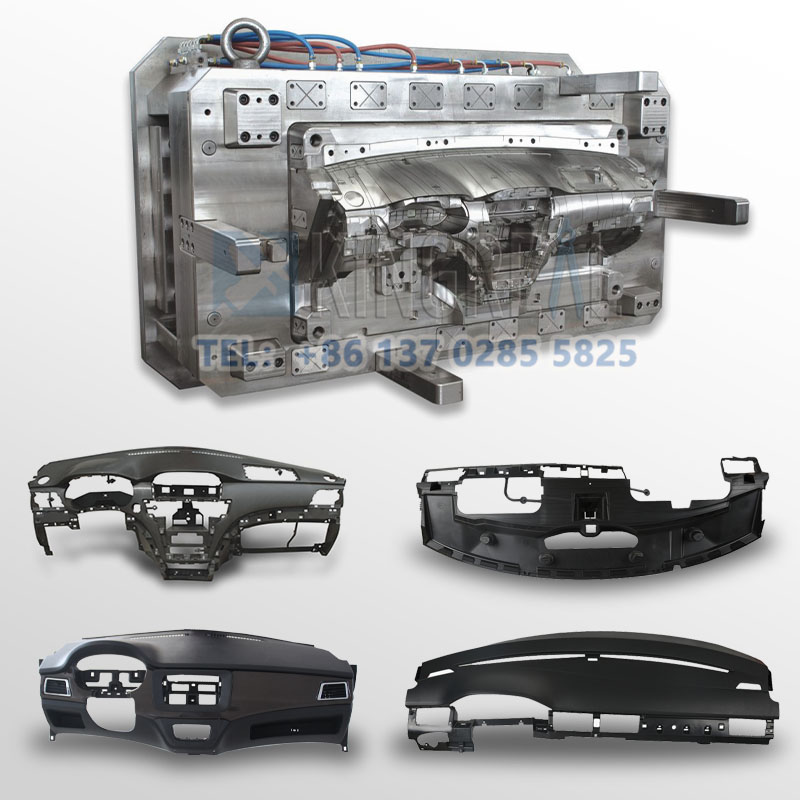
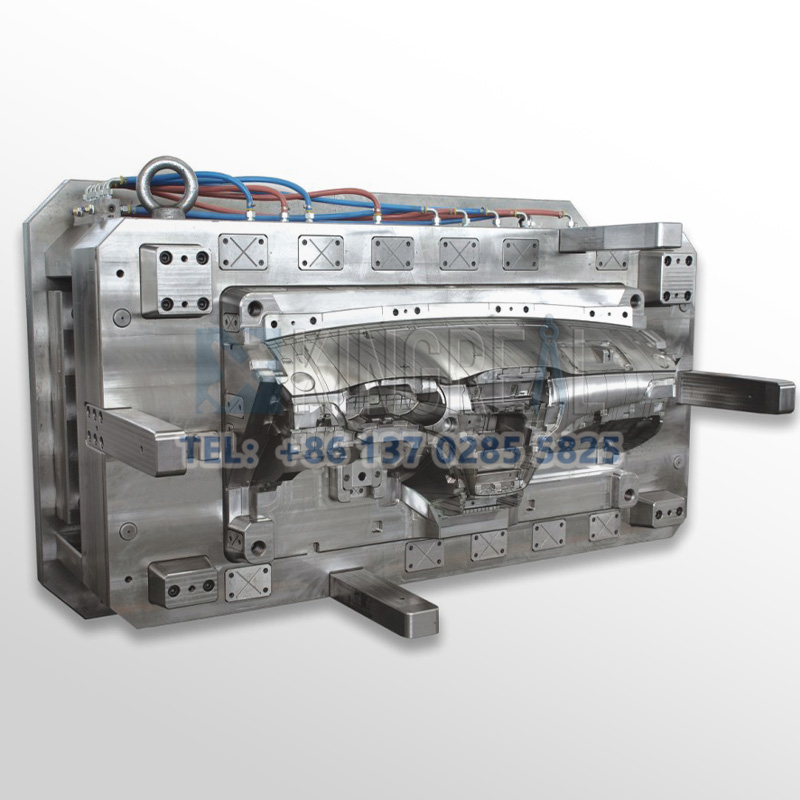
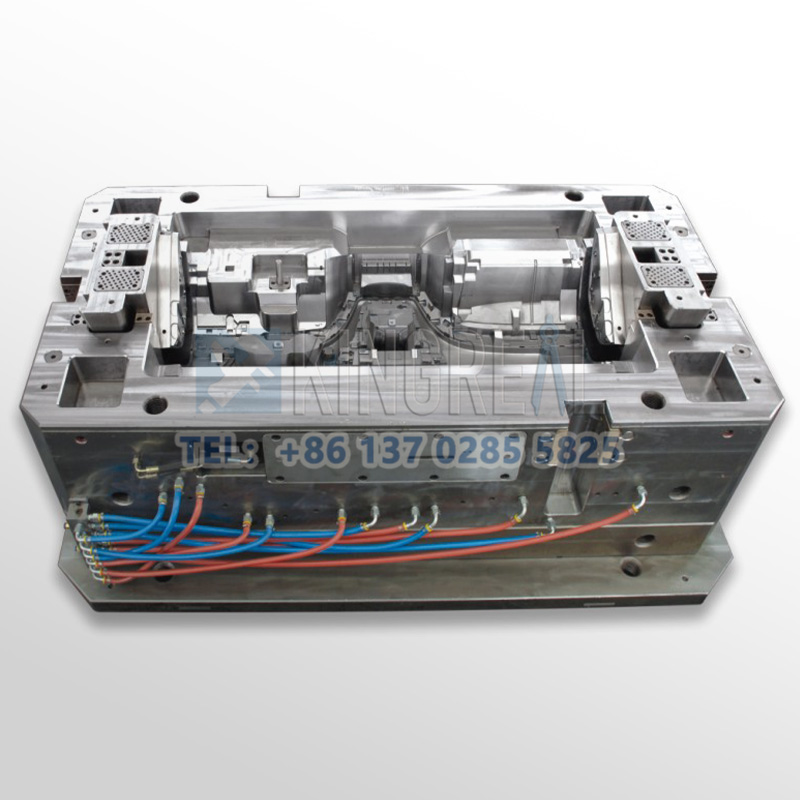
Automotive control panel mould are specifically designed for the mass production of automotive control panels. They are widely utilized in the manufacturing of various core interior components, such as air conditioning control panels, central display bezels, dashboard control zones, and door switch panels. Typically employing the injection molding process, these plastic car instrument panel mould feature precisely engineered core structures—including cavities, runners, and ejection mechanisms—to inject common plastic materials (such as PC, ABS, or PC/ABS blends) into the mold cavity.
The process produces a finished automobile control panel part—complete with particular form, size, and surface treatment—in one step following a cooling and curing period. Every single product is guaranteed consistency and uniformity as this whole process is totally automated and standardized.
Design Requirements for Automotive Control Panel Mould
(1) High Precision
As critical assembly components within a vehicle's interior, automotive control panels must strictly adhere to design standards regarding dimensional accuracy, geometric precision, and surface roughness. Even the slightest deviation can lead to assembly issues—such as jamming, excessive gaps, or functional failure. Through the use of precision machining equipment and rigorous quality control protocols, KRMOLD ensures that every molded control panel produced by plastic car instrument panel mould perfectly meets the assembly requirements of the vehicle's interior, thereby guaranteeing smooth integration and operational stability during actual use.
(2) Capability for Molding Complex Structures
With the advancement of automotive intelligence, the structural complexity of control panels has increased significantly. Beyond integrating various structural features—such as buttons, knobs, display bezels, snap-fits, and reinforcing ribs—control panels in certain high-end vehicle models often incorporate even more intricate elements, such as irregular-shaped recesses and multi-directional snap-fits. Consequently, automotive control panel mould require robust capabilities for molding these complex geometries. These automotive control panel mould are frequently fitted with unique mechanisms like angled ejectors and side-core pulling systems to enable the easy demolding of such complex designs. More precisely, the slanted guide-pin core-pulling mechanism transforms the vertical movement of the plastic car instrument panel mould opening into the lateral slide movement, thus addressing issues connected with demolding lateral recesses or holes. The angled ejector mechanism is intended for internal undercut geometries, allowing simultaneous ejection and core-pulling to guarantee both structural integrity and smooth release of intricate elements, hence avoiding problems such part damage or deformation.
(3) Surface Quality Requirements
As a visible component of a vehicle's interior, the surface of an automotive control panel is typically required to be smooth and flawless, free from defects such as flow marks, weld lines, sink marks, or voids. Furthermore, certain high-end vehicle models demand that the control panel surface possess a refined tactile feel and specific decorative effects. Consequently, plastic car instrument panel mould must employ rational runner designs, optimized cooling system configurations, and specialized surface treatment processes to guide the flow path of the molten plastic. This ensures that distinct weld lines are avoided when the molten streams converge within the mold cavity. Simultaneously, a uniform cooling system is utilized to precisely control the molding temperature, thereby minimizing sink marks caused by uneven shrinkage. Moreover, through mirror polishing or specialized surface treatments, the automotive control panel mould surface can replicate decorative textures—such as leather grain or wood grain—thereby satisfying the rigorous aesthetic and tactile standards required for automotive interiors.
(4) Production Efficiency and Stability
By optimizing the plastic car instrument panel mould’ cooling system, ejection mechanism, and runner design, the molding cycle for automotive control panels can be controlled within a range of a few seconds to a few minutes. When integrated with automated injection molding equipment, this enables continuous, 24/7 production operations. This capability effectively meets the production cadence requirements of automotive manufacturers—who often produce hundreds of thousands or even millions of vehicles annually—while simultaneously reducing mold-related downtime and enhancing overall production efficiency.
Importance of Automotive Control Panel Mould in Automotive Industry
1
Meeting Massive Production Scale Demands
Automobile manufacturing is an industry characterized by massive-scale mass production; the annual sales volume for a single vehicle model often reaches tens or even hundreds of thousands of units. Consequently, the production of automotive control panels must be highly efficient and stable. Leveraging their ultra-short molding cycles—and operating in conjunction with automated injection molding systems and production lines—plastic car instrument panel mould enable continuous, 24/7 production. This capability perfectly aligns with the production cadence of automotive manufacturers, ensuring that the supply of control panels is sufficient to meet the demands of complete vehicle assembly.
2
Accommodating Diverse Material Requirements
As the quality of automotive interiors continues to rise, control panels serving different functions present varying requirements regarding materials. The range of applicable materials spans from common plastics—such as PP and ABS—to high-performance engineering plastics like PC, PA, and PMMA. In fact, virtually all thermoplastic polymers and their modified variants are suitable for use in the injection molding processes facilitated by automotive control panel mould.
3
Rigorous Cost Control
Although the initial manufacturing cost for plastic car instrument panel mould is relatively high, during the process of large-scale mass production, this substantial mold cost is rapidly amortized across the massive production volume, resulting in a significant reduction in the per-unit production cost of the automotive control panels. Furthermore, when integrated with automated production systems, these molds drastically minimize manual intervention—thereby lowering labor costs and reducing human error—which further boosts production efficiency and drives down overall manufacturing costs.
Advantages of Automotive Control Panel Mould
(1) Long Service Life
Plastic car instrument panel mould are manufactured using high-quality mold steels—such as S136 and 238—which are characterized by their high strength, exceptional wear resistance, and corrosion resistance. When combined with a well-engineered cooling system and ejection mechanism, this construction effectively mitigates mold wear and fatigue, thereby extending the automotive control panel mould’ operational lifespan. Typically, the service life of plastic car instrument panel mould can reach hundreds of thousands of cycles, while certain high-quality automotive control panel mould can even endure up to a million cycles.
(2) High Design Flexibility
Plastic car instrument panel mould give great design flexibility, which lets fast changes be made to the mold cavities, runners, ejection systems, and other parts to satisfy the particular functional needs and vehicle models of many customers. This feature helps bespoke manufacture without having to fully retool and produce a whole new mold set, hence greatly reducing the product R&D as well as production cycles.