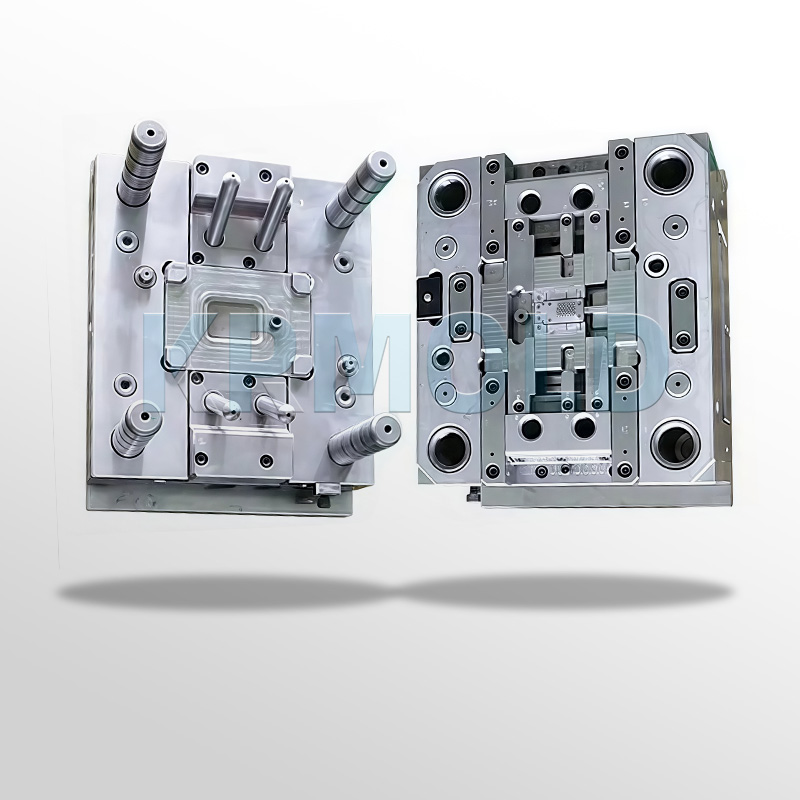
KRMOLD plastic chair injection molds can produce traditional and customized chair styles for a wide range of indoor and outdoor applications.
In the manufacturing process of plastic chair injection mould, KRMOLD pays close attention to the cycle time, parting line, wall thickness, and venting.
KRMOLD can customize personalized automotive door handle injection molds based on specific customer production needs and manufacture door handles for both front and rear doors, tailored to the vehicle model and size, and based on the door panel's exterior features (with or without a speaker mesh).
Automotive fan radiator mould enable the mass production of high-quality fans installed in automobiles. KRMOLD provides high-quality car radiator fan shroud mould due to its extremely stringent requirements for mold materials and processing.
KRMOLD can help you to solve your injection mold design and production needs, with rich experience in producing injection molds for automotive interior and exterior parts, including Turbocharger Housing Mold, Automotive Dashboard Injection Mold, Car Door Panel Injection Mold. and Car Bumper Injection Mold, etc.
Contact us for a complete solution!
Custom designed injection molds for different types of automotive lights, such as signal lights, interior lights, and other automotive lights.Just send us your production requirements and get free injection mold design proposal from KRMOLD.
KRMOLD has successfully provided complete injection molding solutions for auto parts for international famous car companies such as Ford, Honda, Toyota, Volvo and Volkswagen. Welcome to contact us
KRMOLD is committed to helping customers provide customized automotive injection mold products, including all other industry-related mold design and production. Common automotive injection molds include car center console frame mold, automotive dashboard injection mold, car door panel injection mold, car fender injection mold and other injection mold.
KRMOLD automotive control panel injection mould are specialized plastic injection molds used to manufacture automotive dashboards.
KRMOLD car dashboard injection molds are designed to help manufacturers mass-produce complex, high-tolerance dashboard components, ensuring consistency and quality throughout the manufacturing process, and guaranteeing that each dashboard has the correct dimensions, textures, and data.
Automotive instrument panel molds determines the quality of the auto instrument panel. Automotive instrument panels produced using high-quality auto instrument panel injection molds combine safety, functionality, comfort, and aesthetic appeal, and are widely utilized across various automotive manufacturing scenarios.
Switch Socket Plastic Injection Mold Design
2025-12-21
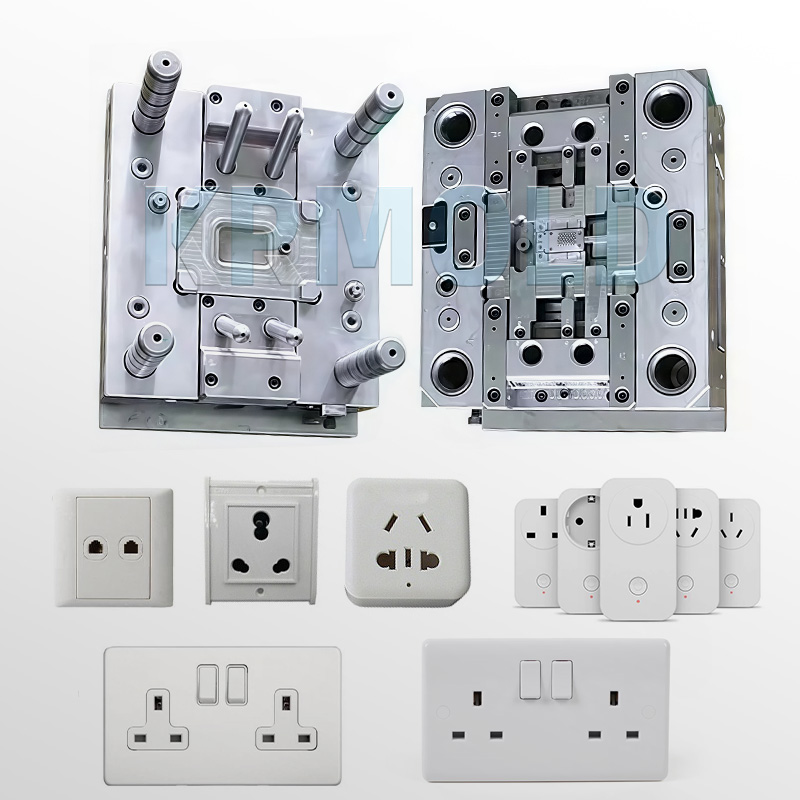
In modern architectural electrical engineering, socket panels, as the terminal interface for power transmission, directly affect electrical safety and user experience. Especially in homes, offices, and public facilities, the stability and safety of sockets are crucial. The quality of socket panels is often inextricably linked to the switch socket plastic injection molds used in the manufacturing process. Therefore, designing efficient plastic plug socket injection mold becomes critical. This article will delve into the design requirements, core challenges, and considerations for customized switch socket plastic injection molds.
1/Design Requirements for Switch Socket Plastic Injection Molds
1.1
High Precision Requirements
The hole spacing tolerance of the socket panel must be controlled within ±0.02mm to ensure perfect contact with the plug. Only by ensuring precise dimensions can electrical hazards such as poor contact and short circuits be effectively prevented. Therefore, the use of high-precision processing equipment and processes is necessary in the design of plastic plug socket injection mold.
1.2
Fast Production Cycle
In today's competitive market, rapid production is a crucial factor for the survival and development of enterprises. Mainstream switch socket plastic injection mold designs require an injection molding life of 800,000 to 1,000,000 cycles, and the molding cycle should be compressed to less than 20 seconds. This requires that in the design of switch socket plastic injection mold, we not only pursue the durability of the mold but also optimize the injection molding process to achieve high efficiency.
1.3
Safety Redundancy Design
Safety is paramount in socket design. The plastic plug socket injection mold design must comply with local national standards for anti-vibration structures to prevent external environmental damage to the socket panel. At the same time, in material selection, flame retardancy and high-temperature resistance should be prioritized to ensure safe use under extreme conditions.
1.4
Surface Treatment Standards
The surface treatment of the socket panel directly affects its appearance and user experience. A matte textured surface with an Ra value controlled within the range of 0.8-1.6μm can effectively prevent scratches and dirt accumulation, improving user satisfaction. Therefore, surface treatment processes are equally important in the design of plastic plug socket injection mold.
2/Core Design Challenges of Switch Socket Plastic Injection Molds
2.1 Complex Geometric Control
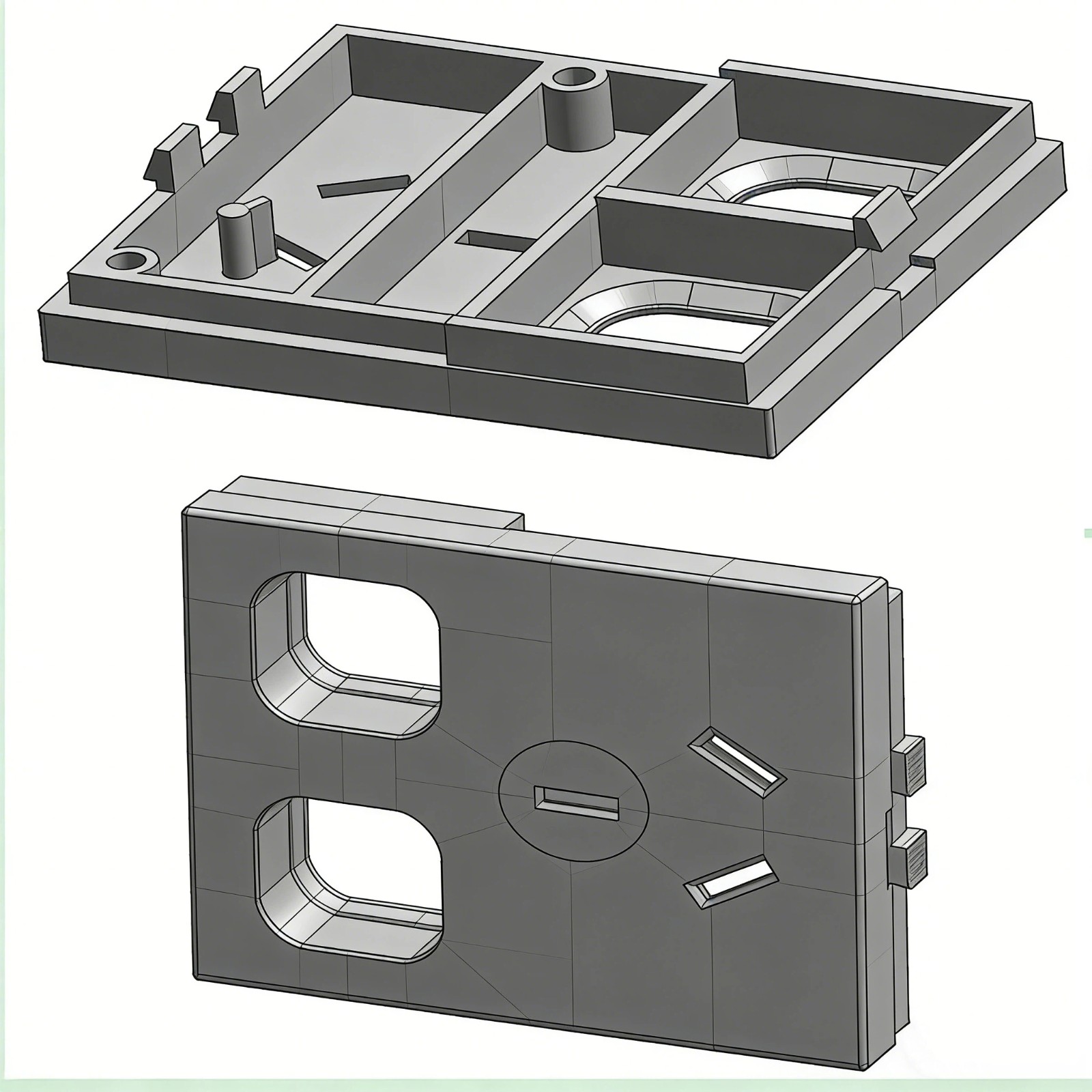
Socket panel designs often involve complex geometric shapes, such as multi-port configurations (e.g., 5-hole sockets), undercut structures (snap-fit features), and thin walls (1-2 mm). Taking a 5-hole socket mold as an example, it requires achieving an accuracy of ±86 mm across five ports within a 0.2 × 86 mm area. This complexity places high demands on switch socket plastic injection mold design.
To address this issue, the KRMOLD team frequently employs angled ejector pin mechanisms, typically set at an angle of 15°-25°, enabling damage-free demolding. Optimizing the parting line design, prioritizing the bottom surface of the panel to minimize visible seams, is also an effective means of improving mold design quality.
2.2 Material-Process Synergy
Polycarbonate (PC) dominates due to its high strength (Vicat softening point ≥145°C) and flame retardancy (UL94 V-0). However, its high melt viscosity (307-317°C) and low shrinkage rate (0.5%-0.7%) present challenges for thermal control. Case studies show that a dual-loop temperature control system (with an accuracy of ±0.5°C) can significantly improve product quality, reducing warpage from 0.744 mm to less than 0.25 mm.
Furthermore, the application of hybrid hot/cold runner systems, such as runners embedded with graphene, can limit melt temperature fluctuations to within ±3°C, greatly increasing the yield of 98.6-cavity molds. These are indispensable advanced technologies in plastic plug socket injection mold design.
3/Switch Socket Plastic Injection Mold Materials and Surface Treatment Technology
Material selection directly affects plastic plug socket injection mold life and product quality. The following are commonly used materials and their processing techniques:
Component
Preferred Material
Heat Treatment
Surface Treatment
Cavity/Core
S136 Mirror Steel
Vacuum Quenching HRC48-52
Nano PVD Coating
Slide Rail
8407 Hot Work Steel
Nitriding (0.1mm layer)
TD Treatment
Ejector Pin
SKD61
Low-Temperature Treatment
DLC Coating
4/Considerations for Customized Switch Socket Plastic Injection Mold Design
4.1 Shape and Size
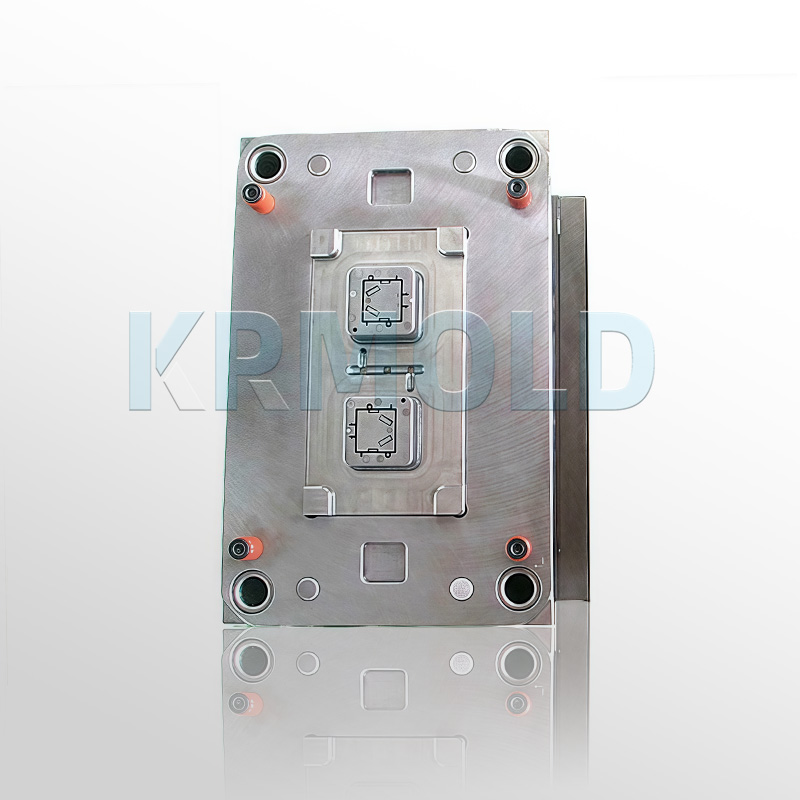
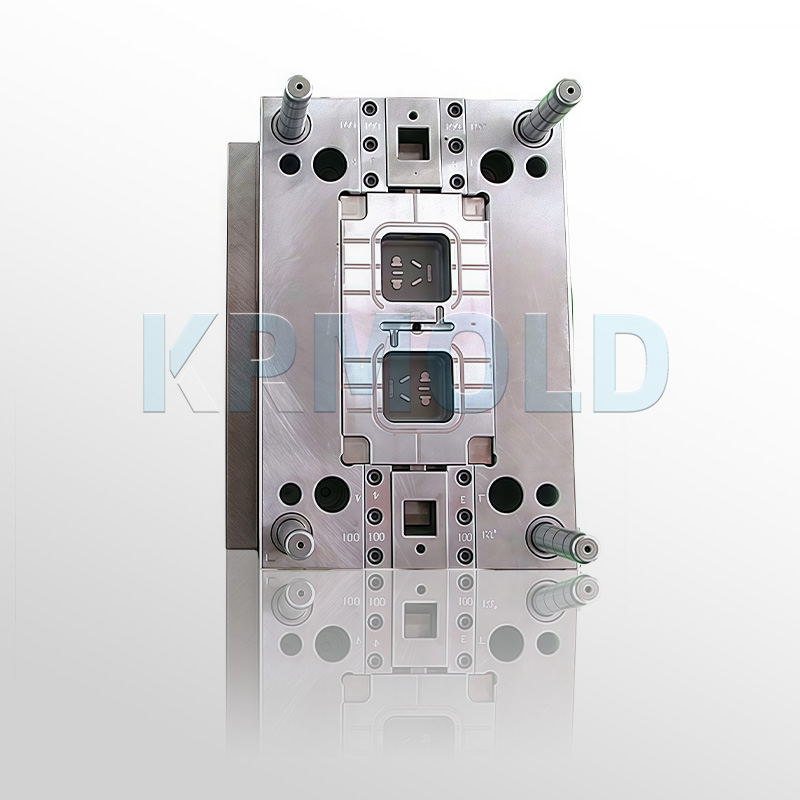
Customized plastic plug socket injection mold design requires communication with the client to confirm the shape and size of the switch and socket housing to ensure product safety and durability. By injecting the appropriate materials into the switch socket plastic injection mold and processing with parameters such as pressure and temperature, the KRMOLD team can manufacture wall switches and sockets that meet user needs.
4.2 Regional Standards
Different countries and regions have different standard requirements for sockets to accommodate different types and specifications of power equipment. For example, the EU models common in European countries and the US models in the American market all need to be designed and manufactured according to the corresponding standards. This makes the development of plastic plug socket injection mold more complex, but also increases its market competitiveness.
4.3 Other Special Requirements
Switches and sockets with special functions such as fire resistance and waterproofing can be achieved by customizing corresponding switch socket plastic injection molds. This is important for meeting safety requirements and user convenience in different environments. Therefore, when designing plastic plug socket injection mold, the KRMOLD team will flexibly respond to various customer needs and tailor solutions.
KRMOLD specializes in plastic injection mold manufacturing and can provide various types of switch socket plastic injection molds. From high-precision requirements and safety design to material selection and surface treatment, KRMOLD takes every step seriously. Contact KRMOLD for more mold-related information.