KRMOLD plastic chair injection molds can produce traditional and customized chair styles for a wide range of indoor and outdoor applications.
In the manufacturing process of plastic chair injection mould, KRMOLD pays close attention to the cycle time, parting line, wall thickness, and venting.
KRMOLD offers a diverse range of refrigerator parts injection mould capable of producing components such as drawers, egg trays, door liners, handles, door frames, and fridge lower vent frames, fully covering the molding needs for both interior and exterior plastic parts.
KRMOLD is dedicated to providing a complete range of plastic pallet injection molds, capable of producing pallets in various sizes for widespread use in everyday goods handling and product transportation in factories. KRMOLD plastic pallet injection mould not only meet market demands but also offer customized designs based on different customer application scenarios and handling conditions.
KRMOLD specializes in providing high-quality waste bin injection molds, capable of designing and manufacturing plastic trash bin injection molds for various capacities to meet specific project needs, including 32L, 45L, 60L, 80L, 120L, and 240L.
KRMODL can provide customers with a wide range of Logistic Packaging Injection Mold, according to the customer's product requirements for customized design of injection molds and the process of manufacturing injection molds, Logistic Packaging Injection Molds are used for the production of logistics and transportation required for the products. Logistic Packaging Injection Mold is a large-scale injection mold product.
KRMOLD is a professional injection mold manufacturer in China that can provide Food Packaging Injection Molds, which are designed to produce food packaging products with various specific shapes and functions. As an important injection molding tool, Food Packaging Injection Molds can produce food packaging products that meet food requirements. Welcome to contact us to get the latest design solutions
KRMOLD can provide customers with complete Thin-Wall Container Injection Molds solutions to manufacture injection molds that meet the production requirements of thin-walled products, such as disposable lunch box injection molds, electronic component packaging injection molds, and medical device injection molds.
KRMOLD thin wall container injection molds are characterized by high strength mold structure, precise process control and material innovation. Contact us for new injection molding solutions.
KRMOLD helps customers with complete injection mold design, production and after-sales services, and is able to provide customers with Cosmetic Container Injection Molds, which are used to produce molds for various cosmetic packaging containers. Injection molding technology is used to make plastic raw materials into specific shapes of packaging, such as bottles, jars, lids and so on.
How Expensive is it to Make a Plastic B Pillar Car Part Mould?
2026-03-22
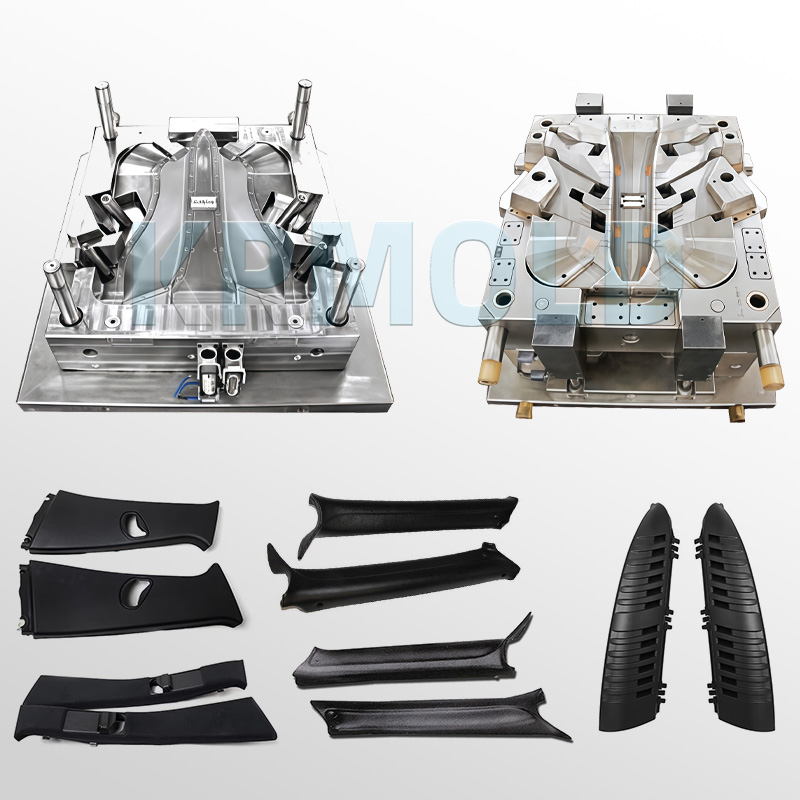
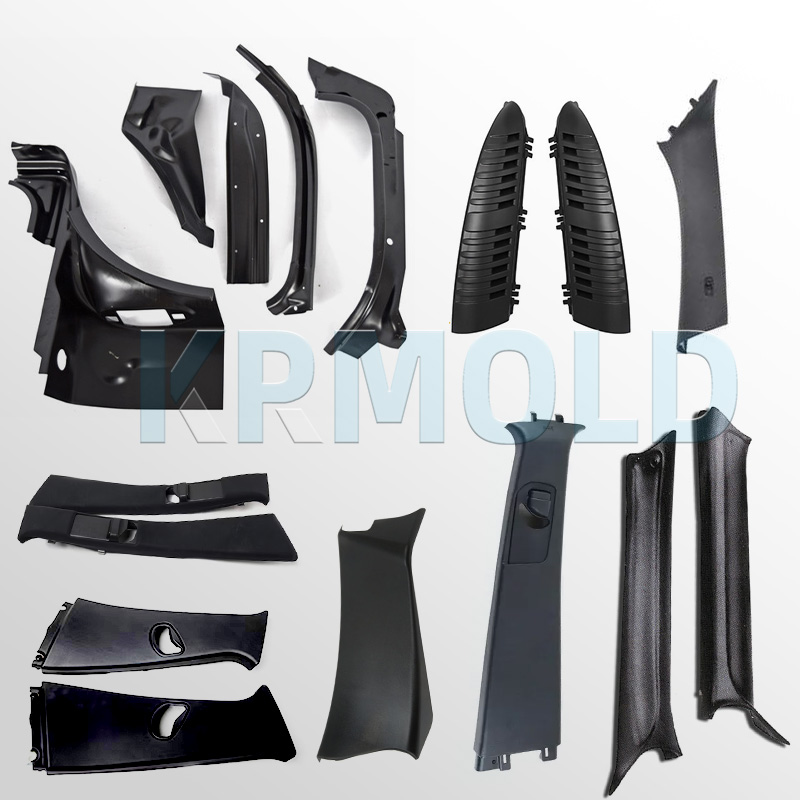
Plastic b pillar car part mould are critical in automobile manufacturing; they directly determine the molding quality, dimensional accuracy, and assembly compatibility of the automotive interior parts b pillars, thereby influencing the vehicle's safety performance and durability. Market prices for plastic b pillar car part mould vary significantly, a disparity closely tied to manufacturing technologies, quality standards, and precision requirements. When making a selection, one should never blindly pursue the lowest price; low-cost automotive interior parts b pillar mould are prone to issues such as insufficient precision and rapid wear, which ultimately increase costs associated with rework and downtime later in the process. In this article, KRMOLD provides a detailed breakdown of the design and manufacturing costs associated with these plastic b pillar car part mould to assist you in making informed decisions.
If you have requirements for automotive interior parts b pillar mould, please feel free to contact KRMOLD at any time, or call our hotline at +86-13702855825 for a consultation. We will provide customized plastic b pillar car part mould manufacturing solutions and precise cost estimates.
1. Design Costs for Plastic B Pillar Car Part Mould
Design serves as the foundation for the production of automotive interior parts b pillar mould; its cost typically accounts for 15% to 25% of the total project cost and primarily comprises the following components:
1.1 Product Analysis Costs
As critical structural components, plastic b pillar car part feature complex geometries and demand high levels of precision, necessitating the involvement of professional engineers for product analysis. Engineers must meticulously analyze parameters such as geometric shape, dimensional accuracy, and wall thickness. By adhering to industry standards, they ensure that the automotive interior parts b pillar mould design meets production requirements and helps avoid the waste associated with rework. The labor costs for these senior engineers constitute the core expense in this phase.
1.2 Plastic B Pillar Car Part Mould Structure Design Costs
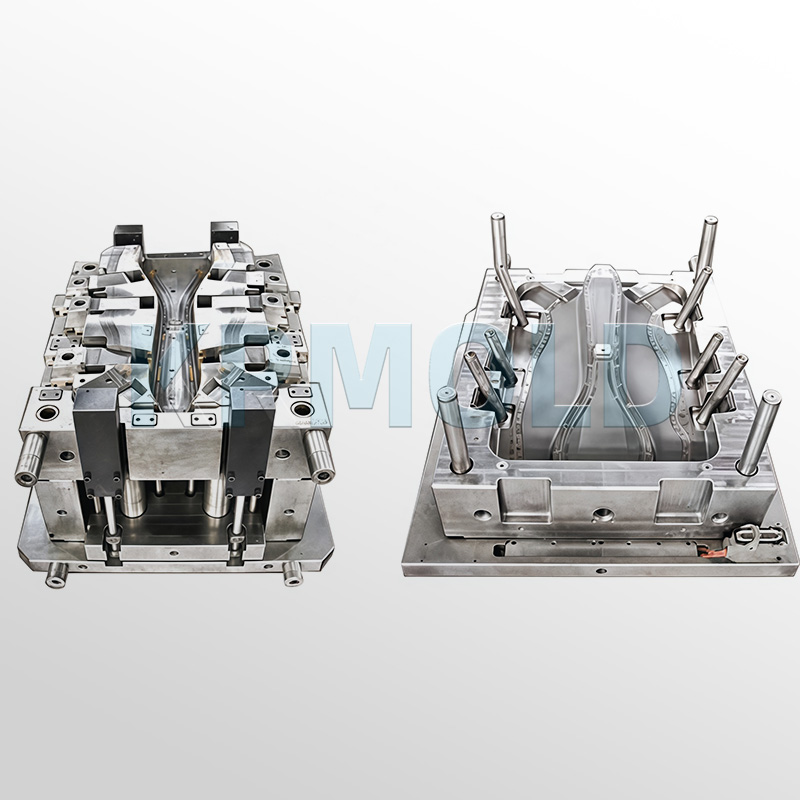
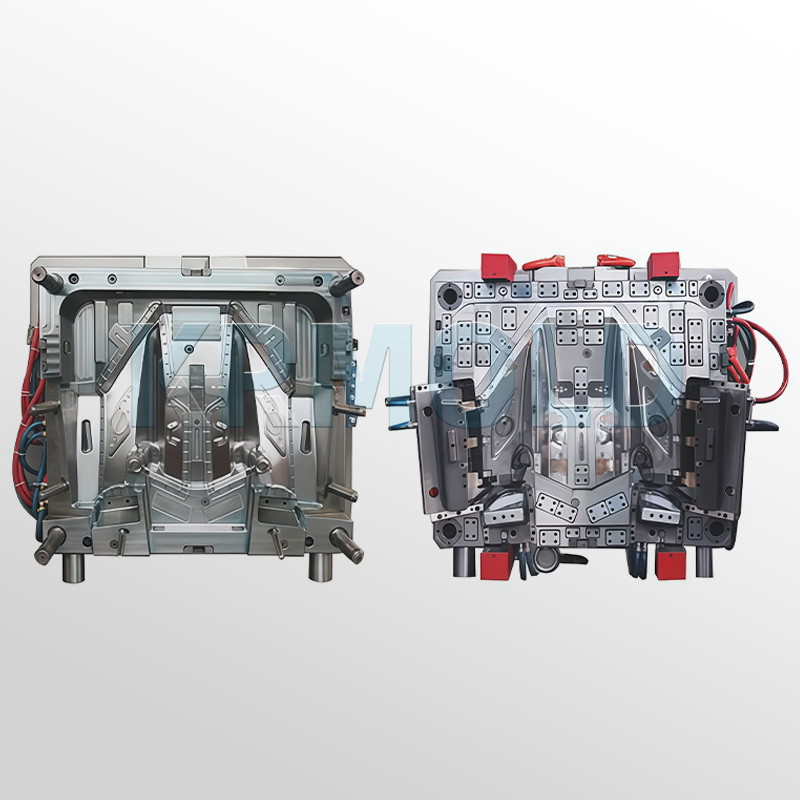
The structural design of an automotive interior parts b pillar mould directly impacts molding efficiency. This process is typically executed using software tools such as UG and AutoCAD; the associated costs depend on the complexity of the plastic b pillar car part mould structure and the engineering hours required. Given the large size of these parts—along with the prevalence of reinforcing ribs and undercuts—multi-cavity mold structures are frequently required. Furthermore, automotive interior parts b pillar mould for more complex vehicle models often necessitate the integration of additional mechanisms, such as angled ejectors and sliders, which significantly increases both the design difficulty and the overall cost.
1.3 Simulation and Verification Costs
During the plastic b pillar car part mould design phase, software tools—such as Moldflow—are utilized to conduct mold flow analyses. These simulations replicate the entire injection molding process, enabling engineers to anticipate potential defects and optimize the design, thereby reducing the costs associated with physical mold trials. The costs for this phase are driven by software licensing fees and the engineering time dedicated to analysis. Automotive interior parts b pillar mould requiring high-precision output often undergo multiple rounds of optimization; while this increases the immediate design costs, it ultimately leads to a reduction in overall material waste and production losses.
1.4 Material Selection Costs
Plastic b pillar car part mould must withstand high pressures and temperatures. Commonly used materials include P20, 718, and H13, each presenting distinct cost differences: P20 is suitable for automotive interior parts b pillar mould requiring standard precision; 718 is appropriate for mid-to-high-end vehicle models, incurring costs 20% to 30% higher than P20; and H13 is utilized for large-scale mass production, representing the highest-cost option. Expenses related to material procurement and heat treatment are also factored into this cost category.
1.5 Standard Component Selection Costs
Standard components—such as guide pillars and ejector pins—constitute a critical part of plastic b pillar car part mould. Their cost is contingent upon the brand, specifications, and quantity utilized. Standard components from renowned brands offer high precision but come at a premium price; furthermore, as the complexity of the automotive interior parts b pillar mould structure increases, the volume of standard components required rises, thereby driving up overall costs.
1.6 Other Design-Related Costs
This category encompasses costs associated with plastic b pillar car part mould miniaturization and optimization, design modifications, and intellectual property rights. Miniaturization and optimization efforts necessitate additional design man-hours; design changes result in increased rework expenses; and the incorporation of patented technologies requires the payment of intellectual property fees.
2. Manufacturing Costs for Plastic B Pillar Car Part Mould
Automotive interior parts b pillar mould manufacturing costs typically account for 60% to 75% of the total project cost. Key influencing factors include the choice of materials, dimensional complexity, and production processes; post-processing costs are also included in this category.
2.1 Core Factors Influencing Plastic B Pillar Car Part Mould Manufacturing Costs
Mold material selection is the primary cost driver. Beyond the materials used for the mold cavity and core, the material chosen for the mold base also impacts costs: steel is suitable for large-scale mass production but entails higher costs, whereas aluminum is appropriate for small-batch prototyping and offers cost savings of approximately 30%. Larger component dimensions and more intricate structural designs necessitate larger automotive interior parts b pillar mould and present greater machining challenges, leading to a significant escalation in manufacturing costs; indeed, the cost of plastic b pillar car part mould with complex structures can exceed that of simpler designs by more than 50%. Production processes directly influence costs: standard mechanical machining offers lower costs but may lack sufficient precision, whereas Computer Numerical Control (CNC) machining provides high precision but comes at a higher expense. Molds requiring ultra-high precision often necessitate 5-axis simultaneous machining, and surface treatment processes also contribute to increased costs. While simple automotive interior parts b pillar mould are relatively inexpensive to produce, complex and custom-designed plastic b pillar car part mould—due to their inherent machining difficulties and the increased labor and equipment required—incur higher costs and demand precise cost estimation by specialized manufacturers.
2.2 Post-Processing Costs
This category primarily covers the material costs for injection molding trials, automotive interior parts b pillar mould maintenance expenses, and transportation costs. The greater the number of plastic b pillar car part mould trials and the larger the mold dimensions, the higher the associated costs for sample materials and transportation; maintenance fees, meanwhile, are allocated for automotive interior parts b pillar mould debugging and upkeep to ensure smooth and reliable operation.
3. Benefits of Investing in High-Quality Plastic B Pillar Car Part Mould
While the initial investment for high-quality automotive interior parts b pillar mould may be substantial, the long-term benefits are significant. First, they offer superior durability; high-quality plastic b pillar car part mould boast a service life exceeding 100,000 cycles, whereas inferior molds are prone to wear and deformation, thereby increasing subsequent repair and replacement costs. Second, they enhance product quality, minimize part defects, and reduce rework rates. Third, they enable highly efficient production, perfectly aligning with the demands of mass manufacturing. Fourth, they generate long-term cost savings that effectively offset the high initial investment.
When planning mold-related costs, it is essential to establish a rational budget for design and production, compare quotes from multiple suppliers, and accurately estimate the production timeline as well as any potential additional expenses. If you have mass production requirements for automotive interior parts b pillar mould, we invite you to contact KRMOLD to discuss how we can collaborate.