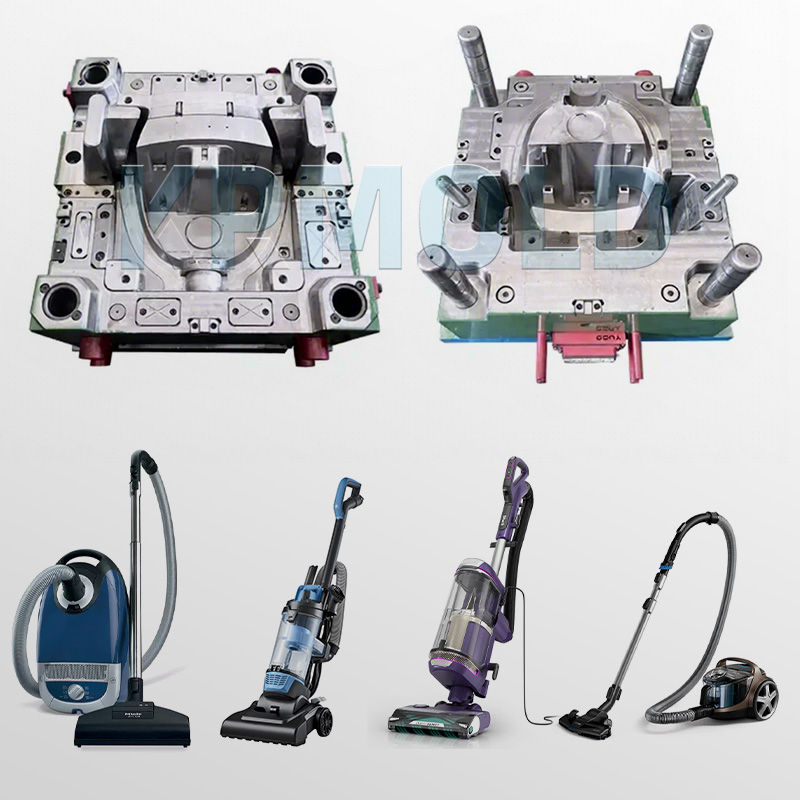
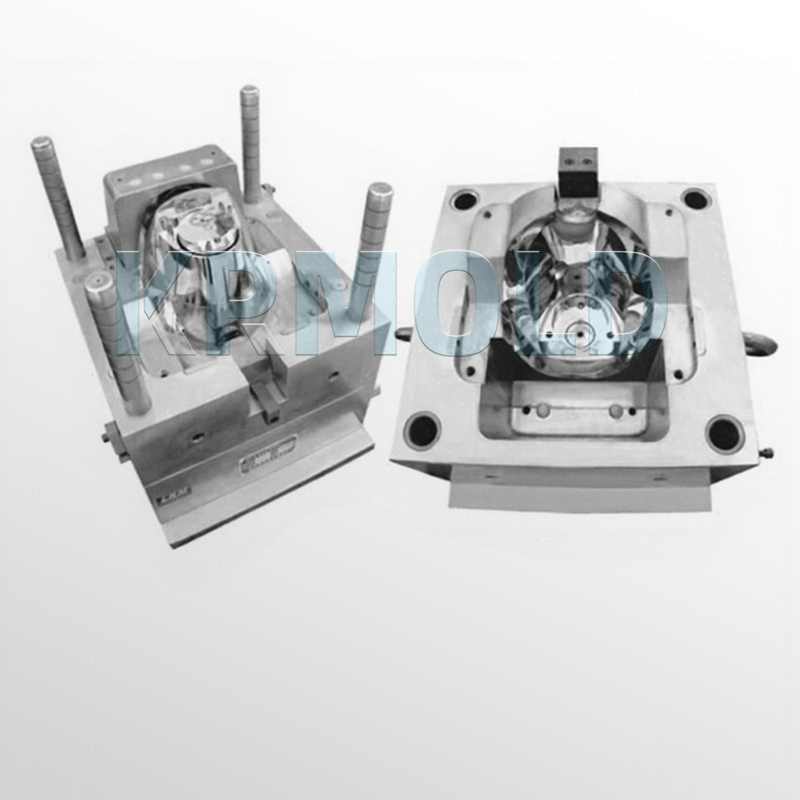
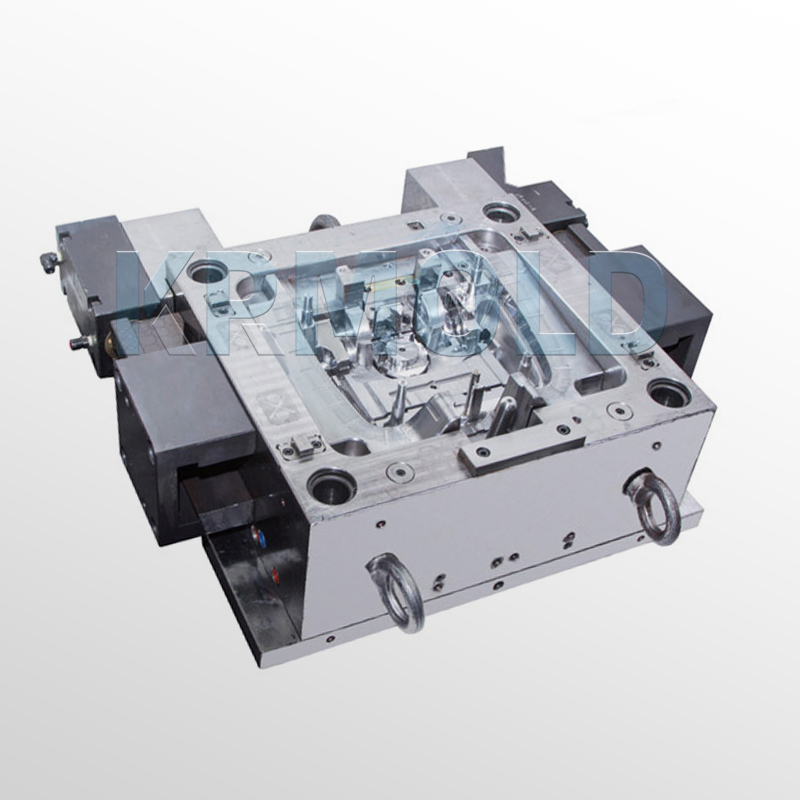
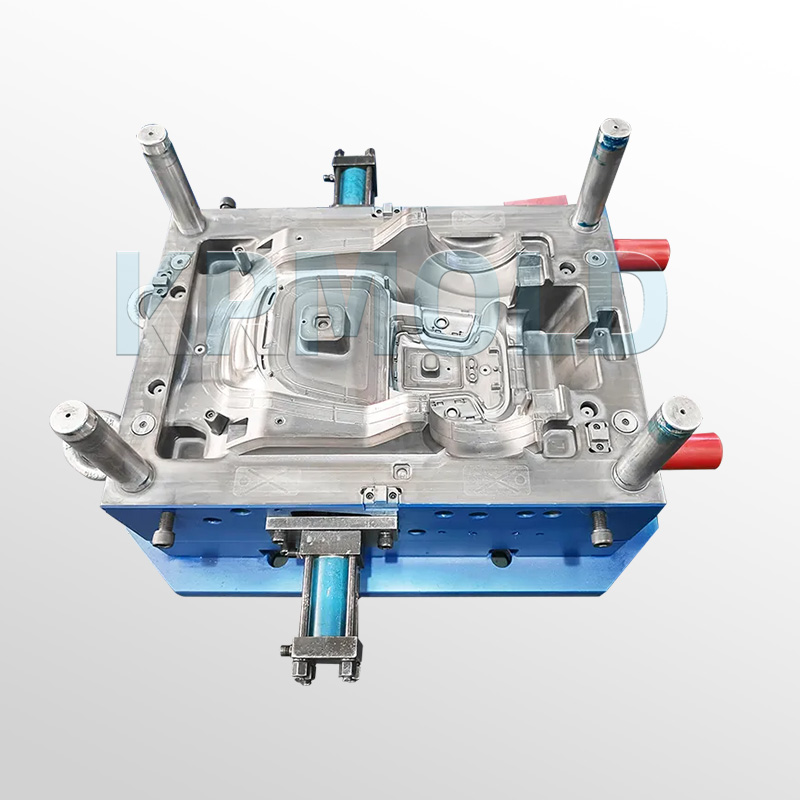
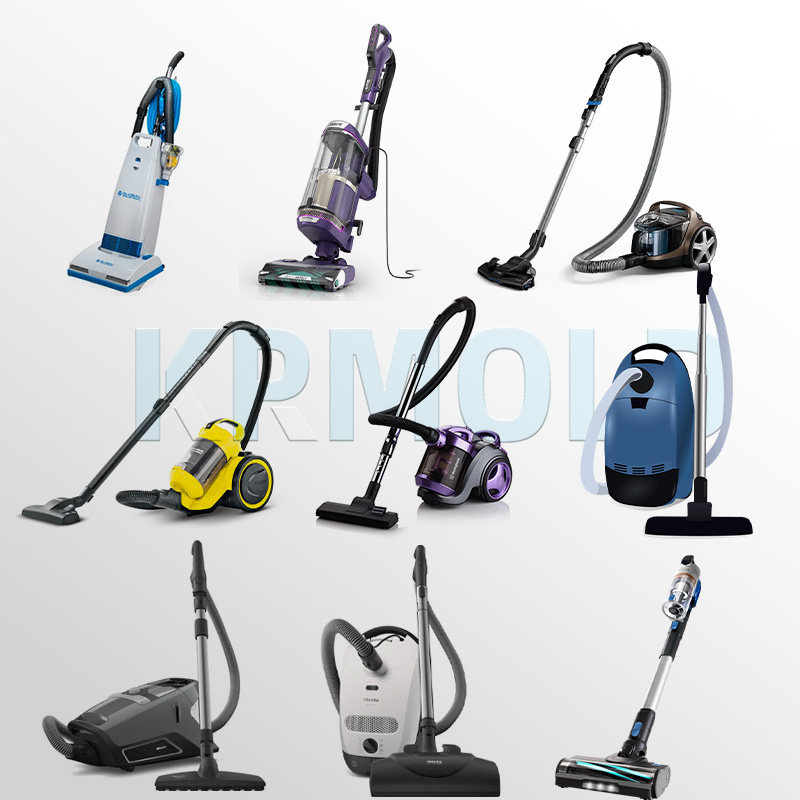
Introduction to Vacuum Cleaner Injection Mold
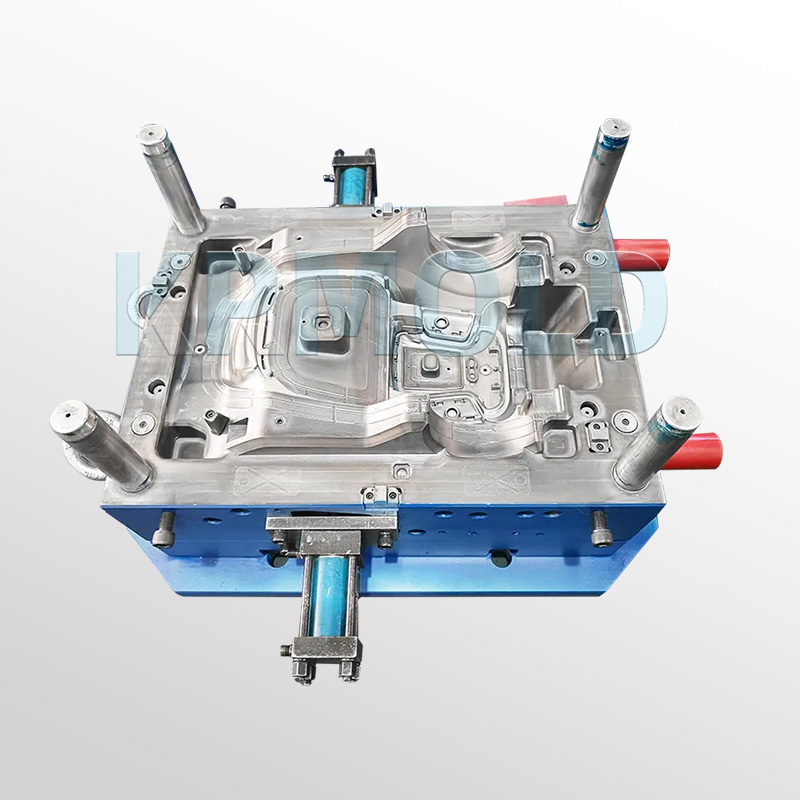
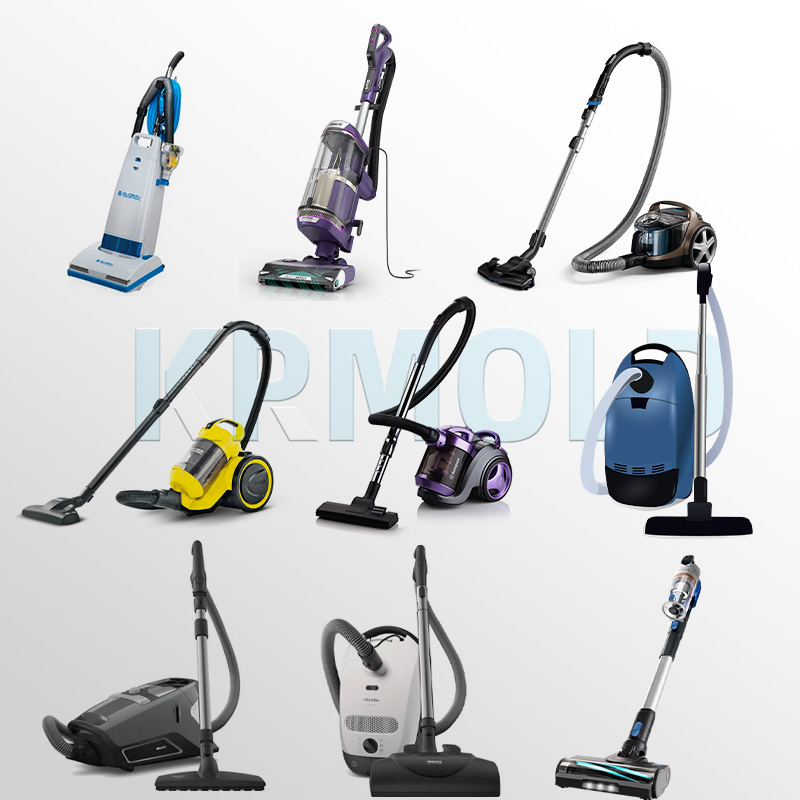
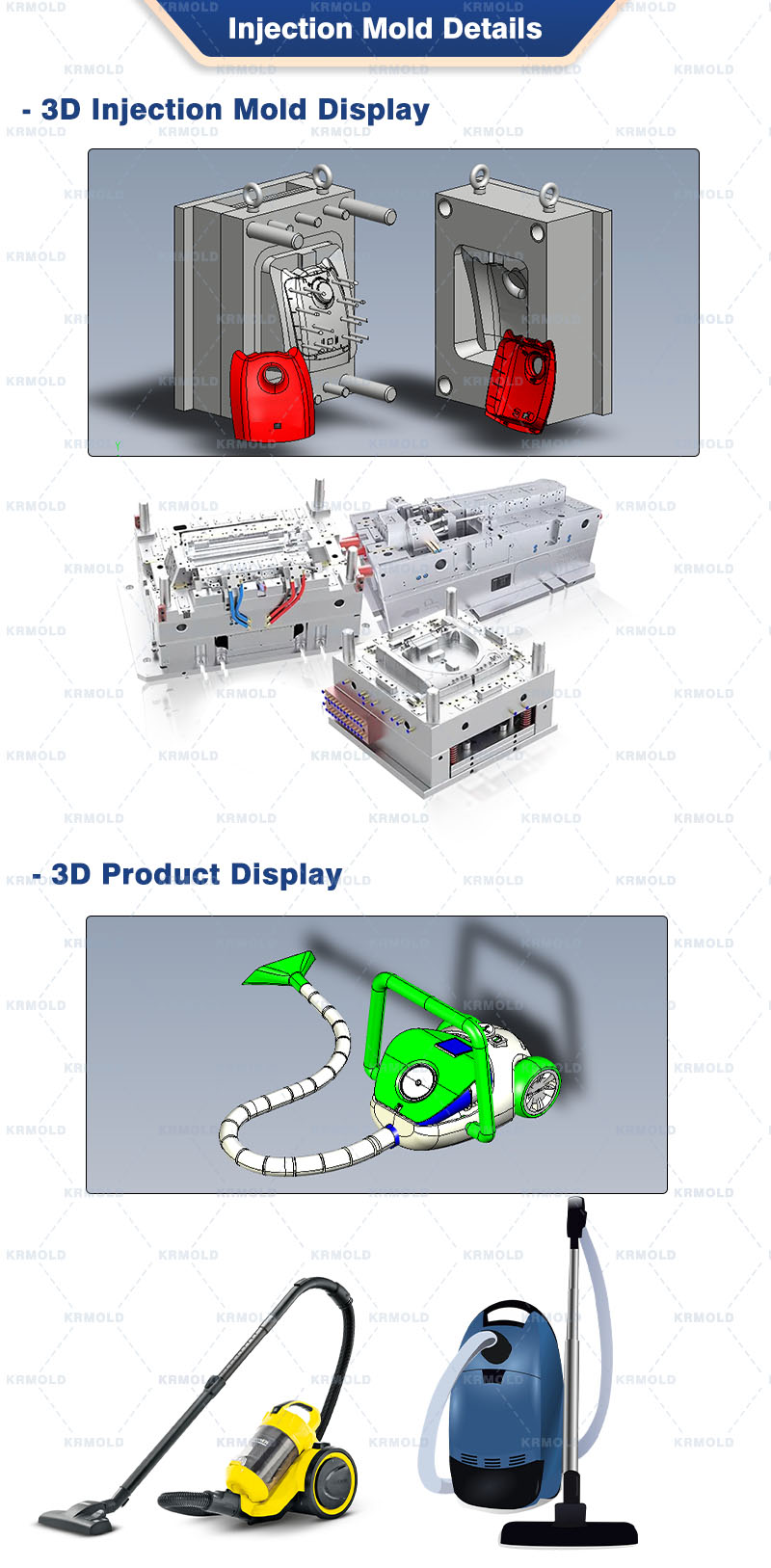
KRMOLD vacuum cleaner injection mold is specifically designed to produce vacuum cleaner housings that combine high structural strength with superior aesthetic quality.
Constructed from premium-grade mold steel and subjected to precision heat treatment, the vacuum cleaner injection mould is engineered to withstand millions of opening, closing, and injection cycles. This long-lasting design effectively lowers the amortized cost per unit, serving as a vital asset for the continuous, large-scale production of high-quality vacuum cleaner bodies.
Vacuum cleaner housings produced with this high-quality vacuum cleaner plastic injection mold offer enhanced sealing performance, superior noise control, and improved assembly efficiency.
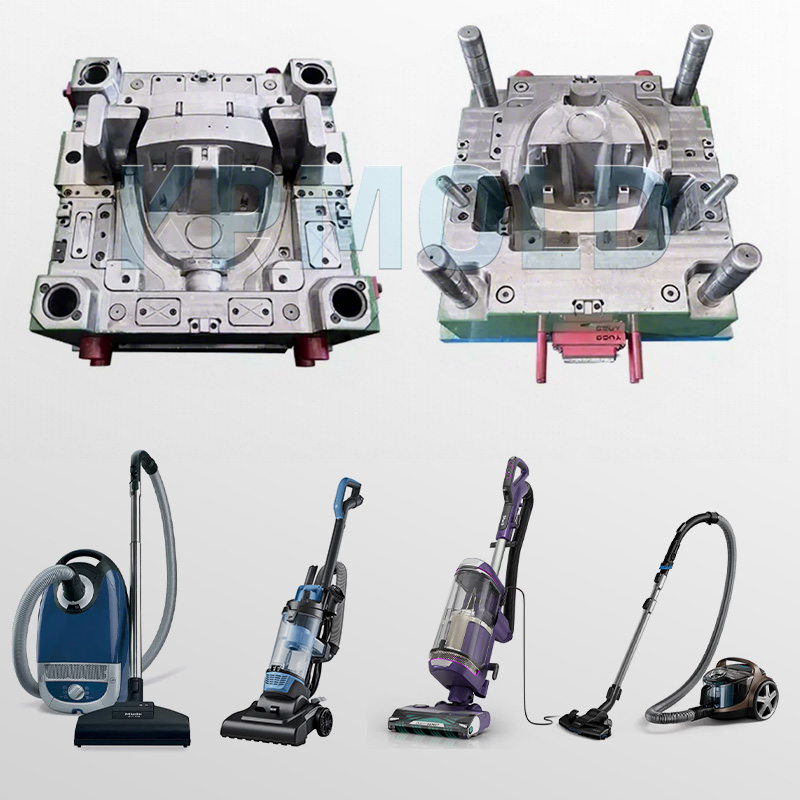
Specifications of Vacuum Cleaner Injection Mold
| Mold Name | Plastic Injection Mold for Vacuum Cleaner |
| Cavity | 1 Cavity |
| Primary Mold Material | 718H |
| Injection System | Hot Runner |
| Ejection System | Hydraulic Cylinder Ejection |
| Cycle Time | 45 Seconds |
Advantages of Vacuum Cleaner Injection Mold
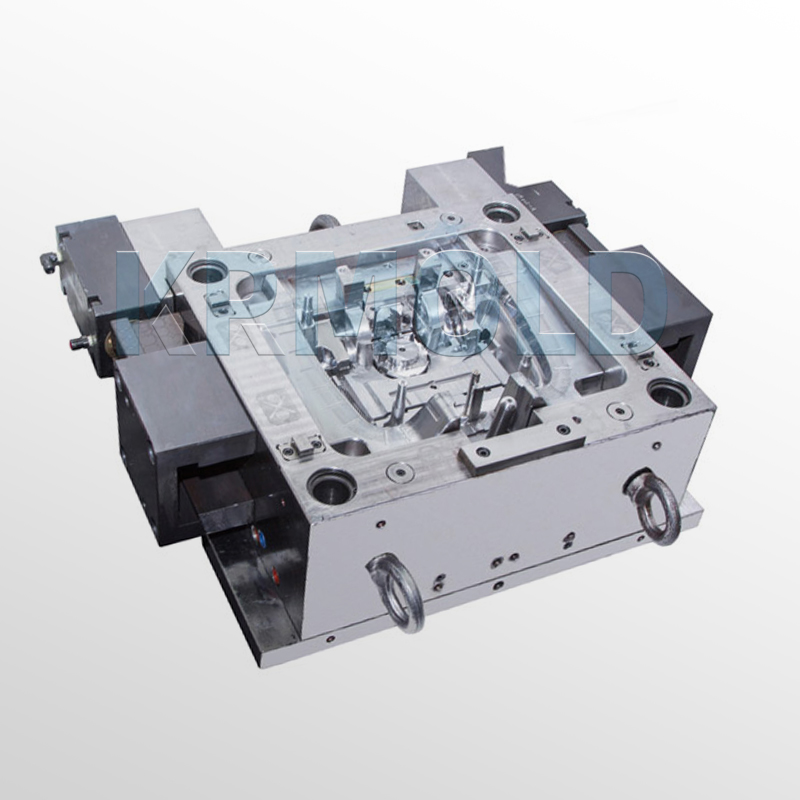
1. High-Efficiency Mass Production
The plastic mold for vacuum cleaner features an exceptionally short molding cycle time.
Once the vacuum cleaner injection mold is in use, each cycle—normally 20 to 60 seconds depending on wall thickness—produces one or more identical components.
This high-frequency output feature helps companies to quickly answer market rises and guarantee a strong supply network.
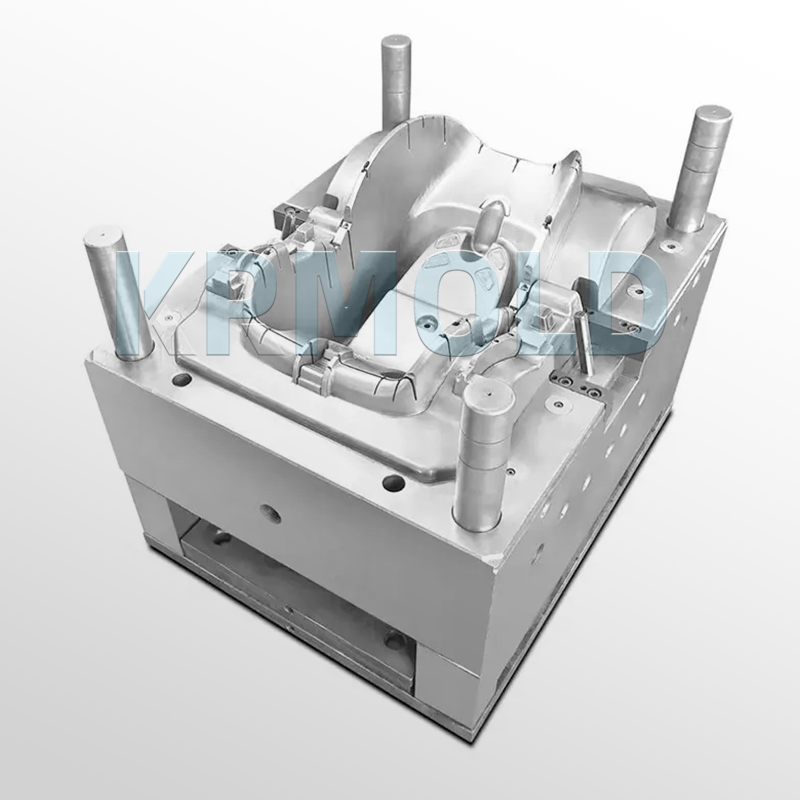
2. High Cost-Effectiveness
Although the initial manufacturing cost of the vacuum cleaner injection mould is significant, the long-term economic benefits are substantial.
As production volume increases, the initial mold cost is amortized across millions of parts. The precision injection molding process minimizes flash formation, thereby reducing raw material costs.
3. Multifunctional Design
Utilizing multi-axis machining, KRMOLD design team can integrate complex curves, internal ribs, and snap-fit features directly into the vacuum cleaner plastic injection mold. This makes lighter and more ergonomic vacuum cleaner housings possible—such as by adding textured grips that fit the palm nicely.
Moreover, during the vacuum cleaner injection mold design stage, KRMOLD engineers may straight away include slots for clear dust containers, openings for buttons and switches, and heat dispersion grids.
This integrated production approach reduces subsequent assembly steps, thereby enhancing the product's perceived value and the overall user experience.
Key Factors Determining the Price of Vacuum Cleaner Injection Molds
Understanding cost components is crucial for optimizing your budget when making vacuum cleaner injection mould procurement decisions.
1. Mold Materials
Material selection is the primary factor determining both mold performance and cost.
Steel Molds: Higher cost, but offer exceptional hardness and wear resistance. Ideal for large-scale production runs requiring hundreds of thousands or even millions of cycles. KRMOLD typically selects P20 or S136 steel to ensure superior surface finish.
Aluminum Molds: Offer good thermal conductivity and lower costs but are prone to faster wear. Typically used for prototyping, small-batch testing, or transitional products with short lifecycles.
2. Design Complexity
The geometric complexity of the vacuum cleaner plastic injection mold is directly linked to machining difficulty.
Undercuts and Sliders/Lifters: If the vacuum cleaner body features complex side openings or internal undercuts, the mold requires sophisticated slider or lifter mechanisms.
Machining Investment: Complex structures demand higher-precision CNC machining, EDM processing, and increased labor costs for assembly.
3. Cavity Count
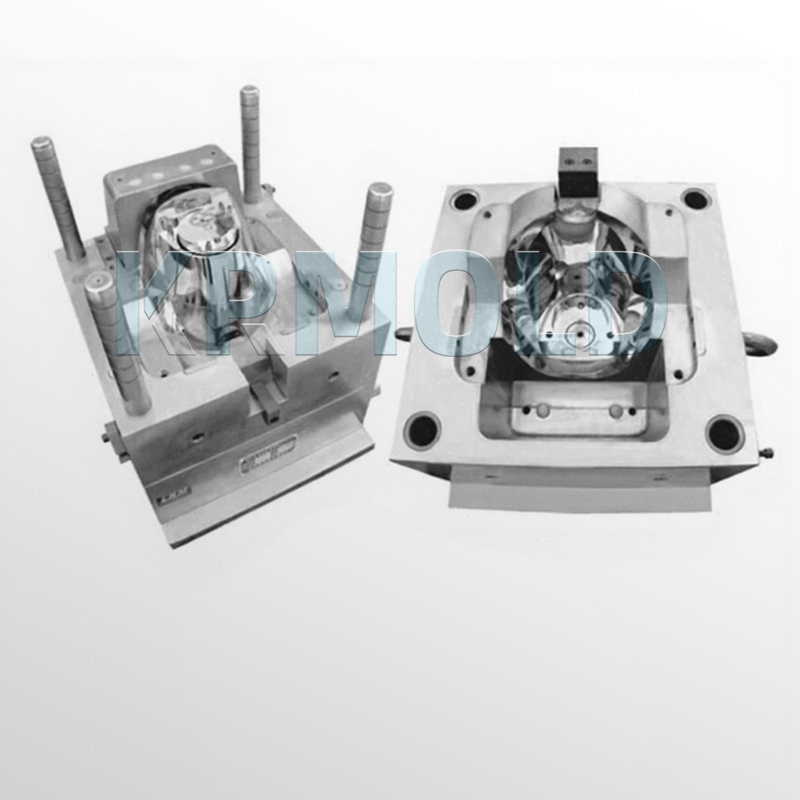
Single-Cavity Molds: Suitable for large body components, ensuring uniform injection pressure.
Multi-Cavity Molds: Able to simultaneously make numerous components—like decorative trim or buttons.
Multi-cavity molds are the best option for lowering long-term production costs even if they cost more to make and call for more tonnage on the injection molding equipment since they greatly increase hourly output efficiency.
Why Choose KRMOLD?
4.1 Over 20 Years of Industry Experience
KRMOLD has been deeply engaged in the vacuum cleaner injection mold manufacturing industry for more than two decades.
We have compiled a lot of information on the shrinkage rates and flow properties of several resin materials—ABS, PP, PC, PA66, among others.
Tailored to the particular use of every vacuum cleaner component, this hands-on experience lets us provide unique solutions that balance strong structural integrity with excellent surface finishes.
4.2 Advanced Manufacturing and Inspection Capabilities
KRMOLD continuously invests in state-of-the-art global production equipment:
Machining Equipment: High-speed CNC machining centers, precision slow-feeding wire-cut EDM, and multi-axis sinker EDM machines ensure machining precision within ±0.01mm.
Inspection Equipment: To guarantee every delivered vacuum cleaner injection mold satisfies design criteria, coordinate measuring equipment and optical inspection systems help to conduct thorough dimensional verification of mold cavities and sample components.
4.3 Full Lifecycle Project Support
KRMOLD services are deeply integrated into the customer's entire product lifecycle:
Design for Manufacturability Analysis: Prior to mold manufacturing, we assist clients in optimizing the vacuum cleaner body structure—recommending appropriate wall thicknesses and draft angles—to prevent issues like sink marks and demolding difficulties at the source.
End-to-End Project Management: We utilize a robust project management system, assigning a dedicated project manager to each order to provide real-time progress updates.
Delivery and After-Sales Support: Our service covers the entire process, from mold trials (T1, T2, etc.) and final delivery to mass production guidance and vacuum cleaner plastic injection mold maintenance recommendations.
Contact the KRMOLD technical team to obtain a customized solution and detailed quotation for your plastic mold for vacuum cleaner.
Specify the type of plastic (e.g. PP, ABS) and post-processing requirements (e.g. spraying, silk-screen printing), and provide 2D or 3D plastic part drawings should be provided. At the same time, provide the production volume, appearance requirements, tolerance standards, etc.
Generally speaking, our engineers will start to prepare the quotation immediately after the customer provides the complete production requirements. Usually it takes about 1-3 days.
The lead time for regular injection molds is usually 30-60 days, and may be longer for complex molds. For example, the typical lead time for liquid silicone molds is around 60 days, covering design, manufacturing, mold testing, etc.
High-precision processing technology: High-precision equipment such as CNC machining centers (CNC) and electric discharge machining (EDM) are used to optimize the design process in combination with CAD/CAM software. Quality control: Inspection of key dimensions of the mold by Coordinate Measuring Machine (CMM) and verification of multiple sample batches during the trial molding stage. Material Selection: Use die steel with high wear resistance (e.g. H13, S136) and surface treatment (e.g. nitriding, chrome plating) for die nuts to extend the life.
After every 50,000 molds, check the guide pillar, ejector pin and other wear parts, and clean up the residual plastic and rust on the mold surface. Use high temperature grease for sliding parts (e.g. tilt top, slider) to reduce friction loss. Ensure that the water circuit is smooth and the temperature difference is ≤5℃ to avoid cracking of the mold due to thermal stress.
Mould cost of materials accounted for about 30-40% (such as 1 ton of P20 steel price of about 20,000 yuan), processing costs accounted for more than 50% (CNC labor hourly rate of about 80-150 yuan / hour). Small batch production can choose aluminum mold or simplify the structural design; more than 100,000 pieces is recommended to use carbide inserts to enhance life!
Mould injection products need to fully meet the design requirements (such as size, appearance), and can be continuous and stable production. Mold marking, inspection reports (such as material hardness test) and engineering drawings should be complete.
Mould steel (such as S136H, NAK80 and other imported materials cost more) and the type of mold embryo (aluminum mold short-term cost is low but short life) directly affect the cost, the use of CAD/CAE/CAM design technology, hot runner system, etc. will increase the upfront investment, but can enhance the long-term benefits (such as reducing the sprues, increase production capacity).