Introduction to Plastic Pail Bucket Injection Mold
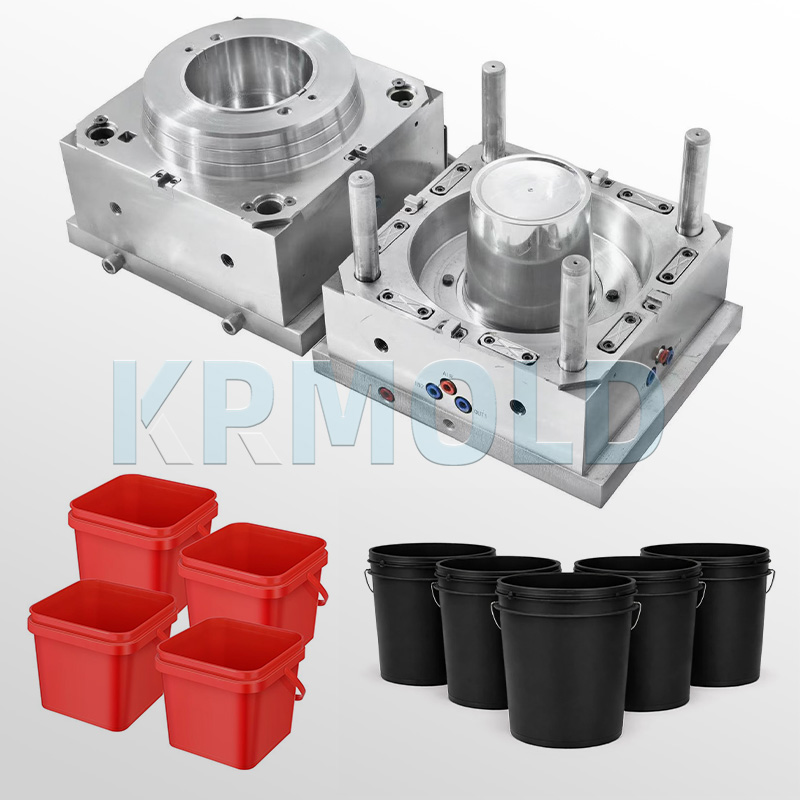
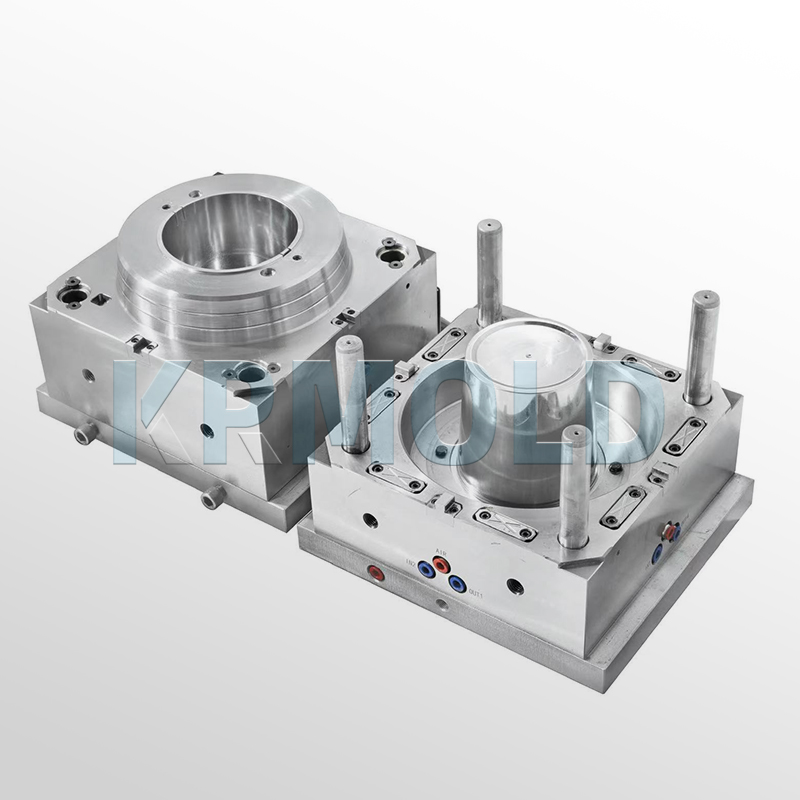
KRMOLD plastic pail bucket injection mold is engineered for the mass production of coating pails, paint buckets, and chemical storage containers. It enables the efficient and stable production of plastic buckets featuring precise dimensions, uniform aesthetics, and robust structural integrity—perfectly meeting the demands of industrial-scale manufacturing.
This plastic bucket injection mold features a short molding cycle, exceptional dimensional accuracy, and superior production repeatability, ensuring stability and consistency throughout mass production runs.
Buckets produced using KRMOLD plastic pail injection molds offer key advantages such as durability, impact resistance, stackability, and excellent sealing performance, all meeting industry standards.
These paint bucket injection molds are widely used in applications ranging from home improvement and small-scale painting projects to large-scale industrial coating operations and chemical material storage.
Custom plastic paint bucket mould designs allow for production across all these scenarios, comprehensively satisfying the diverse and personalized mass-production needs of various clients.
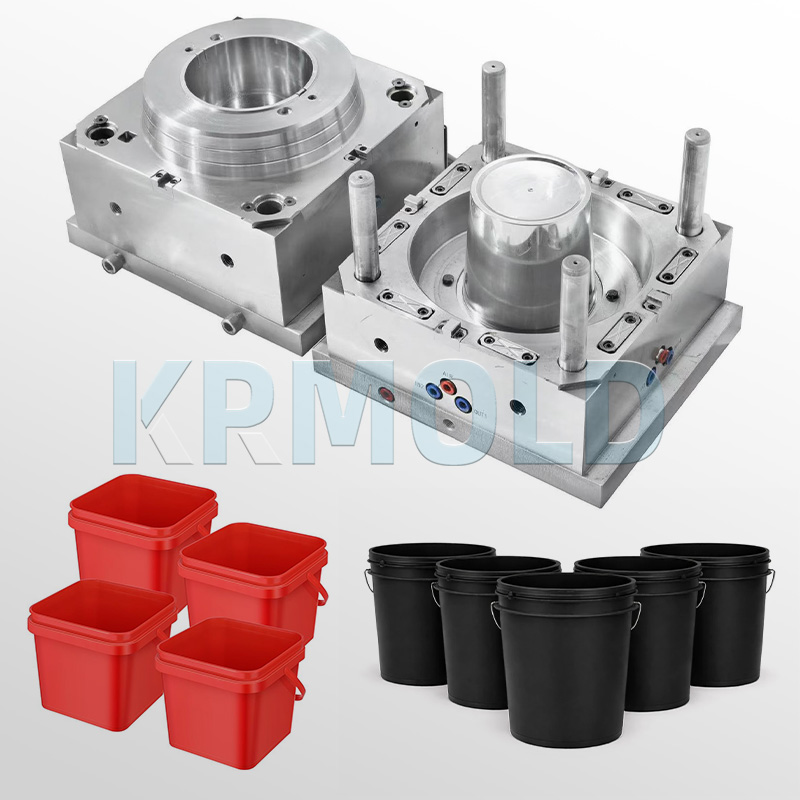
Specifications of Plastic Pail Bucket Injection Mold
| Cavity | 1 |
| Primary Mold Material | DIN 1.2738 |
| Injection System | Hot Runner |
| Ejection System | Ejector Pins |
| Cycle Time | 55 seconds |
Advantages of Plastic Pail Bucket Injection Mold
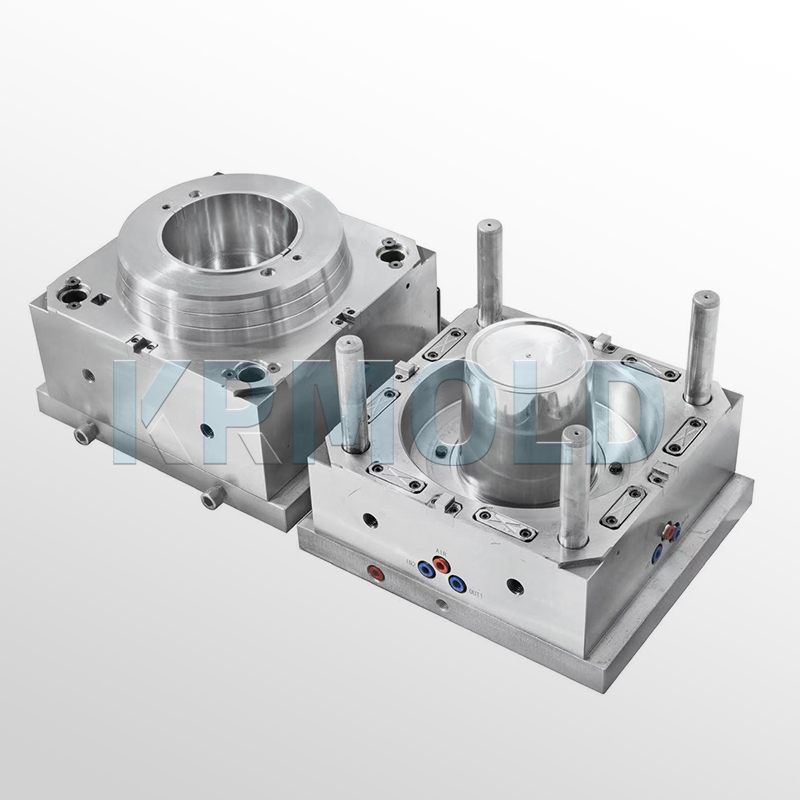
Fully Customizable Design
KRMOLD designs bespoke plastic bucket injection molds tailored to specific client product drawings, production environments, and capacity requirements, ensuring a precise match for any plastic bucket production need.
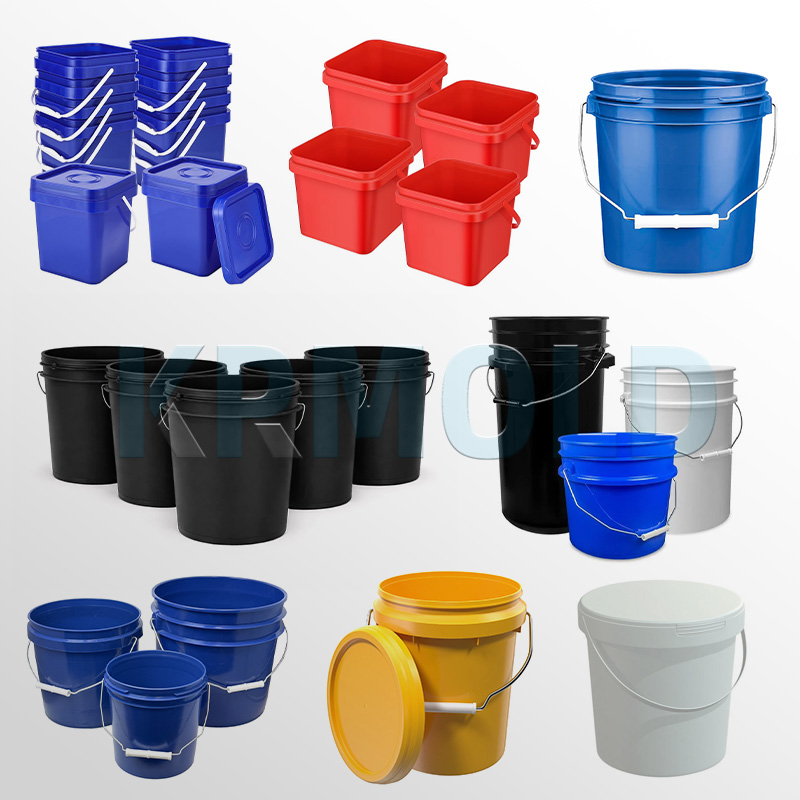
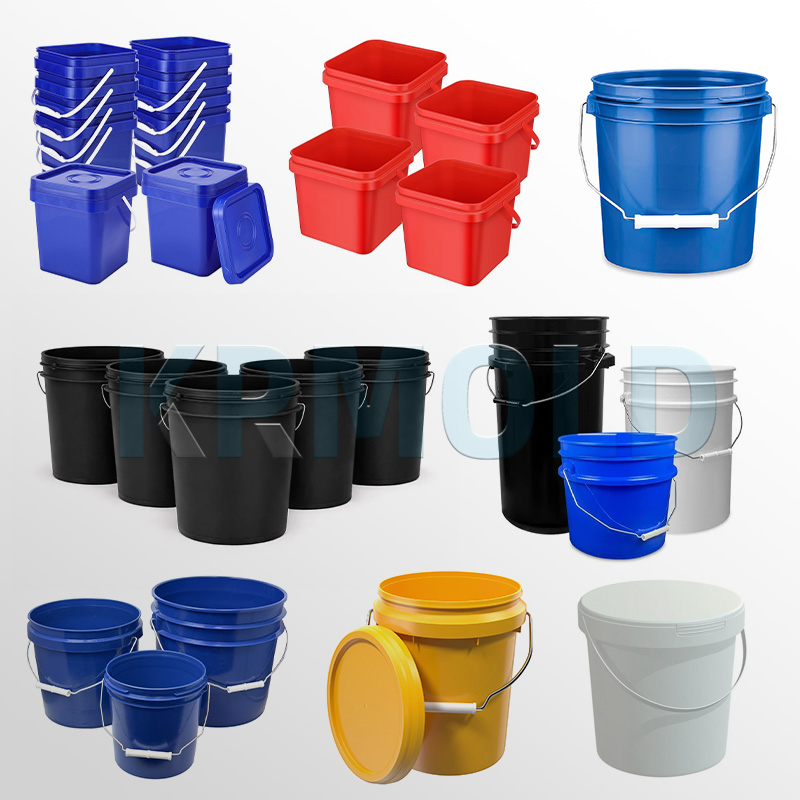
KRMOLD plastic pail injection molds cover a wide range of sizes, capable of reliably producing plastic buckets from 0.5L to 25L. This encompasses the full product spectrum, including small household paint buckets, medium-sized renovation coating pails, and large industrial chemical containers.
Regarding aesthetics and structural design, KRMOLD paint bucket injection molds not only form standard bucket shapes but also integrate ergonomic handle structures. The resulting products are easy to grip, stable when stacked, and effortless to transport, perfectly balancing practicality with visual appeal.
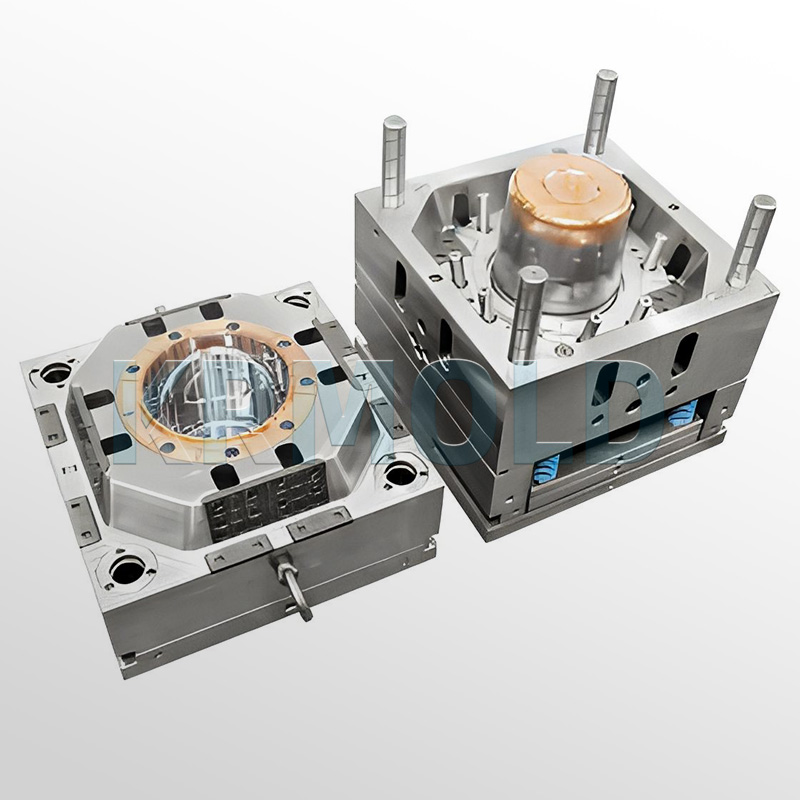
Crafted from Premium Materials
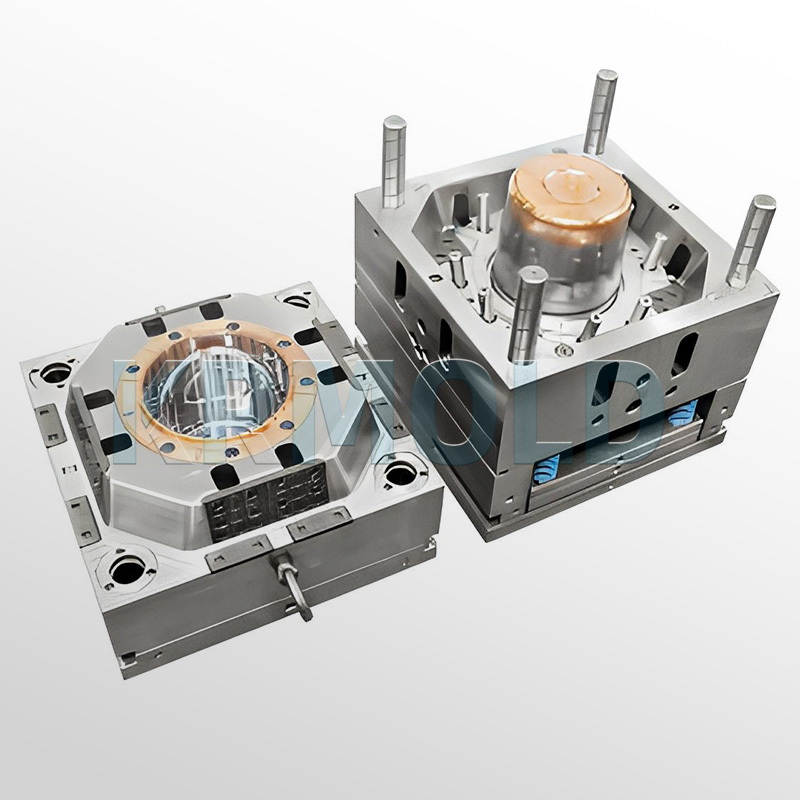
KRMOLD plastic paint bucket mould are constructed using industrial-grade mold steels. Key components incorporate Beryllium Copper to assist the molding process, balancing high strength, superior wear resistance, and efficient heat dissipation.
The entire plastic pail bucket injection mold assembly is optimized for HDPE resin, tailored to the production characteristics of chemical-grade plastic pails; the resulting pails combine high structural strength with a lightweight design.
Furthermore, the inclusion of Beryllium Copper significantly accelerates heat dissipation in critical core areas. This effectively shortens cooling times and reduces the overall molding cycle, thereby boosting production efficiency, minimizing heat-related wear, and substantially extending the plastic bucket injection mold's service life.
Design Considerations of Plastic Pail Injection Mold
1.Diverse Material Selection
KRMOLD selects specific high-quality steels for paint bucket injection molds based on individual client requirements regarding product precision, surface finish, and production costs.
P20 mold steel is a common base material; it offers excellent toughness, wear resistance, and dimensional stability. Balancing durability with cost-effectiveness, it is an ideal, high-value choice for the mass production of standard plastic pails.
For premium paint pails or high-gloss, flawless plastic pails, KRMOLD utilizes 718H steel. This material offers superior polishability, ensuring a smooth, refined surface finish free of burrs or scratches—eliminating the need for secondary finishing and perfectly meeting the aesthetic standards of high-end products.
Critical heat-dissipation zones—such as the top of the mold core and thin-walled cavity sections—feature Beryllium Copper inserts. Leveraging its rapid thermal conductivity, this material quickly draws heat away from the mold cavity and ensures uniform cooling, thereby enhancing the overall cycle efficiency of the plastic paint bucket mould.
2. Optimized Cooling System Design
KRMOLD arranges the cooling channels as close as possible to the inner walls of the mold cavity, ensuring uniform heat dissipation and cooling across the entire pail structure. It enables precise control of mold cavity temperature and ensures uniform, efficient heat dissipation; this effectively shortens the molding cycle and boosts mass production efficiency while completely eliminating various cooling-related defects.
3. Precision Gate and Runner Design
In the design of plastic pail bucket injection molds, KRMOLD employs a scientific hot runner system combined with a precise gate layout to minimize residual plastic melt and reduce raw material waste.
Simultaneously, the KRMOLD team precisely positions the gates based on the pail's structure, volume, and plastic flow characteristics. By optimizing the melt flow path, they ensure the plastic melt fills the entire mold cavity rapidly, uniformly, and completely.
This rational gate and runner design results in a molded pail with uniform structural strength and superior load-bearing capacity.
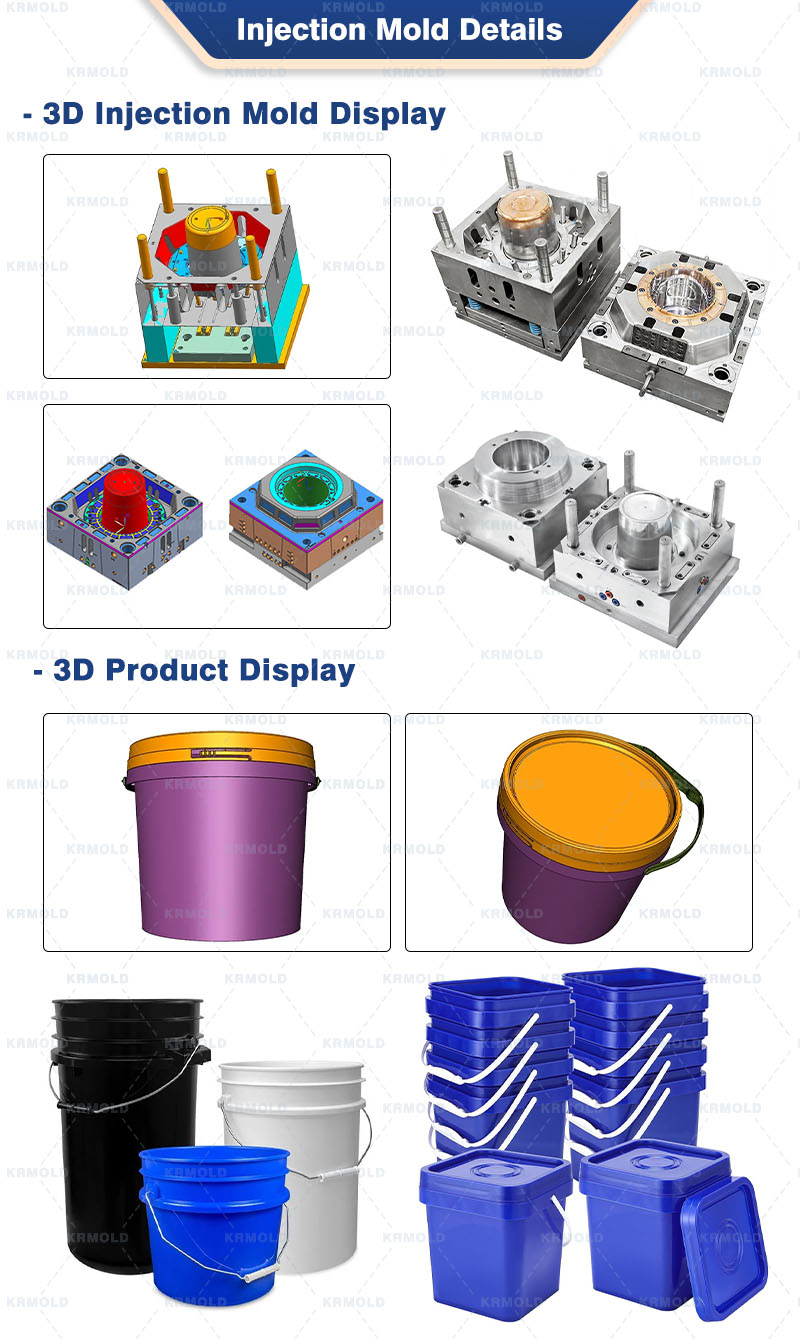
Applications of Plastic Pail Bucket Injection Mold
KRMOLD plastic bucket injection molds are widely used across industries such as chemicals, coatings, construction materials, and mechanical lubrication. They are suitable for producing storage pails for various fluid and powdered chemical materials, catering to a diverse range of end-use scenarios.
Plastic pails produced using these plastic pail injection molds can safely contain materials such as paints, interior and exterior wall coatings, construction chemicals, industrial lubricants, engine oils, and various greases.
Their sealing, corrosion resistance, and compressive strength meet rigorous industry standards, making them suitable for home renovation, construction projects, industrial warehousing, and logistics transport.
A Trusted Paint Bucket Injection Mold Supplier
KRMOLD specializes in the custom design and manufacturing of plastic paint bucket mould, backed by extensive experience in mold R&D and implementation.
From initial design, material selection, and mold machining to trial runs and after-sales maintenance, KRMOLD provides comprehensive custom services.
We precisely meet the production requirements for various chemical projects and pail specifications. While ensuring manufacturing precision and consistent quality, we deliver cost-effective, highly efficient, and durable plastic pail bucket injection mold solutions for our clients.
Specify the type of plastic (e.g. PP, ABS) and post-processing requirements (e.g. spraying, silk-screen printing), and provide 2D or 3D plastic part drawings should be provided. At the same time, provide the production volume, appearance requirements, tolerance standards, etc.
Generally speaking, our engineers will start to prepare the quotation immediately after the customer provides the complete production requirements. Usually it takes about 1-3 days.
The lead time for regular injection molds is usually 30-60 days, and may be longer for complex molds. For example, the typical lead time for liquid silicone molds is around 60 days, covering design, manufacturing, mold testing, etc.
High-precision processing technology: High-precision equipment such as CNC machining centers (CNC) and electric discharge machining (EDM) are used to optimize the design process in combination with CAD/CAM software. Quality control: Inspection of key dimensions of the mold by Coordinate Measuring Machine (CMM) and verification of multiple sample batches during the trial molding stage. Material Selection: Use die steel with high wear resistance (e.g. H13, S136) and surface treatment (e.g. nitriding, chrome plating) for die nuts to extend the life.
After every 50,000 molds, check the guide pillar, ejector pin and other wear parts, and clean up the residual plastic and rust on the mold surface. Use high temperature grease for sliding parts (e.g. tilt top, slider) to reduce friction loss. Ensure that the water circuit is smooth and the temperature difference is ≤5℃ to avoid cracking of the mold due to thermal stress.
Mould cost of materials accounted for about 30-40% (such as 1 ton of P20 steel price of about 20,000 yuan), processing costs accounted for more than 50% (CNC labor hourly rate of about 80-150 yuan / hour). Small batch production can choose aluminum mold or simplify the structural design; more than 100,000 pieces is recommended to use carbide inserts to enhance life!
Mould injection products need to fully meet the design requirements (such as size, appearance), and can be continuous and stable production. Mold marking, inspection reports (such as material hardness test) and engineering drawings should be complete.
Mould steel (such as S136H, NAK80 and other imported materials cost more) and the type of mold embryo (aluminum mold short-term cost is low but short life) directly affect the cost, the use of CAD/CAE/CAM design technology, hot runner system, etc. will increase the upfront investment, but can enhance the long-term benefits (such as reducing the sprues, increase production capacity).