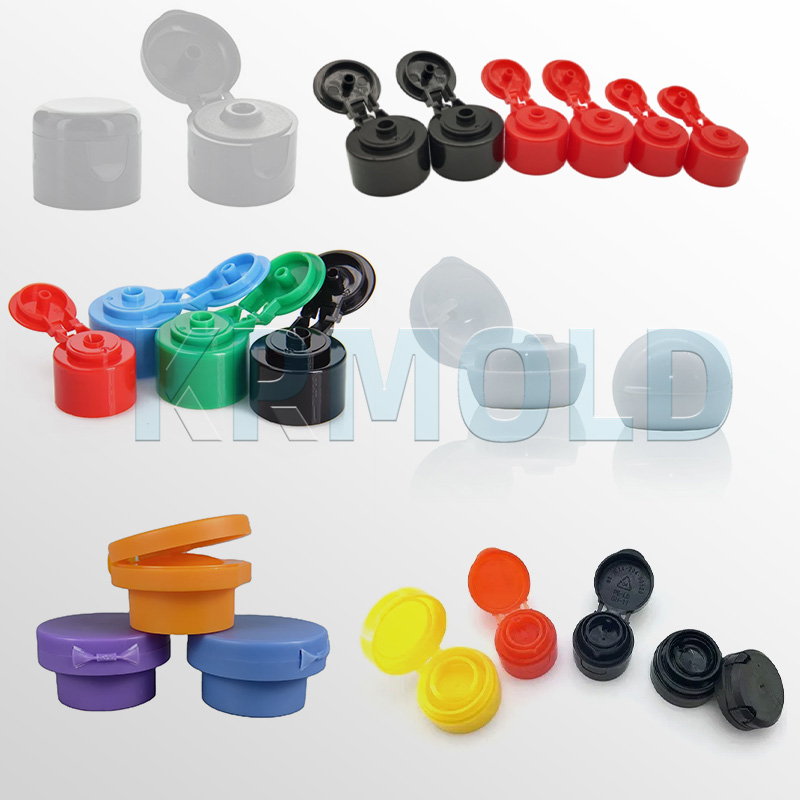
Introduction of Flip Top Cap Injection Mold
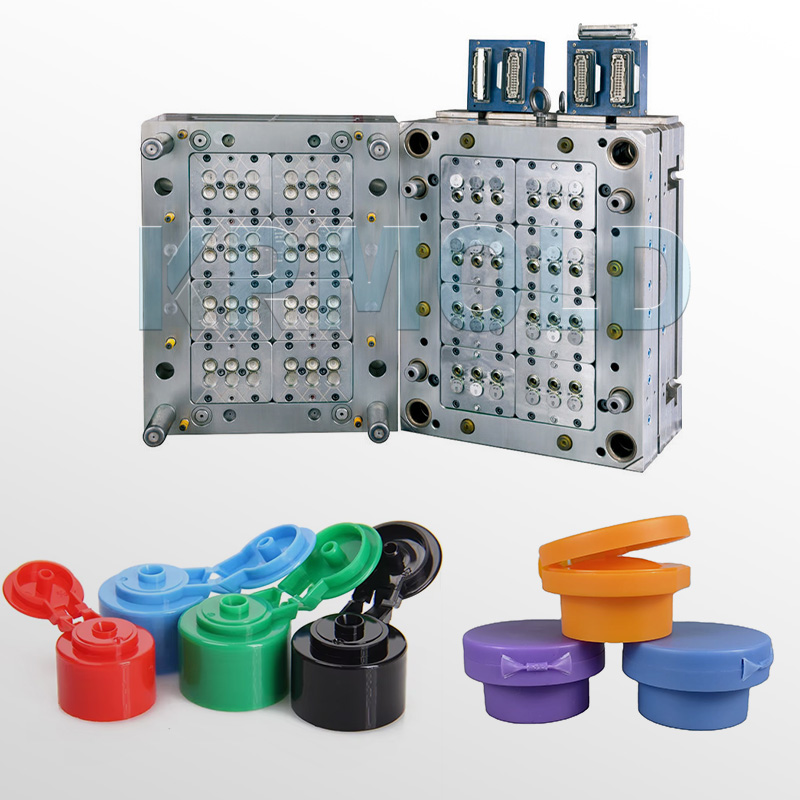
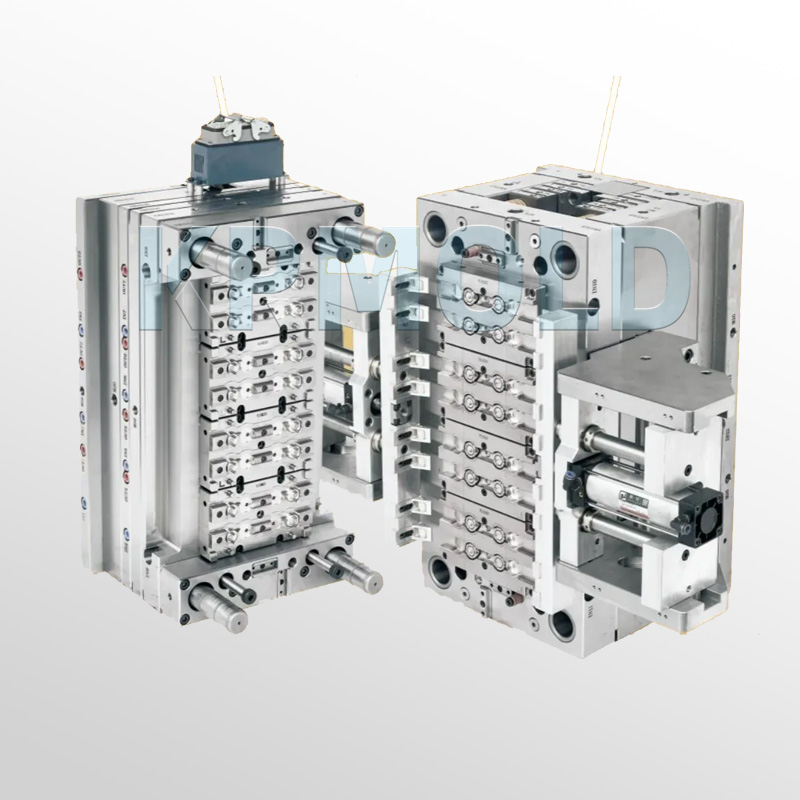
KRMOLD offers flip top cap injection molds that are custom-engineered to meet specific product specifications, production capacity requirements, and application scenarios, making them suitable for the mass production of a wide range of plastic flip-top caps.
These flip top cap molds serve diverse packaging sectors—including personal care, food and beverage, household chemicals, and cosmetics—ensuring that every cap produced delivers excellent sealing performance and reliable functionality.
Flip-top caps produced using KRMOLD flip-top cap plastic injection molds feature a lightweight, refined design and a smooth, even finish, perfectly aligning with current market trends favoring lightweight packaging.
Thanks to precision polishing and meticulous mold finishing, the final products are free from sharp edges, burrs, or scratches, effectively eliminating the risk of injury during use while significantly enhancing product safety and tactile quality.
Furthermore, the flip top cap mould utilizes a precision-engineered design to ensure a perfect fit between the cap and the corresponding bottle. The caps open and close smoothly with a secure snap-fit, effectively preventing leakage and ensuring comprehensive sealing integrity and product stability.
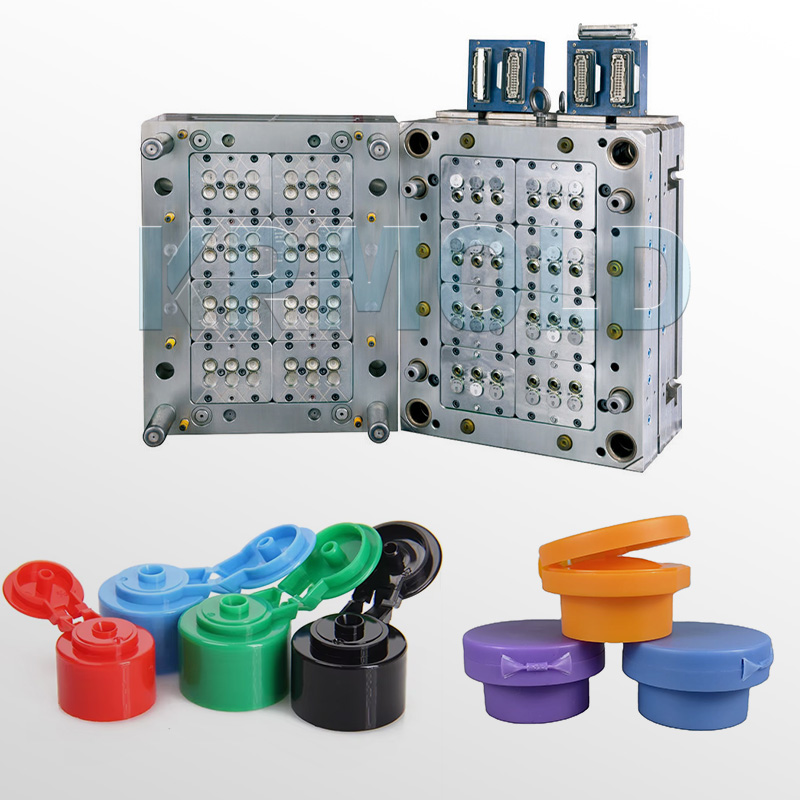
Specifications of Flip Top Cap Injection Mold
| Product Material | PP+PP |
| Mould Cavity | 16 |
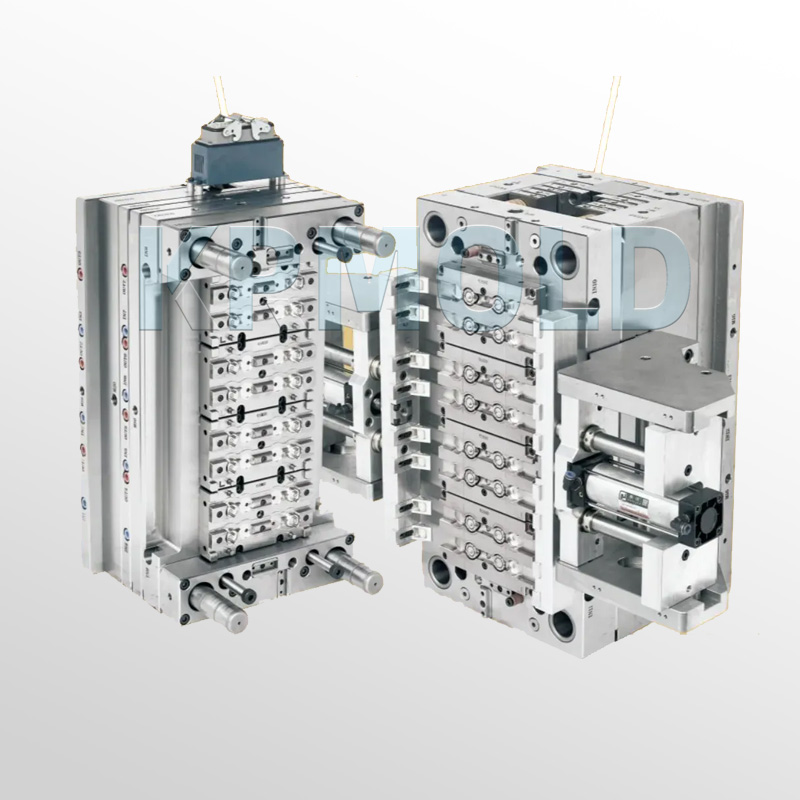
| Hot Runner System | 8-Tip Hot Runner |
| Mold Steel | German 2344 (48-50 HRC) |
Features of Flip Top Cap Injection Mold

Living Hinge Engineering
The hinge thickness and transition radii have been optimized to ensure durability and resistance to breakage during repeated opening and closing cycles.
The integrated molding of the flip-top ensures consistently smooth operation over the long term.

Leak‑Proof Seal
High-precision machining of the mold sealing surfaces ensures a tight fit when the cap is closed.
Reliable leak-proof performance is maintained even when stored upside down, meeting sealing standards for personal care and food packaging.

Fast Cycle Times
Equipped with a conformal cooling system to accelerate uniform cooling and setting of the plastic part.
Reduces cycle times and boosts mass production efficiency for flip-top cap injection molding.

Custom Orifice & Finish
Dispensing orifice size can be customized to accommodate materials of varying viscosities.
Supports a wide range of surface finishing techniques to meet diverse aesthetic requirements.
Advantages of Flip Top Cap Injection Mold
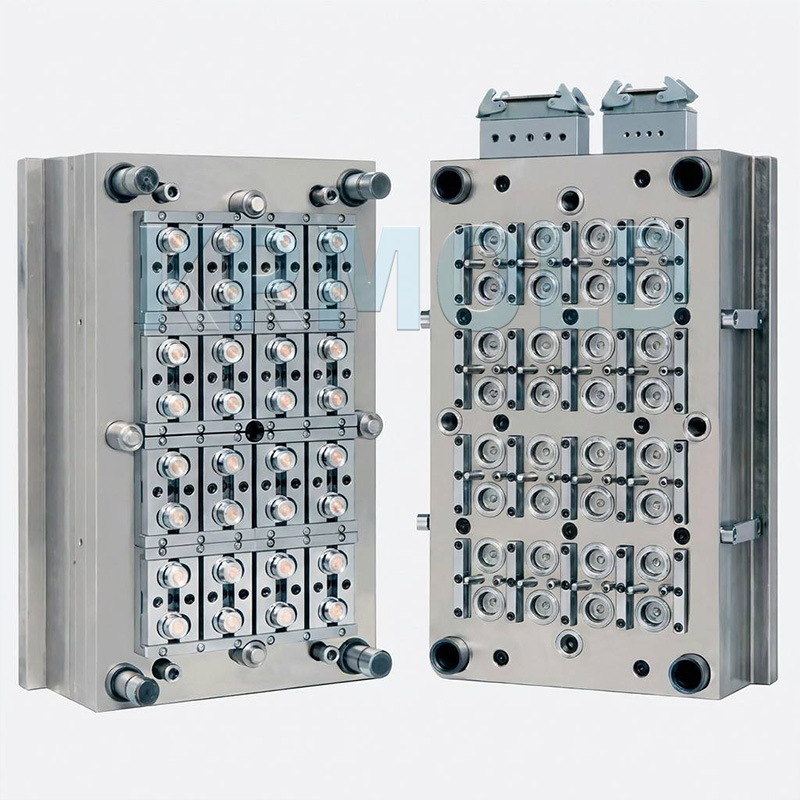
High-Quality Mold Steel
KRMOLD selects premium mold steel known for high strength, toughness, and wear resistance. This material offers balanced hardness, excellent resistance to deformation, and high tolerance for heat and corrosion.
It is perfectly suited for the high-temperature, high-pressure environment of injection molding, ensuring the structural stability and molding precision of the flip top bottle cap injection mold from the ground up.
Supported by this high-quality steel, the flip top cap mold is resistant to deformation, wear, and operational malfunctions. This significantly reduces maintenance frequency and extends the flip-top cap plastic injection mold's service life, enabling stable, long-term mass production for customers while lowering overall production and maintenance costs.
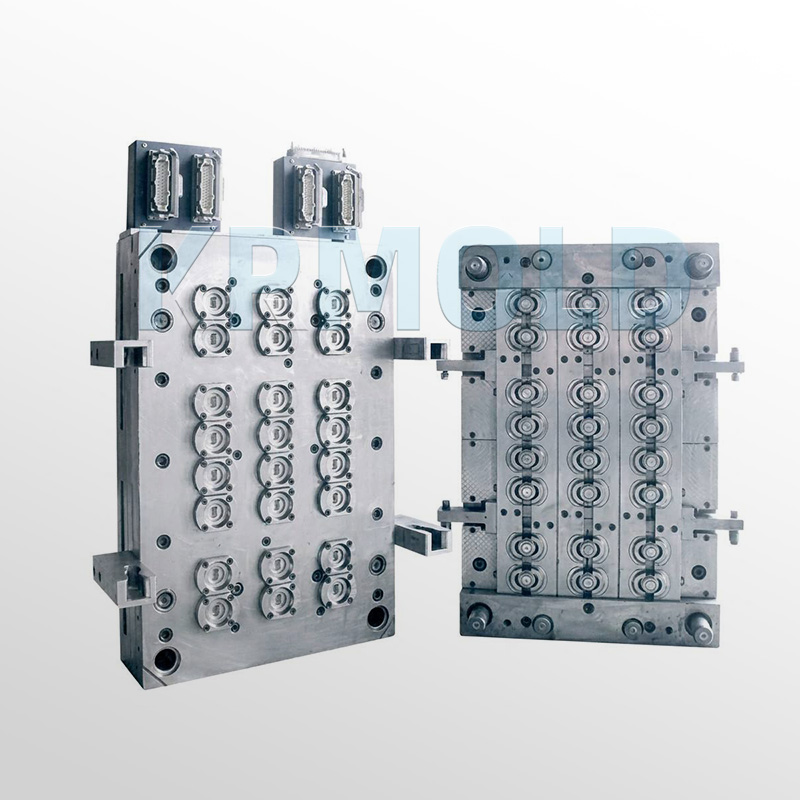
Multi-Cavity Options Available
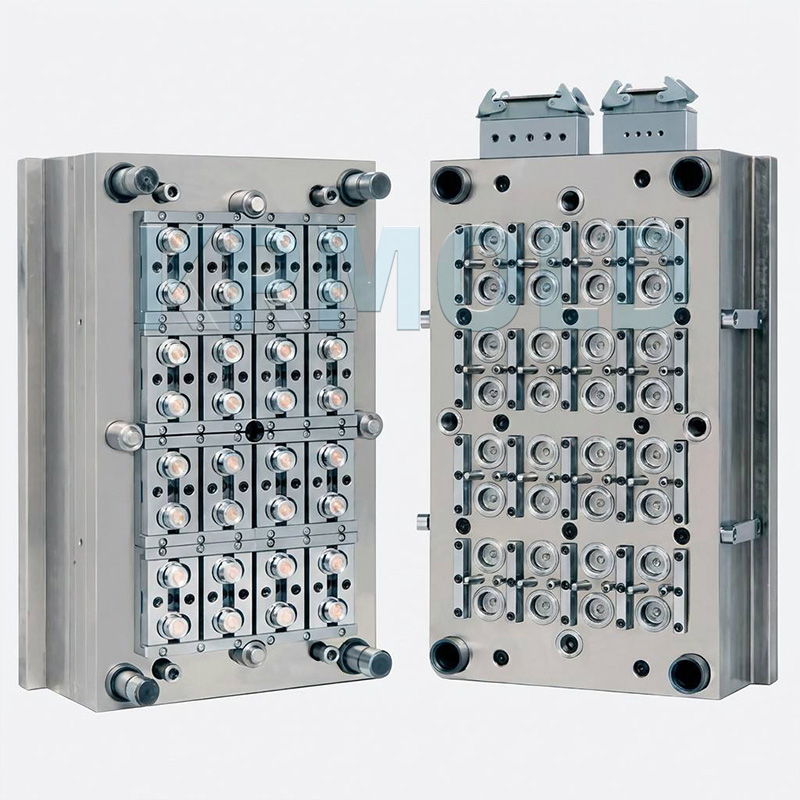
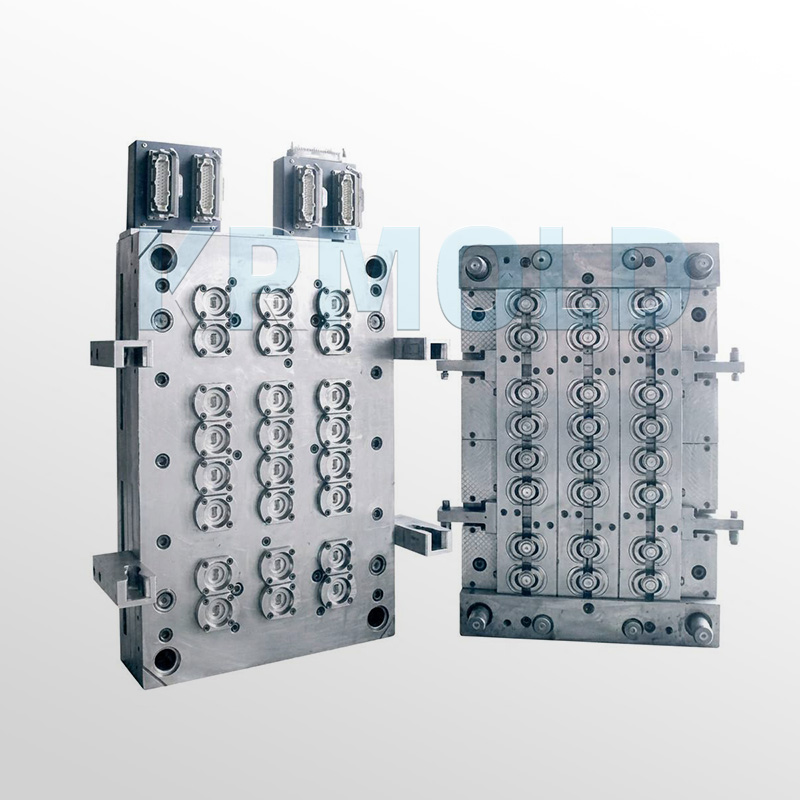
To accommodate varying production scales, KRMOLD flip top cap mould offer customizable multi-cavity configurations—ranging from 4 to 64 cavities (e.g., 1x4, 1x8, 1x16, 1x24, 1x32, 1x64). These solutions cover the full spectrum of production needs, from small-batch pilot runs to medium-volume production and large-scale, high-efficiency manufacturing.
Featuring balanced runner designs and precision temperature control, KRMOLD flip top bottle cap injection molds ensure consistent injection pressure, melt flow rates, and cooling temperatures across all cavities during simultaneous operation. This effectively eliminates common multi-cavity issues such as dimensional deviations, weight inconsistencies, and molding defects.
Before shipment, every multi-cavity flip top cap injection mold undergoes rigorous testing and calibration to guarantee precise, uniform dimensions and consistent aesthetics. The resulting flip-top caps feature uniform hinge opening/closing force and standardized sealing structures that meet industry acceptance criteria.
Customers can select the ideal mold configuration based on their specific production line setups and order volumes, leveraging KRMOLD multi-cavity flip top cap molds to significantly boost efficiency and shorten production cycles.
Customized Design
KRMOLD provides one-stop custom design and manufacturing services for flip-top cap plastic injection molds, precisely tailored to diverse product categories and specifications.
Our design team optimizes mold structure, runner layout, cooling systems, and molding processes based on factors such as intended use, packaging specifications, usage scenarios, and aesthetic requirements.
This ensures the produced caps are a perfect fit for packaging across sectors including cosmetics, personal care, household cleaning products, and food.
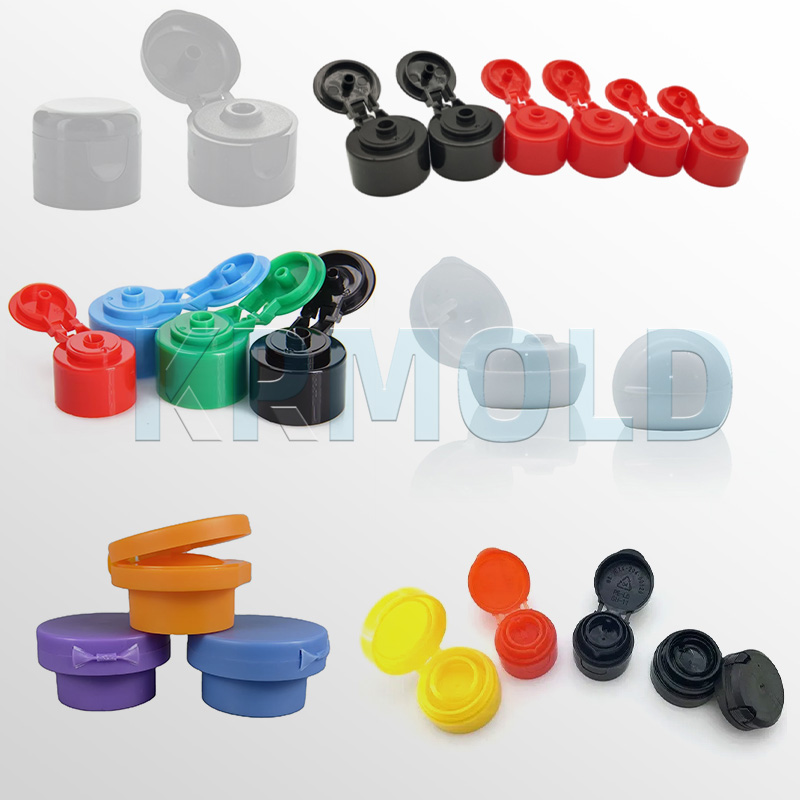
Backed by robust custom R&D capabilities, KRMOLD molds support the production of a wide range of mainstream flip-top caps. Offerings include caps for shampoos, lotion dispensers, two-color bottles, detergent bottles, travel-sized containers, and tamper-evident designs with tear strips, among other customized styles.
Whether producing standard flip-top caps or complex, uniquely shaped designs requiring intricate craftsmanship, KRMOLD delivers high-precision, high-efficiency mass production through custom-designed flip top cap mould.
Flip Top Cap Display

Why Choose KRMOLD?
Specialized Quality Testing for Flip Top Cap Molds
Before shipment, every flip-top cap plastic injection mold undergoes a comprehensive series of specialized tests. These focus on two critical performance indicators—hinge durability and product sealing integrity—by simulating long-term, high-frequency usage scenarios. This process verifies the stability and reliability of the molded products, ensuring that the caps produced by the flip top cap injection mold maintain smooth opening/closing and a tight seal over the long term.
Hinge Fatigue Testing
KRMOLD conducts professional, automated hinge fatigue testing on flip-top cap plastic injection molds. Testing equipment automatically performs 50,000 continuous opening and closing cycles, accurately simulating daily high-frequency usage.
This testing effectively evaluates the toughness, fatigue resistance, and structural stability of the molded hinges. It identifies potential issues such as hinge breakage, sticking, or looseness, ensuring the resulting caps are durable and resistant to wear.
Sealing Integrity Testing
KRMOLD performs professional vacuum decay sealing tests on every cap produced during flip top cap mould trials. These tests precisely measure the fit between the cap and the bottle, sealing gaps, and leak resistance. This comprehensive verification of molding precision ensures that mass-produced caps meet all sealing standards, remaining free from liquid or air leakage.
Dimensional Inspection Reports
To guarantee molding precision, KRMOLD utilizes high-precision Coordinate Measuring Machines to meticulously inspect and calibrate critical dimensions—including hinges, snap-locks, sealing grooves, and threads. Dimensional tolerances are strictly controlled to ensure all parameters align with design specifications.
Additionally, KRMOLD provides clients with complete dimensional inspection reports featuring transparent, traceable data, ensuring the precision and quality of every delivered flip top cap injection mold can be fully verified.
Material Certificates
All core raw materials used by KRMOLD for flip top cap molds—such as mold steel and auxiliary injection molding resins—are compliant products sourced from reputable major manufacturers.
We provide complete material certification for the entire supply chain, ensuring material purity, performance compliance, and adherence to industry production standards.
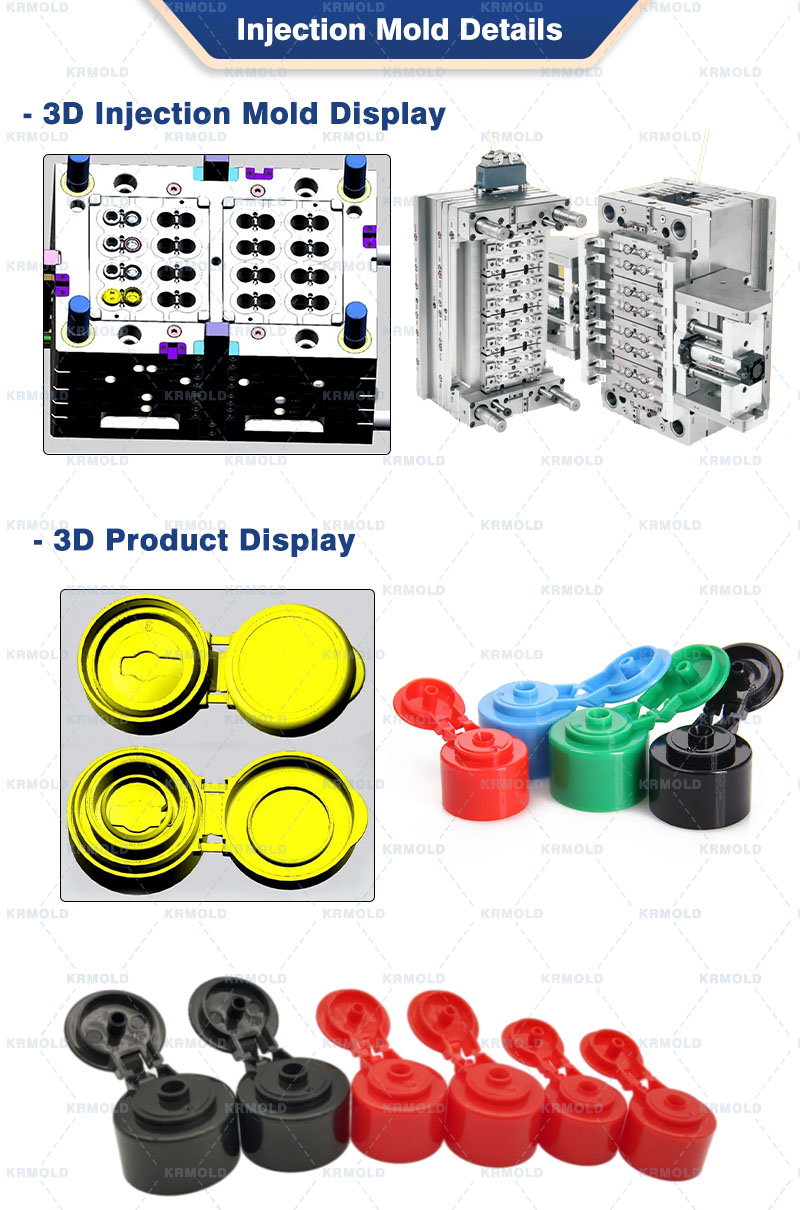
Specify the type of plastic (e.g. PP, ABS) and post-processing requirements (e.g. spraying, silk-screen printing), and provide 2D or 3D plastic part drawings should be provided. At the same time, provide the production volume, appearance requirements, tolerance standards, etc.
Generally speaking, our engineers will start to prepare the quotation immediately after the customer provides the complete production requirements. Usually it takes about 1-3 days.
The lead time for regular injection molds is usually 30-60 days, and may be longer for complex molds. For example, the typical lead time for liquid silicone molds is around 60 days, covering design, manufacturing, mold testing, etc.
High-precision processing technology: High-precision equipment such as CNC machining centers (CNC) and electric discharge machining (EDM) are used to optimize the design process in combination with CAD/CAM software. Quality control: Inspection of key dimensions of the mold by Coordinate Measuring Machine (CMM) and verification of multiple sample batches during the trial molding stage. Material Selection: Use die steel with high wear resistance (e.g. H13, S136) and surface treatment (e.g. nitriding, chrome plating) for die nuts to extend the life.
After every 50,000 molds, check the guide pillar, ejector pin and other wear parts, and clean up the residual plastic and rust on the mold surface. Use high temperature grease for sliding parts (e.g. tilt top, slider) to reduce friction loss. Ensure that the water circuit is smooth and the temperature difference is ≤5℃ to avoid cracking of the mold due to thermal stress.
Mould cost of materials accounted for about 30-40% (such as 1 ton of P20 steel price of about 20,000 yuan), processing costs accounted for more than 50% (CNC labor hourly rate of about 80-150 yuan / hour). Small batch production can choose aluminum mold or simplify the structural design; more than 100,000 pieces is recommended to use carbide inserts to enhance life!
Mould injection products need to fully meet the design requirements (such as size, appearance), and can be continuous and stable production. Mold marking, inspection reports (such as material hardness test) and engineering drawings should be complete.
Mould steel (such as S136H, NAK80 and other imported materials cost more) and the type of mold embryo (aluminum mold short-term cost is low but short life) directly affect the cost, the use of CAD/CAE/CAM design technology, hot runner system, etc. will increase the upfront investment, but can enhance the long-term benefits (such as reducing the sprues, increase production capacity).